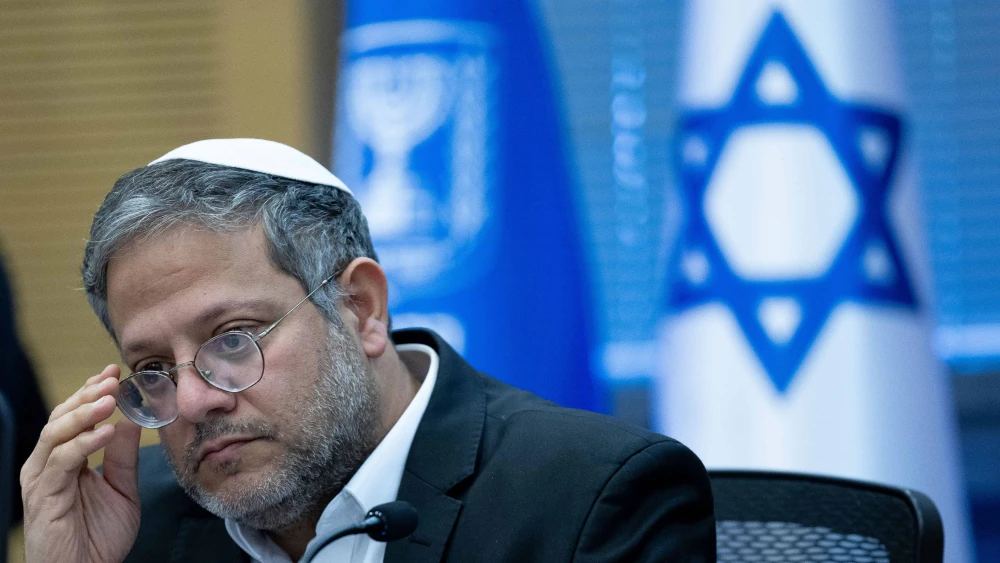
Israeli National Security Minister Itamar Ben-Gvir on Thursday unveiled a policy document for the Israel Police restricting some protest tactics, including a ban on blocking key roads.
The document stipulates that emergency routes, hospital access roads, approach roads to Ben-Gurion International Airport, highways and routes to isolated communities “must remain open at all times,” Channel 12 reported.
The policies also include restrictions on rallies that include placing or throwing objects on roads, as well as protests inside houses of worship.
“Freedom of expression and demonstration are important, but not at the expense of human life and public safety,” said Ben-Gvir. “This policy balances the right to demonstrate with the police’s duty to maintain freedom of movement, public order and the State of Israel’s security.
“It is unacceptable that main roads, access routes to hospitals and emergency routes be blocked, creating a real danger,” he declared.
According to the policy paper, “blocking major or essential traffic arteries endangers road users, damages the state’s infrastructure, disrupts the fabric of life, prevents women in labor and patients from reaching hospitals, obstructs the free movement of the security forces, denying the public the ability to exercise their freedom and rights,” Channel 12 reported.
Following Hamas’s Oct. 7, 2023, invasion, anti-government activists who protested against Prime Minister Benjamin Netanyahu’s judicial reform agenda again began demanding the premier’s ouster, this time over his management of the war and the hostages held in the Gaza Strip.
Demonstrations have often involved blockades of major traffic arteries such as Tel Aviv’s Ayalon Highway, in addition to the lighting of bonfires on roads.
Ben-Gvir said on Thursday that if the Attorney General’s Office failed to respond within five days, the changes would automatically take effect.
Gali Baharav-Miara, who was dismissed as the country’s attorney general on Aug. 4 but remains in her position pending legal proceedings against her dismissal, is expected to express opposition to Ben-Gvir’s move, according to the Kan News public broadcaster.
Baharav-Miara is expected to tell the government that while Ben-Gvir is allowed to set policy, it “must remain general and without politicization or interference in the police’s discretion,” according to the Kan report.
Israel’s governing coalition has been at loggerheads with the attorney general since its formation after the general election of Nov. 1, 2022.
Baharav-Miara had been appointed to the post by the previous government led by then-Prime Minister Naftali Bennett in 2022.