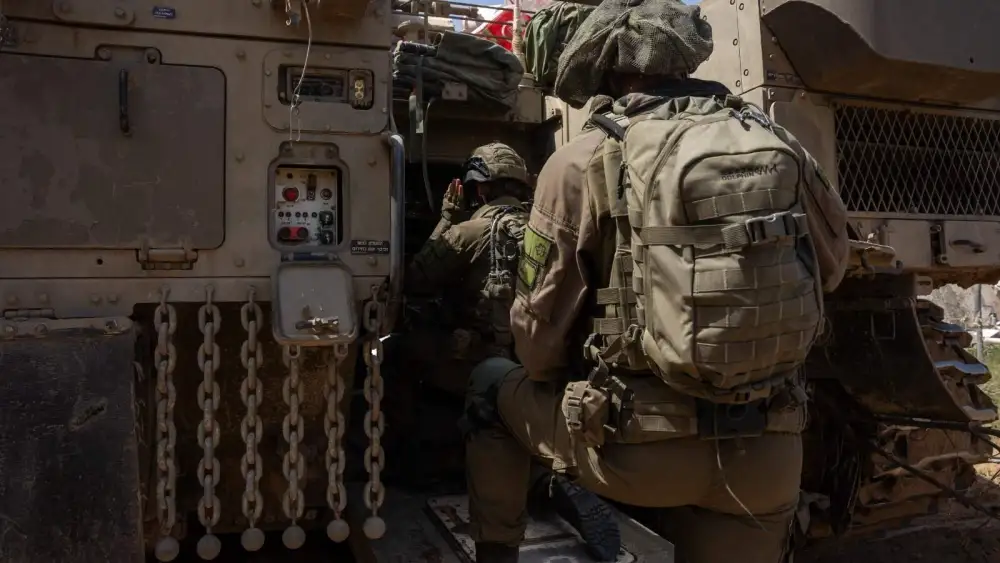
The Israel Defense Forces recently escalated its ground operation in the Gaza Strip by assigning the 36th Division, aka the Rage Formation, to a new security area known as the Morag Corridor.
This corridor now serves as a buffer between the Strip’s southernmost city of Rafah and central Gaza, forming part of a broader campaign to pressure Hamas into releasing Israeli hostages and dismantling its operational networks.
תיעוד מהפעילות הראשונה של כוחות צה״ל במסדרון מורג: כוחות אוגדה 36 חוזרים לפעול ברצועת עזה
— צבא ההגנה לישראל (@idfonline) April 5, 2025
כוחות אוגדה 36 חזרו לפעול ברצועת עזה והחלו את פעילותם במסדרון מורג בו כוחות צה״ל פועלים לראשונה, זאת במקביל לפעילות צה״ל בזירות נוספות ברצועה ומחוצה לה.
במסגרת הפעילות כוחות האוגדה פועלים… pic.twitter.com/XjNKtB1Tym
This escalation falls under the broader framework of “Operation Strength and Sword,” which was launched on March 18 after the breakdown of a ceasefire agreement. Since then, the IDF has intensified air and ground operations across Gaza, targeting infrastructure linked to Hamas. The stated objective remains the elimination of terrorist threats and the safe return of hostages.
Among the latest developments, Israeli forces recently uncovered and destroyed a one-kilometer-long tunnel in Beit Lahia, believed to have been constructed by Hamas for cross-border attacks. Simultaneously, the IDF has extended its reach in both the northern and southern sectors of Gaza, encircling key areas such as the Tel al-Sultan neighborhood in Rafah and carrying out ground operations in Beit Hanun, in the northeastern Strip.
The creation of the Morag Corridor mirrors an earlier initiative—the Netzarim Corridor—which cuts across Gaza from east to west. These controlled zones are part of a broader strategy aimed at limiting Hamas’s mobility, disrupting its communication lines and weakening its territorial control.
The latest measures are intended not only to reduce the threat of enemy attacks but also to gain strategic leverage over Hamas during hostage negotiations. The IDF maintains that these efforts are essential for ensuring long-term national security and reducing the threat posed by terrorist groups operating in Gaza.