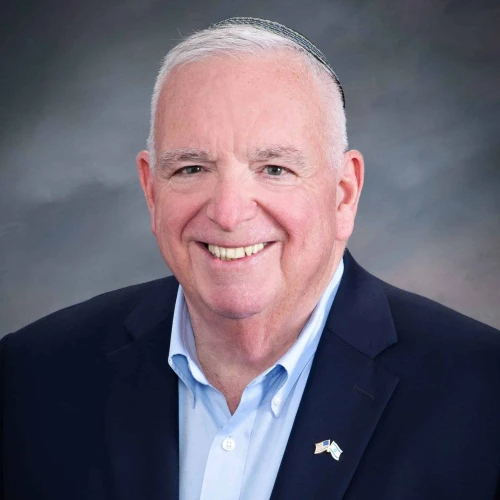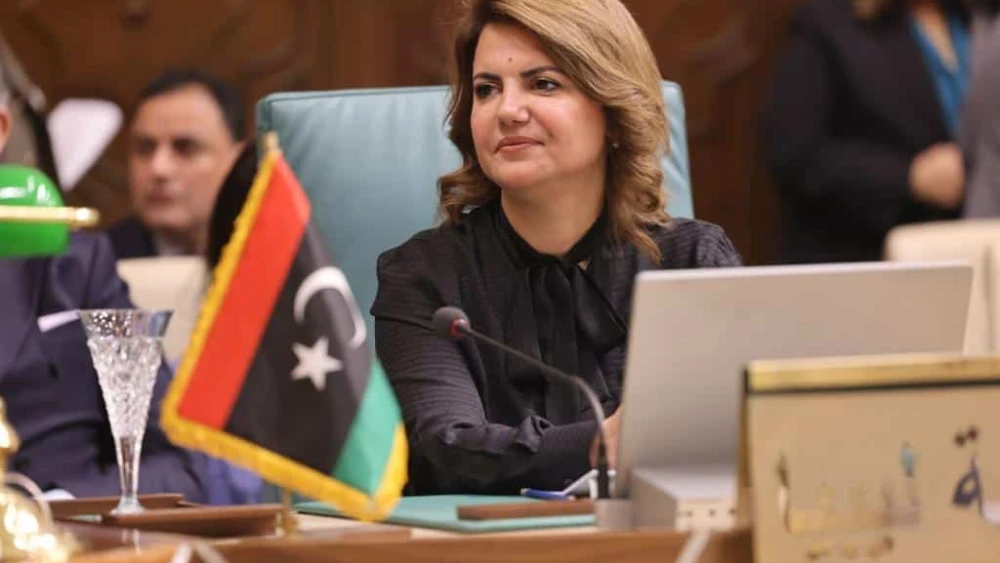
Libyan Foreign Minister Najla Mangoush was suspended from her post late Sunday night amid outrage over her meeting last week with her Israeli counterpart Eli Cohen.
Mangoush fled her country to Turkey amid a public outcry as hundreds of people took to the streets in the capital Tripoli and several other Libyan cities to protest the diplomatic exchange.
Libyan Prime Minister Abdul Hamid al-Dbeibeh announced the formation of a committee to probe his government’s top diplomat, while his Tripoli-based Government of National Unity issued a statement calling the tête-à-tête in Rome “accidental, unofficial and not planned in advance.
“[Libya] categorically denies the exploitation by the Hebrew and international press and their attempt to confer upon the incident the character of meetings,” said the statement, which stressed Tripoli’s “complete and absolute rejection of normalization with the Zionist entity” and affirmed its “full commitment to the issues of the Arab and Islamic nations, foremost of which is the Palestinian cause.”
The development comes hours after Jerusalem revealed that Cohen and Mangoush had met to discuss the possibility of normalizing ties. Israeli diplomatic officials on Monday said that the two-hour meeting was coordinated with senior officials in Tripoli, conflicting with Libya’s version of how the encounter unfolded, Kan News reported.
During the first-ever meeting between representatives of the two countries, Cohen offered humanitarian help to the conflict-wrecked North African nation and discussed efforts to preserve the heritage of Libyan Jewry.
“The historic meeting with the Libyan foreign minister, Najla Mangoush, is the first step in the relationship between Israel and Libya,” Cohen said in a statement, explaining that “given Libya’s size and strategic location, relations are of great importance and have huge potential for the State of Israel.”
Israeli officials established contact with Libya’s unity government several months ago.
A Libyan government official told the Associated Press that the possibility of Libya joining the Abraham Accords was first discussed in January in a meeting in Tripoli between al-Dbeibeh and CIA Director William Burns.
The source told AP that the Libyan premier initially gave approval to Burns’s normalization proposal but withdrew from his position due to fears of a public backlash in the country.
Torn by a bloody civil war since a NATO-supported rebellion removed dictator Muammar Gaddafi from power in 2011, Libya has been divided between rival governments for more than a decade.
Mangoush represents the U.N.-backed unity government in Tripoli, which enjoys support from large swaths of the international community.
Israel’s previous prime minister and current opposition leader Yair Lapid on Monday criticized Cohen’s handling of the diplomatic exchange.
“The global community is looking this morning at Israel’s irresponsible leak of the Libya foreign ministers meeting, and asking themselves: Is this a country with which we can conduct foreign relations? Is this a country one can trust?” Lapid wrote on X, formerly Twitter.
“The incident with the Libyan foreign minister is amateurish, irresponsible and a serious failure of judgment. This is a morning of national disgrace and risking human life for a headline,” the Yesh Atid Party leader continued.