


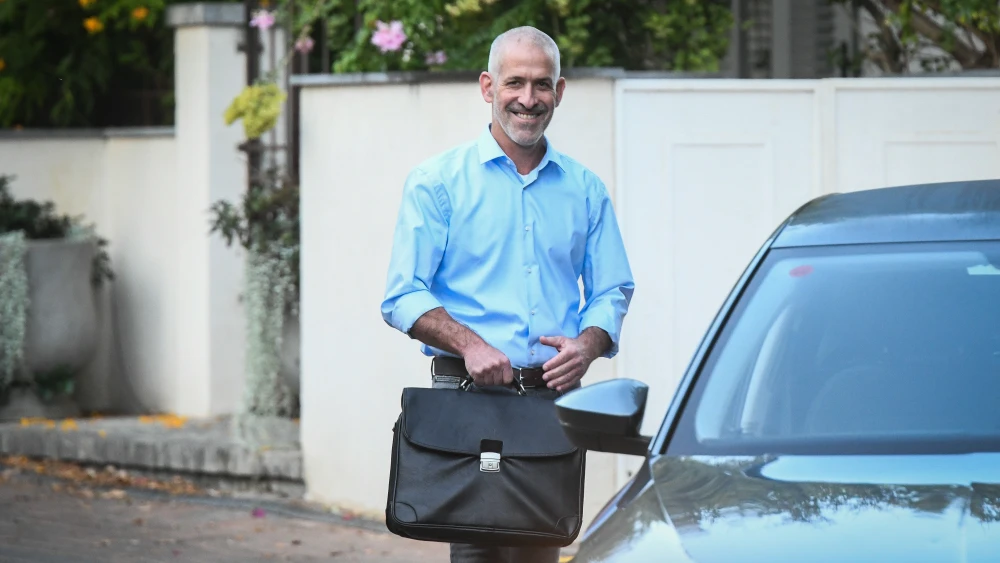
Shin Bet (Israel Security Agency) director Ronen Bar traveled to Egypt on Sunday amid an apparent row with Cairo over an Israeli counter-terrorism raid in Judea and Samaria that came less than 48 hours after a ceasefire was forged to end the latest conflict with Palestinian Islamic Jihad, local media reported.
Bar reportedly met with Egyptian intelligence chief Abbas Kamel, after Cairo expressed anger over an Israeli raid on Aug. 9 in Nablus that killed wanted Palestinian terrorist Ibrahim Nabulsi during an hours-long gun battle.
According to the reports, Israeli Prime Minister Yair Lapid had assured Egyptian President Abdel Fattah el-Sisi that Jerusalem would curtail its military activities in Judea and Samaria in the wake of the Egyptian-mediated truce that ended “Operation Breaking Dawn” on Aug. 7. The three-day conflict, in which Gaza Strip-based terrorists fired some 1,100 projectiles at the Jewish state, was partially precipitated by the arrest on Aug. 1 during an Israeli mission in Jenin of Bassam al-Sa’adi, who leads PIJ in Judea and Samaria and is suspected of building terror cells in the area. The IDF announced on Sunday that it would formally indict Sa’adi on charges including membership in a terror group, perpetrating terrorist acts, and incitement to violence. Concerned about potential reprisals following Sa’adi’s arrest, the IDF subsequently shut down much of the country’s south. Tensions eventually boiled over and the IDF initiated “Operation Breaking Dawn” to preempt an imminent PIJ attack. The day after the ceasefire was brokered, Egyptian Ambassador to the United Nations Osama Abdel Khalek surprised many by ripping into Israel during an emergency session at the Security Council. Abdel Khalek made no mention of PIJ during his address, labeling all Gazans killed in the fighting as “martyrs” with no differentiation between terrorists and civilians. He also said that Israel was “fully responsible” for “occupied” Gaza, despite the IDF having withdrawn from the Palestinian enclave in 2005 and even as Egypt currently maintains a security blockade on the territory similar to the Jewish state’s. Bar’s reported visit on Sunday was not confirmed by official sources in Israel or Egypt.


