


A wedding was held in the partially destroyed home of the terrorist who murdered Or Eshkar in Tel Aviv in March.
The home that the IDF partially destroyed on May 22 has now become a reception hall and restaurant.
A video circulated on social media on Sunday showed a wedding reception at the location, Ynet reported.
The caption on the video read: “Joy amid the ruins. The home of Moataz Salah al-Khawaja, destroyed by the occupation, hosts a wedding feast in Ni’ilin, west of Ramallah.”
On March 9, al-Khawaja, a Hamas member, shot Eshkar, who was on his way to a friend’s wedding. Eshkar, 32, died of his wounds on March 20.
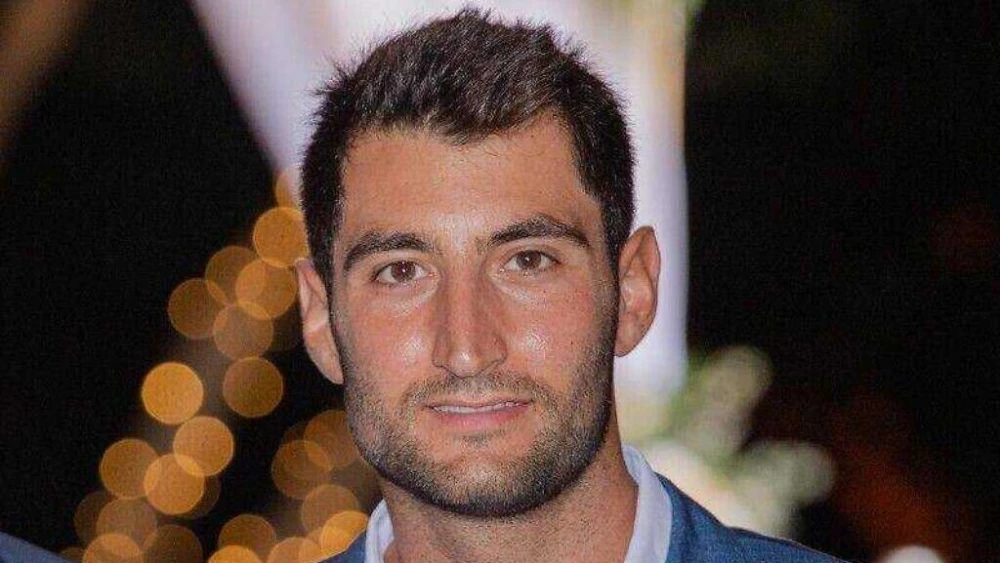
“Or came to us after extensive resuscitation attempts in the field, which were ongoing in the hospital, and he was immediately taken to the operating room where against all odds doctors managed to stabilize his condition,” said Roni Gamzu, CEO of Tel Aviv Sourasky Medical Center (Ichilov Hospital).
“Unfortunately, the … wounds were fatal, and after a lengthy struggle over a number of days … we were forced to declare his death,” he concluded.
Two other Israelis, Rotem Mansano, 34, and Michael Osdon, 36, were wounded in the attack. Mansano remains disabled.
The IDF considers the destruction of terrorists’ homes an effective deterrent. But an Israel Hayom investigation carried out with Zionist NGO Im Tirtzu found that since the beginning of 2023, such demolitions have all but stopped.
Since the start of the year, 12 severe terrorist attacks were committed in which 26 people were murdered. However, the home of only one of the 17 terrorists involved in those terrorist attacks, and whose identities are known for sure, was demolished, the report said.
Alon Schvartzer, Im Tirtzu’s director of policy, said, “The findings are very troubling and the delay in demolishing the terrorists’ homes is unacceptable and undermines Israeli deterrence.”



