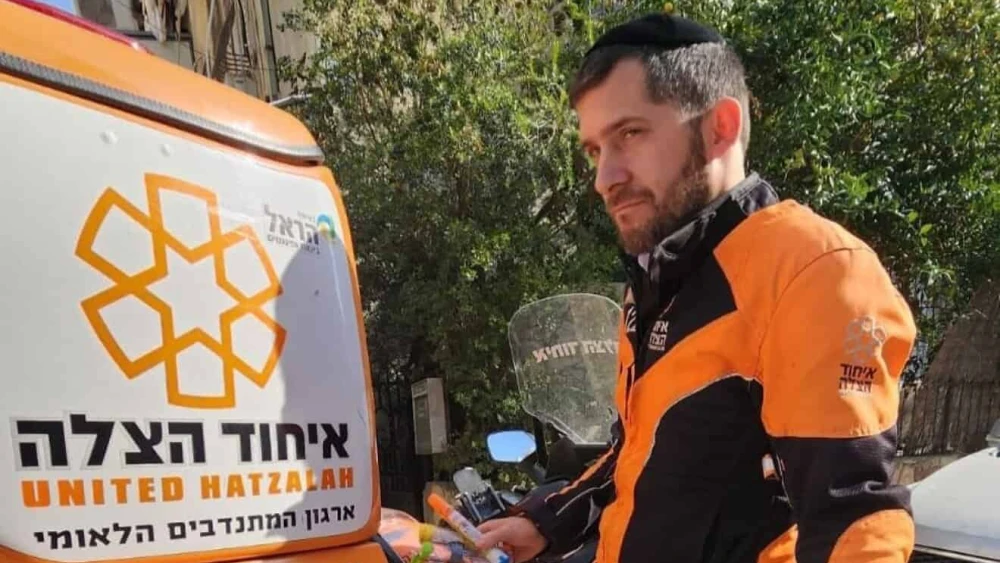
United Hatzalah announced on Monday a global fundraising campaign to expand mass-casualty incident training for its volunteer emergency responders across Israel.
The “Training Saves Lives” initiative is intended to ensure that all volunteers take part in realistic drills simulating bus crashes, terror attacks, building collapses and natural disasters. The volunteer-based organization has conducted hundreds of such exercises but says evolving threats require expanded preparedness.
When Seconds Matter, Training Matters More
— United Hatzalah (@UnitedHatzalah) December 2, 2025
This Giving Tuesday, your support funds the mass-casualty incident training that prepares our volunteers for Israel’s most critical moments. Whether it’s a bus crash, a building collapse, a terror attack, or any type of emergency, every… pic.twitter.com/BC34svSgfo
The campaign follows real-world validation of the training’s effectiveness. Yehuda Geffen, 20, a United Hatzalah volunteer and Israel Defense Forces soldier, credited a recent drill with enabling him to organize triage and coordinate the response when a drone crashed into his base earlier this year.
United Hatzalah president Eli Beer said the drills recreate the pressure and confusion volunteers face during real emergencies. “When the call comes in, there is no time to think,” Beer said. “We must act.”