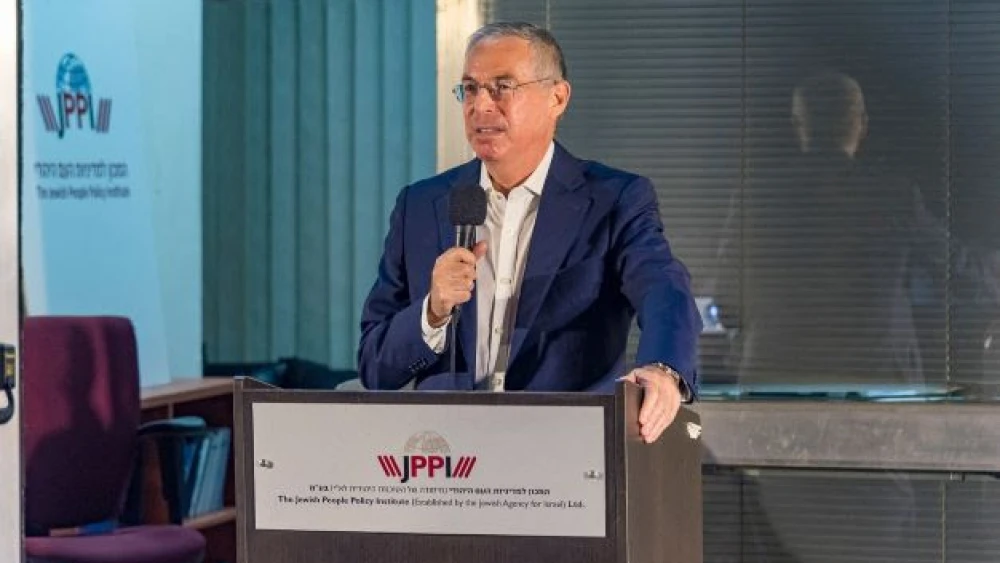
Israeli Ambassador to the United States Michael Herzog was summoned to the U.S. State Department on Tuesday, amid anger in Washington over the Knesset’s repeal of the portion of the 2005 Disengagement Law that prevented Jews from entering or residing in parts of northern Samaria.
Herzog was called for a meeting with Deputy Secretary of State Wendy R. Sherman, who “conveyed U.S. concern regarding legislation passed by the Israeli Knesset rescinding important aspects of the 2005 Disengagement Law, including the prohibition on establishing settlements in the northern West Bank,” according to a State Department statement.
“They also discussed the importance of all parties refraining from actions or rhetoric that could further inflame tensions leading into the Ramadan, Passover, and Easter holiday,” added the statement.
The Israeli parliament voted on Tuesday to repeal articles of the disengagement law banning Israelis from entering and residing in four communities in northern Samaria.
The 2005 disengagement led to the destruction and evacuation of the Israeli communities of Sa-Nur, Homesh, Ganim and Kadim in northern Samaria, as well as 21 communities in the Gaza Strip.
“There is no longer any justification to prevent Israelis from entering and staying in the evacuated territory in northern Samaria, and therefore it is proposed to state that these sections [of the disengagement law] will no longer apply to the evacuated territory,” reads the introductory text to the bill.
The bill’s passage erases “to some extent the stain on the garment of the State of Israel” left by the disengagement, it continues.
The Israel Defense Forces must now approve a military order allowing Israelis to return to those areas.
State Department spokesman Vedant Patel strongly denounced the Knesset vote on Tuesday, saying Washington was “extremely troubled” over the development.
Patel told reporters that the move was “inconsistent with Israel’s recent commitments to de-escalating Israeli-Palestinian tensions. Just two days ago, Israel reaffirmed its commitment to stop discussion of any new settlements for four months and to stop authorization of any outposts for six months.”
Patel spoke of the changes coming “at a time of heightened tensions” and being “particularly provocative and counterproductive to efforts to restore some measures of calm as we head into Ramadan, Passover and the Easter holidays.”
The State Department spokesman appeared to refer to an agreement of Israeli and Palestinian officials in Sharm el-Sheikh, Egypt, on March 19. At the security summit, Israel agreed to “stop discussion of any new settlement units for four months and to stop authorization of any outposts for six months,” according to a joint statement released by the State Department.
The March 19 statement added that both sides “agreed to develop a mechanism to curb and counter-violence, incitement and inflammatory statements and actions.” Although an Israeli man was wounded in a second Huwara terrorist attack as that agreement was hammered out, Patel did not refer to that attack, which seriously wounded an Israeli man, as particularly provocative and counterproductive to restoring calm.