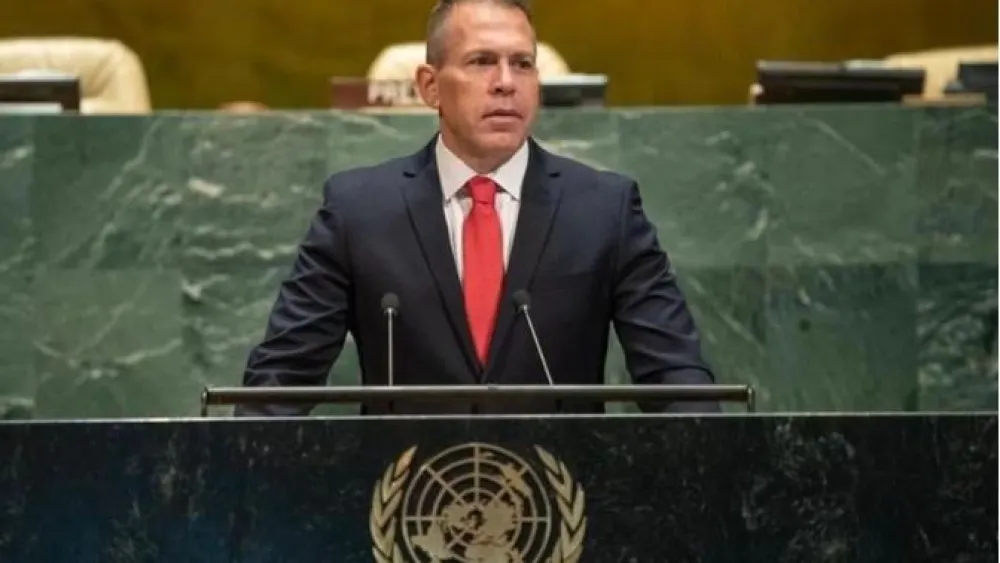
Israel’s Ambassador to the United States and the United Nations blasted the founders of ice-cream manufacturer Ben & Jerry’s on Monday, saying their remarks in an interview published the day before displayed “ignorance and hypocrisy.”
In the Axios interview, Ben Cohen and Jerry Greenfield rejected criticism of their company’s decision to stop selling its products in Judea and Samaria, calling it “painful” and “absurd.”
In July, the Vermont-based ice-cream maker announced that it would stop selling its products in Judea and Samaria by 2022. The announcement drew much condemnation, with New Jersey and Arizona announcing they would divest from Ben & Jerry’s Unilever over its violation of state anti-BDS laws.
Greenfield told Axios that he “wasn’t surprised” by the accusations of anti-Semitism that followed the company’s announcement this summer, though acknowledged that it was “still painful.”
“I understand people being upset. It’s a very emotional issue for a lot of people, and it’s a very painful issue for a lot of people,” he said. Cohen, on the other hand, called the accusations absurd. “What, I’m anti-Jewish? I’m a Jew. My family is Jewish. My friends are Jewish,” he said. Greenfield added that the outrage was, in his opinion, largely based on misinformation.
“I think Ben & Jerry’s and [parent company] Unilever are largely being characterized as boycotting Israel, which is not the case at all,” he said.
“I don’t view it as withholding money. We just don’t want our ice-cream sold in the occupied territories,” said Cohen. “We hugely support Israel’s right to exist, but we are against a particular policy.”

Greenfield and Cohen, said Erdan on Monday, “have no problem with their ice-cream being sold to supporters of terrorism, but Israel they boycott.”
The ambassador went on to state that “part of the definition of anti-Semitism is exactly that—demanding from Israel what is not demanded from any other entity in the world.”
Therefore, he said, “I will continue to act so that as many countries as possible include Ben & Jerry’s and Unilever on their blacklist until this despicable boycott comes to an end.”
In a statement released following the publication of the interview, Ben & Jerry’s Israel CEO Avi Zinger said that Unilever and Ben & Jerry’s “continue to claim they are not acting against Israel at the same time as they are acting in full force against the State of Israel and its citizens and doing a great service to the BDS movement and our detractors around the world.”
Ben & Jerry’s Israel, he said, “will continue to act against the illegal decision that discriminates and harms many of the state’s citizens, and we call on the Israeli government to act, similarly to many countries around the world that have already joined the fight against Unilever’s policy and announced the imposition of tough economic sanctions on it.”
This article first appeared in Israel Hayom.