Middle East

Shaima Gargash, deputy chief of mission at the United Arab Emirates embassy in Washington, stressed that “there is no way to promote this peace without women.”

Holes in the ship’s hull “were not caused by an external attack, but elements from inside the ship itself,” claims pro-Hezbollah media.

On his way to the first-ever papal visit to Iraq, he sent “warm greetings” and prayers for Israel to be blessed with “harmony and peace.”

The materials include poems; legal trials; oral traditions and histories; and information about economic life, social organization, values, laws, religious practices, poetic creativity and the environment.
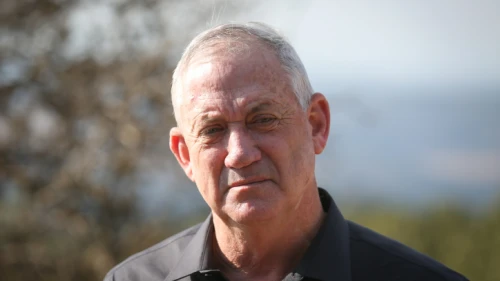
Benny Gantz says it won’t be a defense pact, but rather, an arrangement where “we can continue and develop our relations.”
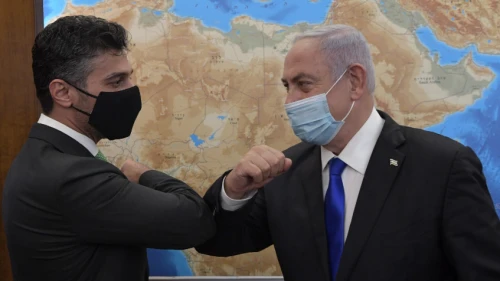
“We’re changing the Middle East. We’re changing the world,” says the Israeli premier.

The former U.S. secretary of state was chosen for his “exceptional and groundbreaking contributions to the fight against anti-Semitism and religious prejudice of all forms.”

Tehran “is Israel’s greatest enemy, and we are striking it everywhere in the region,” says Israeli Prime Minister Benjamin Netanyahu in the wake of reported airstrikes on Iranian targets in Syria, two days after explosions in the Gulf of Oman rocked the “MV Helios Ray.”
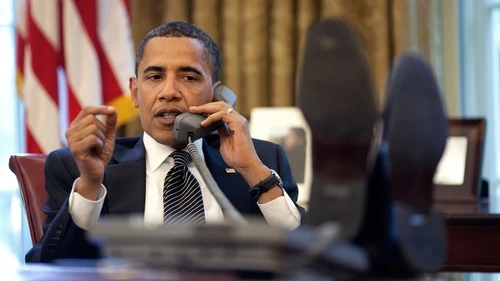
According to the Saudi-owned newspaper “Asharq Al-Awsat,” the talks reached an advanced stage; the sides had even prepared a document for signing.

The vessel, identified as MV Helios Ray, a Bahamian-flagged vehicle cargo ship, is owned by a Tel Aviv-based firm called Ray Shipping Ltd.
The Abu Dhabi Investment Office hails the opening of its Tel Aviv mission as “a significant milestone on a journey to advance collaboration between our two markets in pursuit of solutions that can benefit the wider region.”
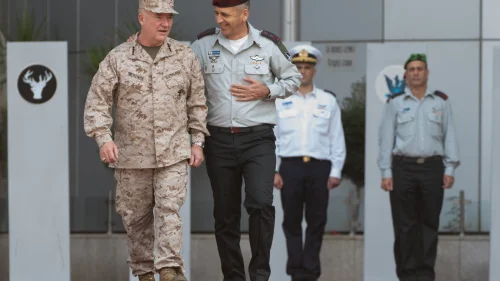
The Pentagon’s decision last month to relocate Israel to the U.S. military’s Central Command area of responsibility is a milestone development that could boost deterrence of Iran.