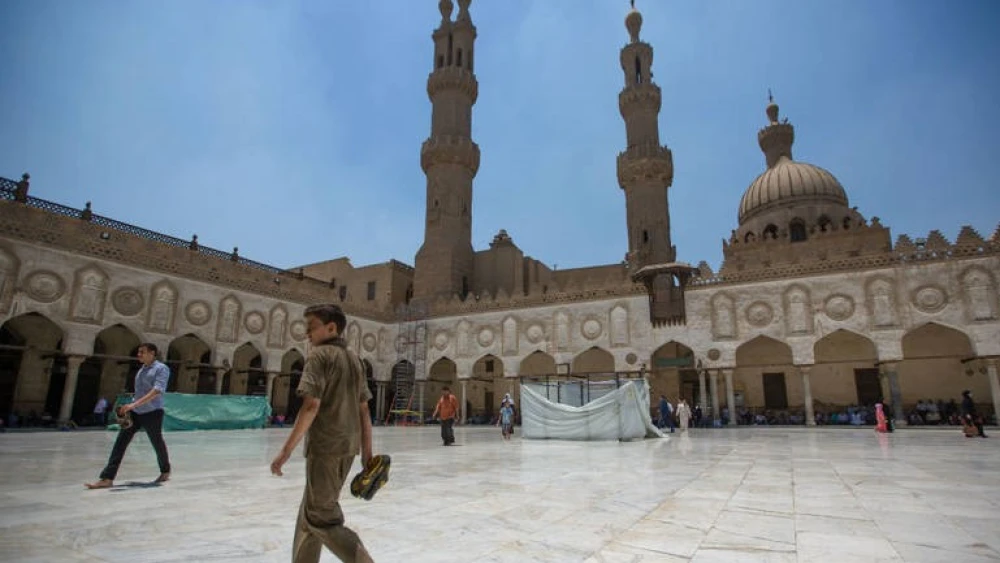
Against the backdrop of the Egyptian police’s and military’s recent extensive efforts to eliminate terrorism in the Sinai, Al-Azhar deputy Sheikh ‘Abbas Shuman said, in an interview on Egyptian television, that the anti-terror military and police operations were legal and compatible with Islamic law. However, he refused to accuse the terror organizations of heresy, saying, “Al-Azhar cannot accuse anyone of heresy.”
Shuman’s statements were another expression of the Al-Azhar institution’s years-long cautious position on the issue of accusing Islamic terror organization activists of heresy, particularly the Islamic State (ISIS) – even though the latter has carried out many attacks against both Muslims and non-Muslims, both in Egypt, in the rest of the Arab world and in the West.
Al-Azhar officials have harshly criticized these organizations, calling ISIS a terror organization that deviates from Islam, and have launched informational campaigns to undermine the legitimacy of this organization. Nevertheless, these officials have refrained from declaring activists in terror organizations heretics, although they have been censured for not doing so, including by Egyptian President Abd Al-Fatah Al-Sisi.
Al-Azhar officials explain their position by saying that a Muslim remains a Muslim as long as he has not renounced the shahada – that is, the declaration that there is no God but Allah and Muhammad is His Prophet – and that terror organization activists’ actions are criminal and that all-out war should be waged against them, but that they should not be declared heretics because only a shari’a judge can issue such a ruling.
An additional explanation given is that accusing terror organizations of heresy could open up a Pandora’s box and lead to civil wars in Islam. Yet another argument is that if Al-Azhar decrees that ISIS and other terror organizations are heretics, there will be no difference between Al-Azhar and these organizations, which do not hesitate to accuse other Muslims of heresy.
It may be that Al-Azhar’s refraining from ruling in this matter stems also from fear of direct conflict with the terror organizations, and from fear that such a ruling would also be used against the Muslim Brotherhood.
It should be noted that in Egypt’s religious establishment there are several sheikhs who have indeed ruled that ISIS and other Islamic terror organizations are heretical, but they form a tiny and exceptional minority.
The full report reviewed statements by Al-Azhar officials on the subject and can be viewed here.