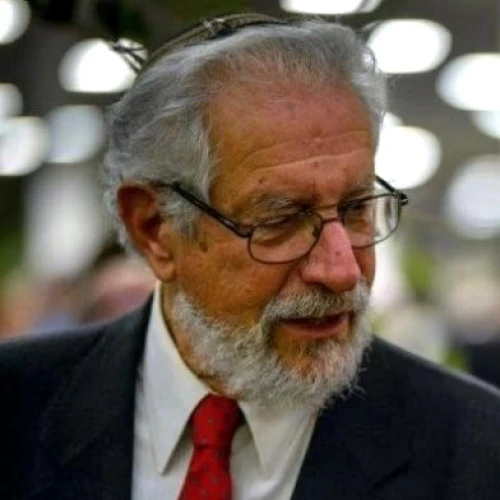
A top rabbi in Azerbaijan on Tuesday joined his government in criticizing Israel’s recent recognition of the Armenian Genocide.
Rabbi Zamir Isyaev, the chief Sephardic rabbi of Azerbaijan, told JNS that Israel’s recognition last month “doesn’t make any sense, does little to punish Turkey and threatens to harm relations with one of the Jewish state’s most valuable allies—Azerbaijan.”
Azerbaijan’s government rejected Israel’s recognition on June 29, a day after the Israeli Cabinet voted in favor of it.
“The distortion of the historical facts surrounding the events of 1915, and the reduction of a complex historical issue to a political decision without a sound legal or scholarly basis, are unacceptable,” Azerbaijan’s Foreign Ministry said. “We call on the Israeli government to reconsider this decision.”
Turkey also condemned the move, saying it was intended to distract from allegations of genocide directed at Israel, including by Ankara.
A statement approved by Israel’s Cabinet on June 28 said attempts to “deny, minimize or distort the truth about the Armenian Genocide” must be rejected. Israeli Foreign Minister Gideon Sa’ar said that “based on the moral and historic duty, Israel will recognize the genocide perpetrated against the Armenian people in the final days of the Ottoman Empire.”
Turkey and Azerbaijan have long rejected characterizing the mass arrests, deportations and killings of Armenians in 1915 as genocide.
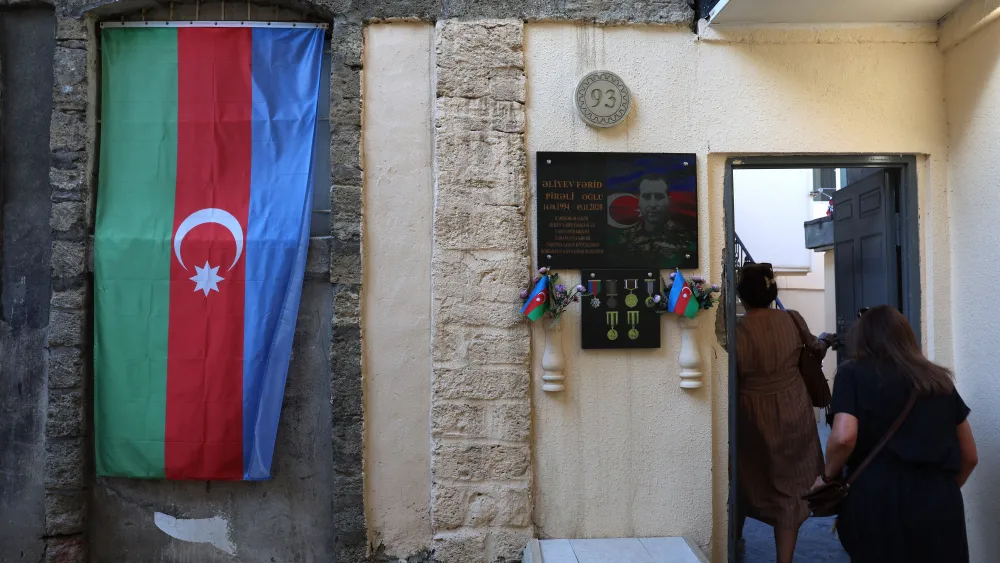
Azerbaijan shares close cultural and historical ties with Turkey and has fought a decades-long conflict with Armenia. The latest round of fighting ended in September 2023 with the dissolution of the Armenian-backed Republic of Artsakh.
Israel had long resisted recognizing the Armenian Genocide while it maintained close ties with Turkey. Relations have deteriorated sharply under Turkish President Recep Tayyip Erdoğan, particularly following Hamas’s Oct. 7, 2023, attack on Israel and the regional war that followed.
Erdoğan has repeatedly escalated his rhetoric against Israel.
In 2024, he said, “Just like we entered Karabakh, just like we entered Libya, we will act similarly exactly to them,” a remark widely interpreted as threatening military action against Israel.
Last year, during an Eid al-Fitr prayer service, Erdoğan prayed: “May Allah, for the sake of his name ... destroy and devastate Zionist Israel.”
Addressing the U.N. General Assembly in 2024, he said, “Just as Hitler was stopped by the alliance of humanity 70 years ago, Netanyahu and his murder network must also be stopped by the alliance of humanity.”
Last month, Turkish Foreign Minister Hakan Fidan described Israel as “a burden humanity can no longer bear.”
Isyaev said he understood Israel’s desire to respond to Erdoğan but argued that recognizing the Armenian Genocide was ineffective.
“The Azerbaijani government felt surprised and betrayed by this recognition, but it also failed to achieve anything,” he said.
“Many countries, including the U.S., have already recognized the ‘Armenian Genocide.’ Israel following suit does nothing to hurt Turkey. It did nothing for ties with Armenia, which rejected it. It only hurt Israel by straining relations with Azerbaijan and appearing to opportunistically take sides on what should be a moral issue.”
Armenian Prime Minister Nikol Pashinyan also reacted coolly to Israel’s decision.
“We see no need to respond because we believe that refraining from entering into the issue of the weaponization of the Armenian Genocide is in the interests of the Republic of Armenia,” Pashinyan told reporters in Yerevan on June 29.
Azerbaijan, a predominantly Muslim country bordering Iran, maintains close military and energy ties with Israel, supplying the Jewish state with a significant share of its crude oil imports. Armenia, a predominantly Christian country, has maintained friendly relations with Iran.
Isyaev said he believes bilateral ties will not suffer further “unless the issue is advanced and brought to a Knesset vote.”
He said he has written to Shas, the ultra-Orthodox Sephardic party in Netanyahu’s governing coalition, urging it to block any further declarations or legislation on the issue.
Israel’s Foreign Ministry did not respond by press time to a JNS request for comment on Isyaev’s criticism.