The Italian parliament has initiated legislation to establish a formal restitution process for looted art, a Jewish organization said on Tuesday.
The bill put forward last month, more than eight decades after the Holocaust, would empower the Italian government to create a restitution process for art and cultural property seized, looted, or lost due to antisemitic racial persecution under Italian Fascist racial laws beginning in 1938 through 1945.
“The bill offers a historic opportunity to finally deliver justice to victims of Nazi and fascist persecution and their heirs,” said Gideon Taylor, president of the World Jewish Restitution Organization (WJRO), a Jerusalem-based nonprofit which works for the recovery of Jewish property in Europe.
“While operational and legal details remain to be resolved as the bill moves forward, this is a vital step toward creating a framework for restitution,“ he said.
A 2024 report found that Italy had made only “some progress” on looted cultural property over the past 25 years.
The study, authored by the WJRO and the Claims Conference, found that Italy had not yet established a clear procedure for restitution despite having endorsed the 1998 Washington Conference Principles on Nazi-Confiscated Art and the 2009 Terezin Declaration.
“With the bill under discussion, Italy is finally taking steps... to fill a gap aimed at clearly establishing, in our country as well, right to redress, certainly not for the lives lost and the suffering endured, but for the dispossession of artistic heritage—which a legal system that respects fundamental human rights must, in any case, ensure,” said Livia Ottolenghi, president of the Union of Italian Jewish Communities (UCEI), at the June 24 parliamentary hearing.
During World War II, Italy was a founding member of the Axis Powers and officially allied with Adolf Hitler’s Nazi Germany under dictator Benito Mussolini. The Allies landed in Sicily in June 1943, and a month later, Mussolini was removed from power. His successor signed an armistice with the Allies in September 1943. In response, the Germans occupied Italy and its territories, restoring Mussolini as head of a radical Fascist regime.
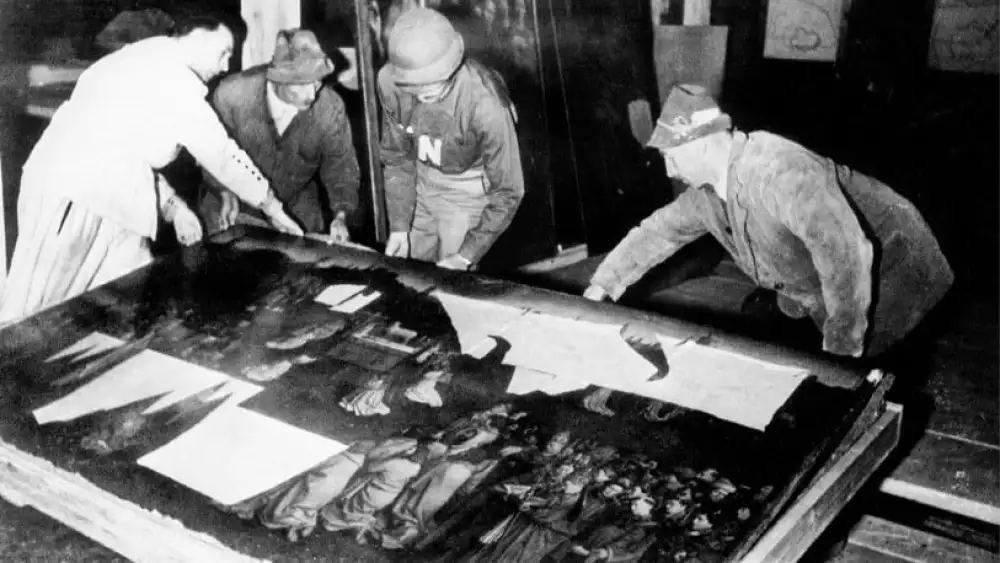
The Nazis looted about 20% of the art in Europe, and more than 100,000 items have not been returned to their rightful owners.
The report found that a majority of countries have made no progress on Holocaust art restitution over the last quarter century.