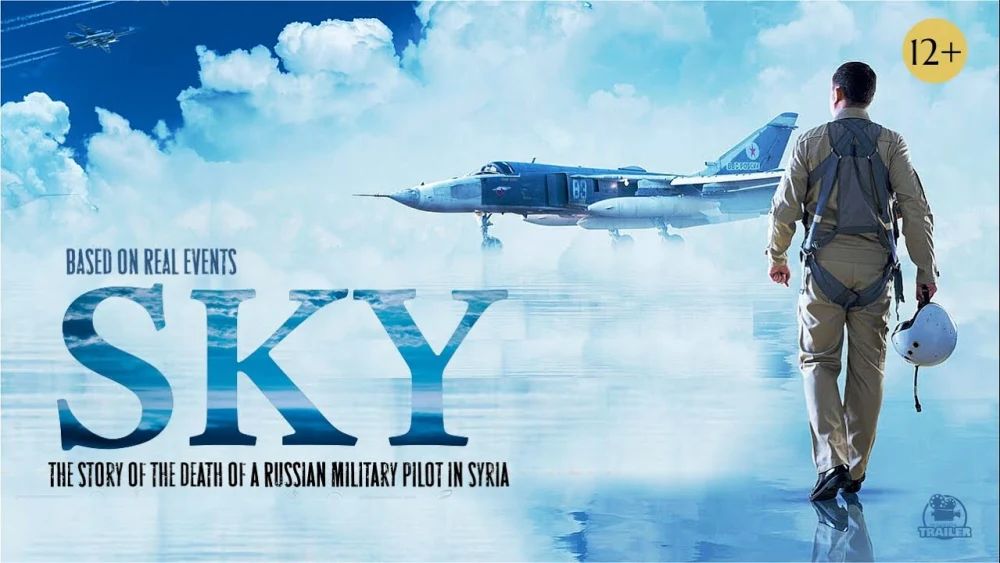
A new action movie, called “Sky,” debuted in Russian movie theaters about a month ago. The story portrays the Russian intervention in Syria in a heroic light and seeks to add to it an element of “saving the homeland.” But don’t look for any artistic merit or depth in “Sky.” It’s a classic propaganda product, as one might expect of a film commissioned by the Russian Defense Ministry.
It does the job, etching on the Russian public’s consciousness the willingness of the state to do anything, even employing force, to promote what the regime declares to be Russia’s interests. Naturally, the film does not reveal what really motivated President Vladimir Putin to order Russian forces into a Middle Eastern country thousands of kilometers from Russia’s borders.
Impressively, the Russians explained their military venture into the Assad regime’s fight by saying there was a need to defend their country against Sunni radicals—some of whom were born in Russia or other former Soviet states—who might entrench themselves in Syria once Assad was defeated. The fear was that those same radicals would then start posing a threat to the southern parts of Russia. This explanation sounds well enough, as it puts Russia on the side of the “good guys,” while painting all opponents of Assad as radical Islamists—effectively, terrorists.
But the true reasons that brought Russia into Syria were much more complicated and less innocent. They are rooted in Putin’s strategic decision to position Russia, like the former USSR, against the United States and its allies in every possible arena, in order to return his country to the status of a superpower. The choice of Syria was almost natural; Syria was an ally of the Soviet Union and so the return to it was seen as a restoration.
The United States’ gradual pulling up of stakes in the Middle East gave the Russians a good opportunity to go back. Even the price—in terms of human lives and money—that the Russians had to pay for their military intervention in Syria was relatively low. They were little involved in the “dirty work” of ground combat, preferring to pummel the enemy with airstrikes, making the war into a long series of training drills for them, in which they could also test out new weapons systems.
As far as Putin is concerned, what he got in exchange was worth the price he paid. Assad has already given him ports for the Russian Navy in the Middle East. In contrast to the Soviet past, Russia today does not intend to fund its satellites. The opposite—it intends to profit from its adventures in Syria. For example, it wants to build the infrastructure projects the international community will fund to rehabilitate the country, much of which lies in ruins.
When millions of Russians watch “Sky” and are thrilled by its fearless heroes, Putin will check off another move in his global chess game. In a region where the Americans failed and fled Iraq and Afghanistan, he is succeeding, for now.
Ariel Bulshtein is a journalist, translator, lecturer and lawyer.
This article first appeared in Israel Hayom.