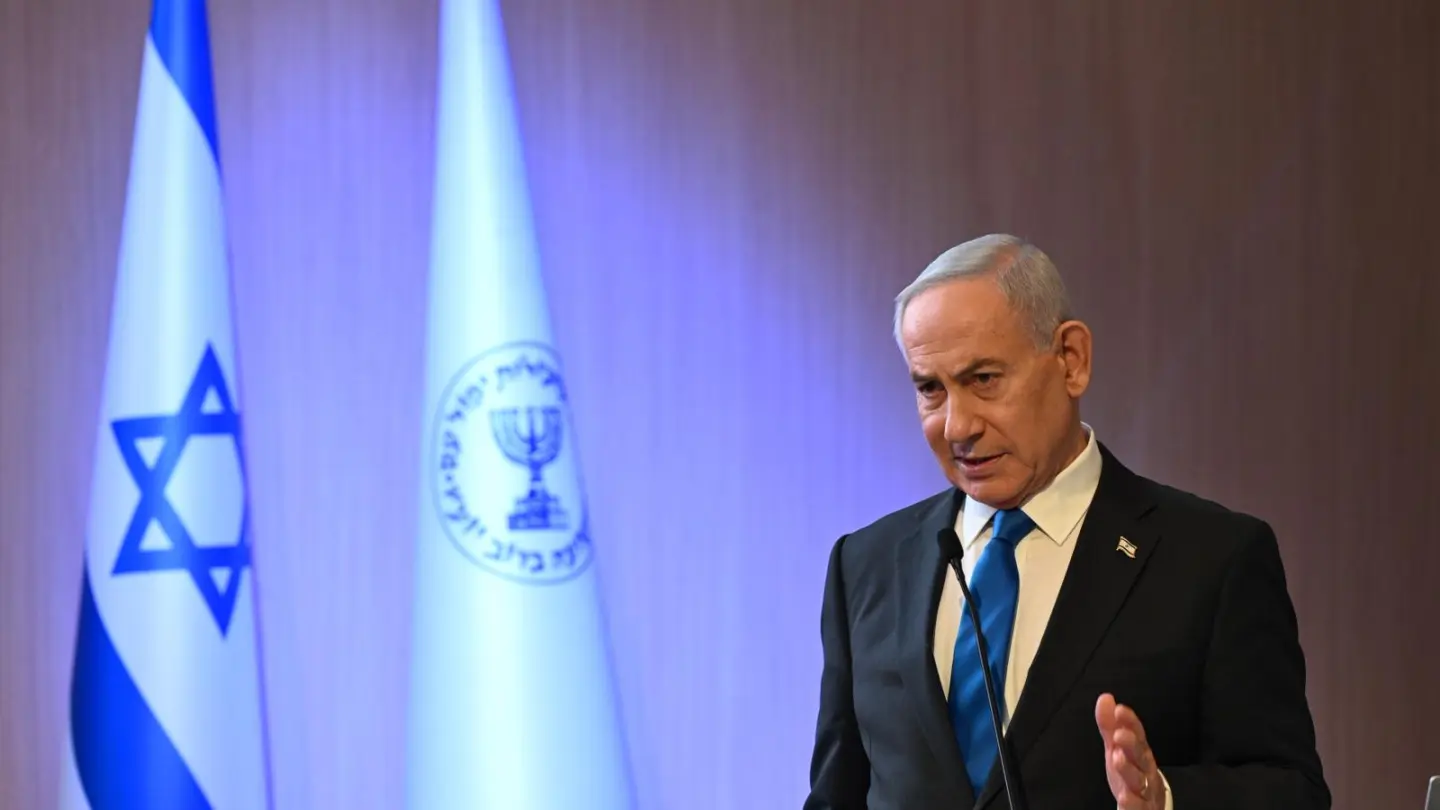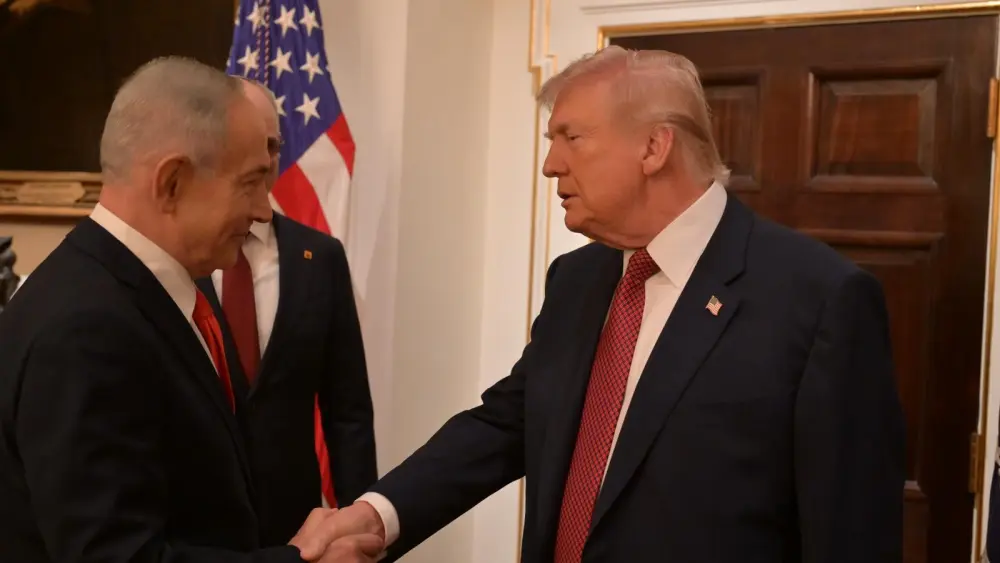

One cannot help but notice the widespread delight surrounding media reports that U.S. President Donald Trump allegedly cursed at Israeli Prime Minister Benjamin Netanyahu during a phone call. What a spectacle! Much of the reporting relied on anonymous accounts, and sources hostile to both Trump and Netanyahu have every interest in exaggerating the tone, content and significance of what was allegedly said.
The two villains of the international imagination—burned in effigy in public squares, demonized in the media and condemned in political discourse—have suddenly become the stars of a new drama. The larger villain scolds the smaller one and tells him exactly what much of the prime-time audience wants to hear: “Everyone hates you. I told you so.”
But let us look at the facts.
Trump pressured Netanyahu into accepting a ceasefire that Iran has made a precondition for any diplomatic engagement, apparently accepting the ayatollahs’ promises at face value. Yet since March 2, when the war orchestrated by Iran began, Hezbollah has launched 5,500 missiles at Israeli military targets and another 2,200 at civilian communities.
The ceasefire announced on April 16 has changed little. Schools remain disrupted, businesses suffer, agriculture has been devastated, and 26 soldiers and two civilians have been killed, including 14 since the ceasefire took effect.
Faced with these realities, Netanyahu reportedly decided on Sunday to strike Hezbollah’s terror headquarters in Beirut’s Dahieh district. He ultimately backed down after Trump accused him of jeopardizing efforts to secure a broader understanding with Iran, which continues to link any talks to a ceasefire with Hezbollah.
The Israeli prime minister has not backed down. Israel has kept its forces in place and has accepted only a simple principle: silence for silence. If Hezbollah stops firing, Israel will stop firing. Everything else remains to be seen.
Netanyahu has repeatedly demonstrated that he is not afraid to say no to an American president, as he did on numerous occasions with Trump’s predecessor, Joe Biden. Today, however, he appears to believe that preserving the strategic relationship with Washington is both the safer and more prudent course. That does not mean Israel has abandoned its objectives. Israeli forces remain deployed, and the next chapter has yet to be written.
The broader reality remains unchanged. There is no genuine ceasefire and no agreement that Iran intends to honor in good faith. Tehran’s strategy is not peace but war. Diplomacy, truces and negotiations are instruments to be used when convenient, not goals in themselves.
Iran continues to rely on Hezbollah as a lever against both Israel and the West, maintaining constant pressure while presenting itself as a reasonable actor seeking stability. Yet its actions tell a different story. The regime continues to rebuild its missile capabilities, direct its proxies and pursue a regional strategy based on intimidation and conflict.
That is why the greatest danger is not military escalation but political illusion: the belief that the regime of the ayatollahs can be persuaded to abandon a strategy that has defined it for decades. The evidence points in the opposite direction. For Tehran, war remains the central instrument of policy, and every ceasefire is merely another move in that larger game.
Hezbollah continues to fire. And Iran is unlikely to provide Trump with anything resembling a meaningful or lasting truce.
Tehran will continue directing Hezbollah to attack communities such as Kiryat Shmona, Manara, Hanita and Shlomi—all of which came under fire again despite the renewed ceasefire. This is because the Iranian regime has no philosophical or strategic interest in peace. Rather, it has transformed the ceasefire into another instrument of war—a tool for manipulating and pressuring the United States.
Trump, facing multiple political pressures and eager to calm regional tensions, is actively seeking a pause in hostilities. Iran understands this and is exploiting it.
But a larger game has been underway since Oct. 7.
Through a sophisticated propaganda campaign, Iran has succeeded in reshaping much of the international conversation. A regime that remains one of the world’s leading sponsors of terrorism and continues to oppress its own people now seeks to present itself as a responsible international actor—a force for stability rather than chaos.
Its openly declared goal, however, has not changed: the destruction of Israel.
The strategy is proving remarkably effective.
Iran uses Hezbollah to blackmail the West with the promise of a peace that can never truly be achieved. At the same time, it seeks to provoke Israel into a confrontation with its most important ally, the United States.
Israel, however, cannot simply stand down. It has an obligation to defend its citizens. It will continue efforts to dismantle Hezbollah’s infrastructure, tunnels, weapons stockpiles and military capabilities up to and beyond the Litani River. It will avoid escalation when possible, but it cannot ignore attacks against its population.
And Hezbollah will continue to attack because Tehran commands it to do so.
Iran’s strategy is to keep the region permanently on the edge of a wider conflict, creating constant instability while extracting concessions from the international community.
Meanwhile, the regime continues rebuilding its missile arsenal. And amid all the discussion of ceasefires and diplomacy, another critical issue has largely disappeared from view: Iran’s enriched uranium stockpile, one of the central concerns repeatedly raised by Trump, alongside freedom of navigation through the Strait of Hormuz.
The underlying message remains clear. Iran continues to wield the threat of war as a strategic weapon. No agreement with the regime of the ayatollahs can eliminate that threat so long as Tehran remains committed to using terrorism, proxies and regional instability as instruments of power.