



The fact that the coronavirus pandemic is an accelerating disaster is no longer in doubt. Nearly half of the world is on lockdown. In America, the death count keeps rising, our medical system is stretched to its limit, our economy has shut down, and we haven’t even seen the worst of it.
But when survival is at stake, the human species is wired to fight.
We are now waging a collective war against the virus. Health care workers are risking their lives. Researchers are working around the clock to develop a treatment. The government is pouring in a record $2 trillion to mitigate the fallout. Thousands of volunteers are doing what they can, from helping feed the needy to assisting the elderly.
For those of us bunkered down at home, away from the front lines, the darker things get the more we look for a sign of hope. Maybe it’s a coping reflex: We can’t just see darkness. Feeling somewhat helpless, we look for rays of light, for silver linings.
So, as we approach the first night of Passover, I thought I would share a few silver linings for the occasion.
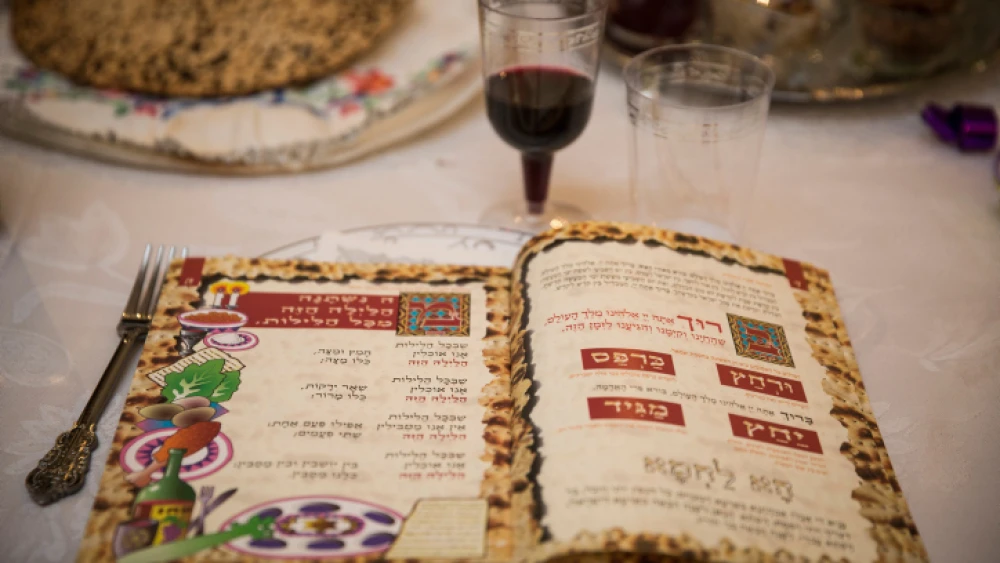
First, because of the mass lockdowns this year, many of us will be separated from our friends and families during the seder meals. That’s a painful thing, but can you see the silver lining?
How about the fact that there will be infinitely more seder tables this year than ever? Smaller ones, to be sure, even lonely ones, but it’s extraordinary to think there will be more seder tables and readings of the Haggadah in 2020 than at any moment in Jewish history.
It’s customary before Passover to do a thorough cleaning of our homes, including getting rid of bread, as we prepare to eat the humble matzah and enter a holier space during the eight days of the holiday.
Well, guess what has been happening to Planet Earth over the past few weeks? That’s right, it has been undergoing an epic spring cleaning. With transportation and economic activity at a virtual standstill, pollution levels have been drastically reduced.
As far back as March 19, the BBC was already reporting that “Levels of air pollutants and warming gases over some cities and regions are showing significant drops as coronavirus impacts work and travel.”
Talk about a silver lining: While we were cleaning our homes for Passover, a global virus has forced humanity to clean up the planet. If they could speak, I would imagine the rivers, mountains, trees and skies would all be saying: “Thanks for the holiday!”
A third silver lining is about human connection. By being forced to physically separate from those we love, we have fought back by doubling down and tripling down on those connections. My siblings and I gather every Friday on FaceTime to sing the Shabbat blessings to my mother, who is alone in her home in Montreal. This brings her immense joy. The virus can separate us physically, but emotionally, it is bringing us closer.
And what is Passover but a time to reaffirm our connections—to our families, our communities, our ideals?
It’s easy to take people for granted when you see them all the time. This year, no one is taken for granted, present or not. If I can’t spend Passover with so many people I love, you can be sure I will be thinking about them. Our seder tables will be smaller, but our hearts will be bigger, filled with renewed love for those who can’t join us and those who can.
Finally, we are seeing enormous pain and human devastation around us. Caring for the stranger and the vulnerable is an essential Jewish ideal which we honor at Passover. If we come out of these pandemic times with greater compassion for the less fortunate, that would be the greatest silver lining of all.
A tiny virus has humbled us and brought darkness to our world. This darkness is real, certainly, but it will end, however long it takes.
It’s up to us to make sure the silver linings endure.
Happy Passover!
David Suissa is editor-in-chief and publisher of Tribe Media Corp and Jewish Journal. He can be reached at davids@jewishjournal.com.
This article was first published by the Jewish Journal.



