The jihadist war being waged by radical Islamist groups across the globe has never stopped at the gates of holy sites and places of worship. Indeed, worshippers in these places have become legitimate and convenient targets for the jihadists in the Middle East, Africa and Asia—as we learned from the recent massacre in Sri Lanka—and in recent years in Europe as well.
Minority communities, mostly Christians, are persecuted in large portions of the Islamic world, and the tolerance once shown to Jews and Christians has now been replaced by extremism threatening the continued existence of Christianity in these places. Some 70 years after the end of Jewish life in Iraq and Syria due to persecution and expulsions, the Middle East’s Christian community is now disappearing.
The Islamic State group has engaged in the systematic destruction of churches in the territories it has held, but churches are attacked and often burned as a matter of routine in other Arab and Muslim countries, which are struggling, despite the efforts of their rulers, to protect their Christian minorities. The extremists also don’t spare mosques that don’t share their radical views and have targeted them in tens and hundreds of attacks within the framework of jihad.
In light of these attacks, Europe’s voice has barely been heard. Due to their desire to maintain political correctness, European governments have failed to stand in defense of Christian communities in the Middle East, Asia and Africa, out of fear they would be perceived as enemies of Islam.
It’s interesting to note that radical Islam has found a partner in the form of the neo-Nazi far-right, whose members are behind hate crimes against Jewish synagogues, for example the Tree of Life synagogue in Pittsburgh, but also against Muslim mosques, the most recent case being in New Zealand. In the Israeli context, these two camps are joined by the far-left, which is flooding Europe with a tidal wave of anti-Israel and anti-Semitic sentiment.
Jihad, however, made its way to European shores a while ago. Alongside numerous terrorist attacks, it has been reported in recent years in France alone that hundreds of churches have been attacked by extremists, the majority of them Muslim. The authorities in Europe silence this, too. They apparently believe the most effective way to contend with extremism and terrorism is to ignore and contain it, in the hope that it will simply disappear.
The question of Europe’s approach to radical Islam has resurfaced in the wake of the fire at Notre Dame Cathedral in Paris, one of France’s most important historical and religious symbols. The reason for the blaze is still unknown, and it could be that a technical mishap—the site was under renovation—was behind the fire.
Yet it was fascinating to see the outrage in Europe toward anyone who hinted at the possibility of arson, perhaps by extremists. After all, as stated, in France alone hundreds of churches have been attacked in recent years—and threats were made to target Notre Dame. No one is allowed to suggest this possibility, however. This is also the approach, particularly in France, to any terrorist attack that takes place on the continent, where the jihadist aspect is blurred and disregarded.
Europe still believes that burying its head in the sand is the best way to cope with the challenge posed by radical Islam, but time and again we see that denying the existence of a problem doesn’t solve it.
We can assume the problem will only worsen in light of Europe’s failure to absorb the waves of Muslim immigration to the continent. These immigrants currently represent less than 5 percent of the entire population of Europe, but that could spike to 20 percent and even a quarter of the population due to low natural birth rates among native Europeans. And the ratio of Muslims in some large European cities, such as Paris or Brussels, is already around 20 percent or higher. An effort to absorb these immigrants and accommodate them across the continent—while also fighting radical Islam with determination—is, therefore, the order of the day, but in Europe, no one is ready to acknowledge this challenge, let alone tackle it.
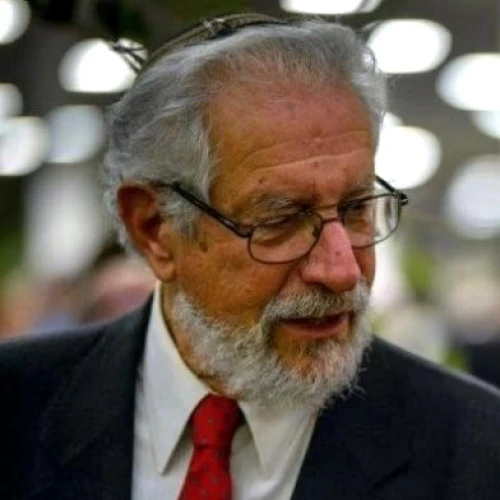
Eyal Zisser is a lecturer in the Middle East History Department at Tel Aviv University.
This column first appeared on Israel Hayom.