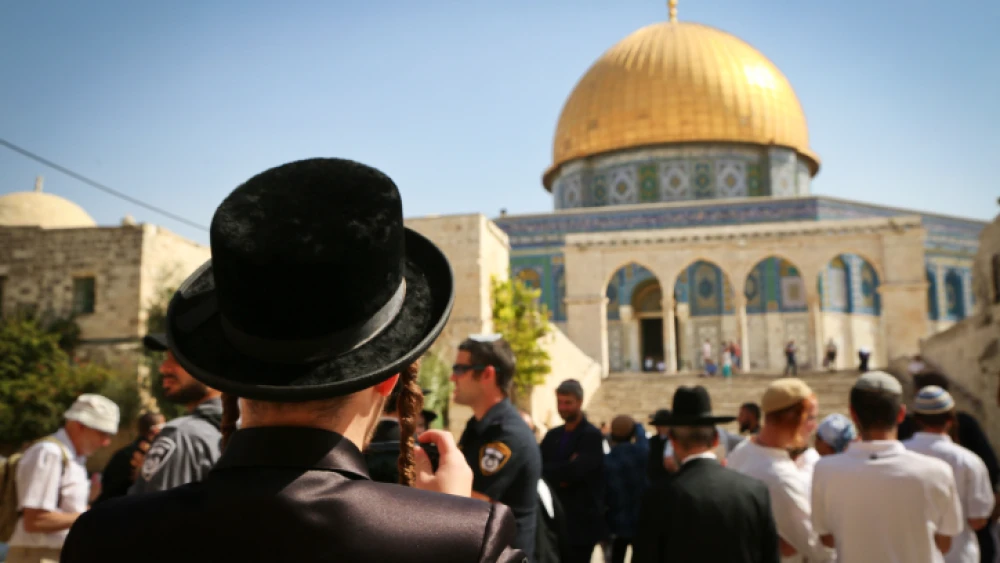
A Herodian-era stone dislodging from the upper part of the Western Wall, even if it miraculously avoided hitting anyone, isn’t some minor event. The incident highlights, first and foremost, the failures to enforce Israeli sovereignty on the Temple Mount and its surroundings.
For years now, Israel has been giving into the whims of the Muslim waqf and Jordan, who object on political and religious grounds to Israeli engineers repairing cracks, protrusions, rockfalls and the destabilization of stones in the Temple Mount compound walls. Now it turns out that playing politics means playing with fire.
Israel erred in making Jordan the caretaker of the southern and eastern walls of the Temple Mount compound, both of which now bear serious cracks. The late Shuka Dorfman, who was head of the Israel Antiquities Authority when that decision was made, asked that IAA personnel and Israeli laborers be allowed to repair the walls. In vain, he protested then-Prime Minister Ariel Sharon’s decision to let Jordan carry out the work.
Israel has been punished for that mistake twice: first, when the ugly patches on the Temple Mount wall—which do not meet the criteria for archaeological preservation work—were revealed; and later when the dirt embankment and the path leading to the Mughrabi Gate collapsed. That gate, at the top of the Western Wall, was the only entrance to the Mount that Jews and tourists could use.
After the embankment crumbled, Israel slapped together an unaesthetic temporary wooden bridge. The government planned to have it replaced by a permanent, attractive structure, but the Jordanians intervened and opposed the move, arguing that the same rules must apply to all the Temple Mount walls—that if they had been made responsible for the other (eastern and southern) edifices, they must be in charge of the Western Wall as well.
Israeli Prime Minister Benjamin Netanyahu gave in. He shelved the plan for a permanent bridge and complied with Jordan’s demands, even when the kingdom objected to the removal of piles of trash and construction rubble that had simply been covered by a “temporary” metal sheet placed against the Little Western Wall (a section of the Western Wall that lies in the Muslim Quarter of the Old City). The garbage and metal sheet are still there.
The lack of inspection and engineering work in the area where the stone came loose is also related to the same “religious-political restrictions,” but we cannot accept it any longer. Similar objections from the waqf almost allowed Solomon’s Stables to fall apart in the early 2000s, when the waqf put off urgent structural work at the eastern wall of the Temple Mount compound. Israel came to its senses at the last minute and forced the waqf to cooperate.
Similar restraints could have led to a disaster last week, and now is the time to take action. Israel is the one that should be inspecting and carrying out any necessary structural work on the Temple Mount walls. Various factors affect their stability: the waqf’s plant watering regime on the Temple Mount plaza, unusually rainy winters, earthquakes and, of course, the natural wear-and-tear typical to sites of this age.
If there is any truth to the libelous Muslim claims that “Al-Aqsa is in danger,” it lies with the obstacles the Muslims themselves put in the way of caring for the Temple Mount walls. Israel has to throw off these pressures, because the day that “Al-Aqsa” becomes unstable, or parts of the Western Wall collapse, the world will see it as Israel’s fault.
Israel is the sovereign entity in Jerusalem and on the Temple Mount—not the waqf and not Jordan.
Nadav Shragai is a veteran Israeli journalist.