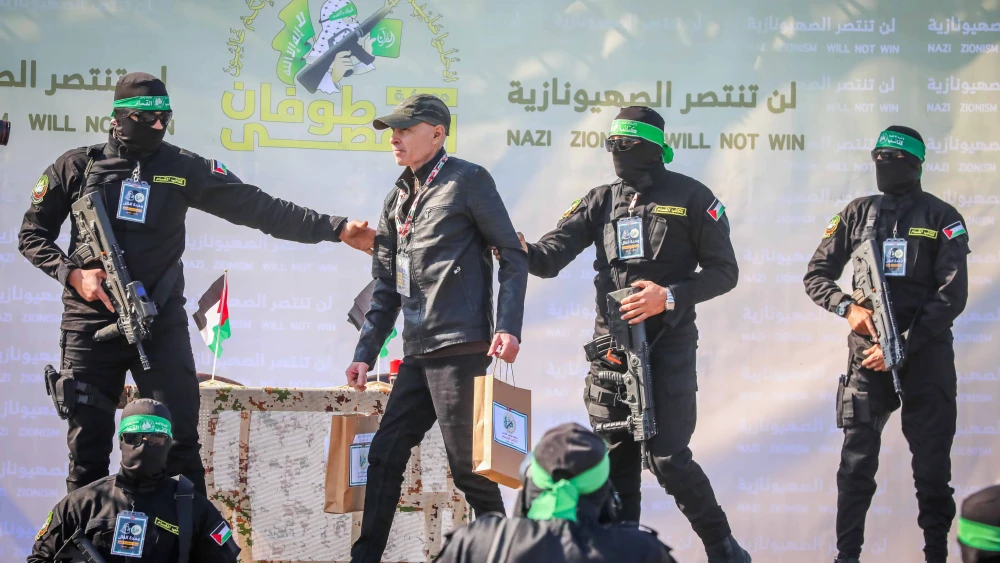
Amid the ceasefire in Gaza and the release of hostages by Hamas, new details emerged on Sunday regarding the terrorist group’s “Shadow Unit,” which is responsible for holding Israeli captives in the Strip.
Saudi newspaper Asharq Al-Awsat on Sunday published an extensive report on the unit, which Hamas sources told the outlet was created in 2006 following the abduction of Israeli soldier Gilad Shalit.
The unit’s existence was only revealed in 2016—five years after the deal for Shalit’s release—when footage from his captivity in Gaza was published.
Terrorist sources told the Saudi paper that the unit was formed about three months after Shalit’s abduction, following a series of Israeli attacks on locations where he had been hidden. Initially, the unit was composed of highly experienced terrorists, but over time, others were recruited, including members of the Hamas intelligence apparatus, its Nukhba force and other divisions. According to the report, these operatives received intelligence and technological training.
Hamas sources also stated that two of the group’s senior leaders (both of whom were killed by Israel during the war), Mohammed Deif and Yahya Sinwar, were behind the decision to establish the unit. They added that most of the unit’s original operatives were from the Khan Yunis area.
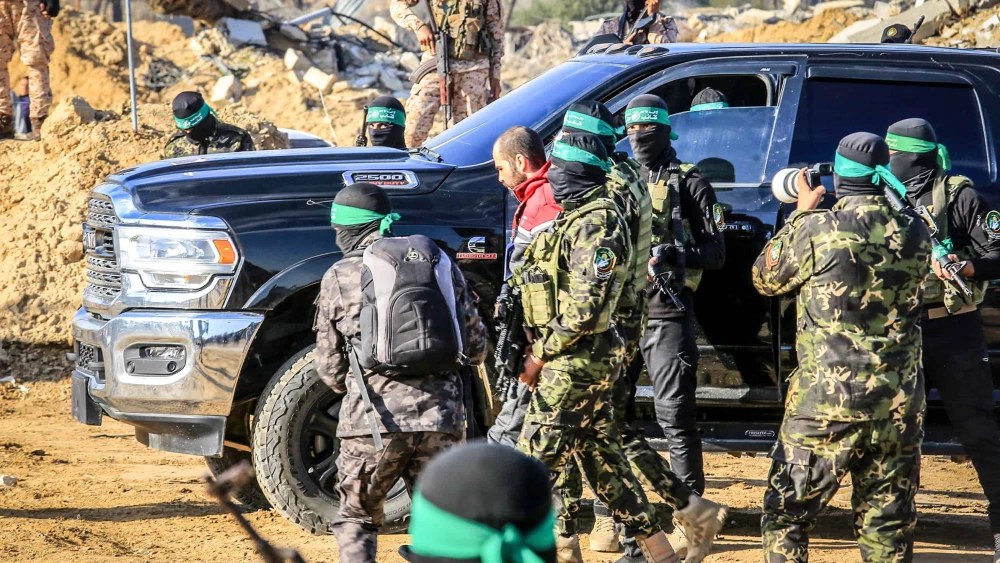
According to the report, Shadow Unit operatives were also involved in launching rockets, digging tunnels and other tasks, as their primary role was not always needed. During the war, sources claimed that unit members received “round-the-clock instructions” to move hostages from place to place, both above ground and through tunnels. Hostages were sometimes dressed in Arab women’s clothing to facilitate their movement, according to the report.
Hamas sources also revealed that Israeli strikes on the terror group’s tunnel system forced operatives to transfer hostages from underground passageways to safe houses controlled by the Shadow Unit. Another reported method involved using vehicles to create a diversion while transferring hostages to different locations. Additionally, some hostages were moved between identical vehicles of the same make and color, with multiple cars departing simultaneously to confuse trackers.
Meanwhile, following the public appearance of Hamas’s Shati Battalion commander Haitham al-Khujari on Saturday, Hamas sources told the Saudi outlet that he had survived three assassination attempts and was seriously wounded in one of them. However, they stated that he had since recovered.
Originally published by Israel Hayom.