Newsletter
Newsletter Support JNS

Israel sends human help, medical devices to Romania hard-hit by COVID

The country requested help via the E.U. Civil Protection mechanism; Denmark, Holland, Poland, Italy, Austria, France, Germany and Serbia all stepped up to the plate.

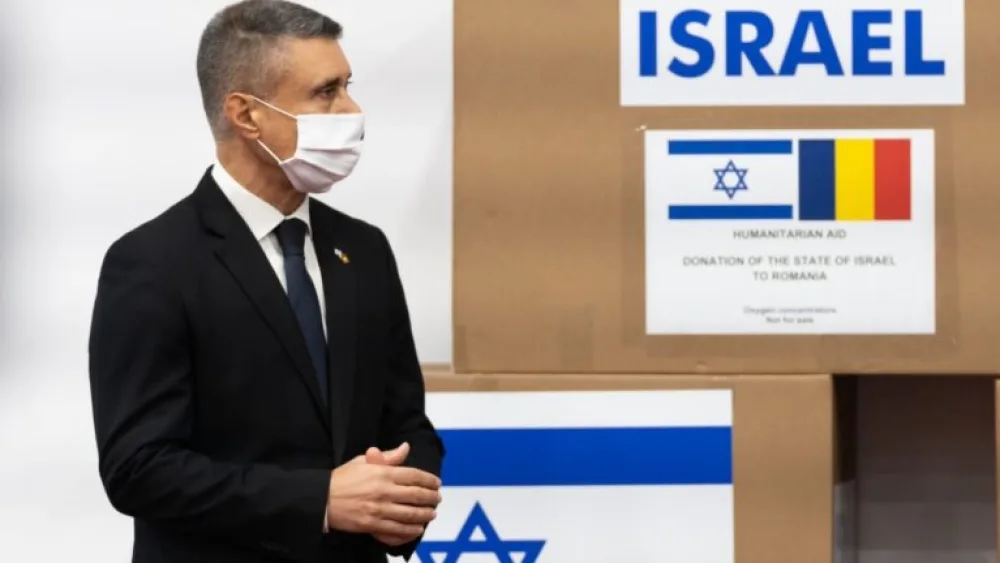
David Saranga, Israel's ambassador to Romania, with boxes of oxygen concentrators donated by the embassy along with AFI Europe Romania and Elbit Systems Israel. Photo courtesy of the Israeli embassy in Bucharest.
David Saranga, Israel’s ambassador to Romania, with boxes of oxygen concentrators donated by the embassy along with AFI Europe Romania and Elbit Systems Israel. Photo courtesy of the Israeli embassy in Bucharest.

The fourth wave of COVID-19 has hit Romania hard. The country is confronting its worst wave of infections since the pandemic started nearly two years ago, with 500 deaths a day and more than 10,000 new infections every 24 hours. Romania’s health system is starting to collapse.

Israel is coming to the aid of Romania, offering both human and technical help via the Israeli embassy in Bucharest.

Earlier this week, Israel sent 40 oxygen concentrators to Romania. The delivery of the devices was made possible with help from AFI Europe Romania and Israel’s Elbit Systems.

“Romania is going through a difficult period,” said David Saranga, Israel’s ambassador in Romania. “COVID patients need special medical attention and these oxygen concentrators will help them in the healing process.”

In addition, a medical team from Israel was sent to Bucharest on Sunday to share best practices with physicians in Romania. The team includes three doctors, a chief nurse specializing in COVID-19 and a logistics expert.
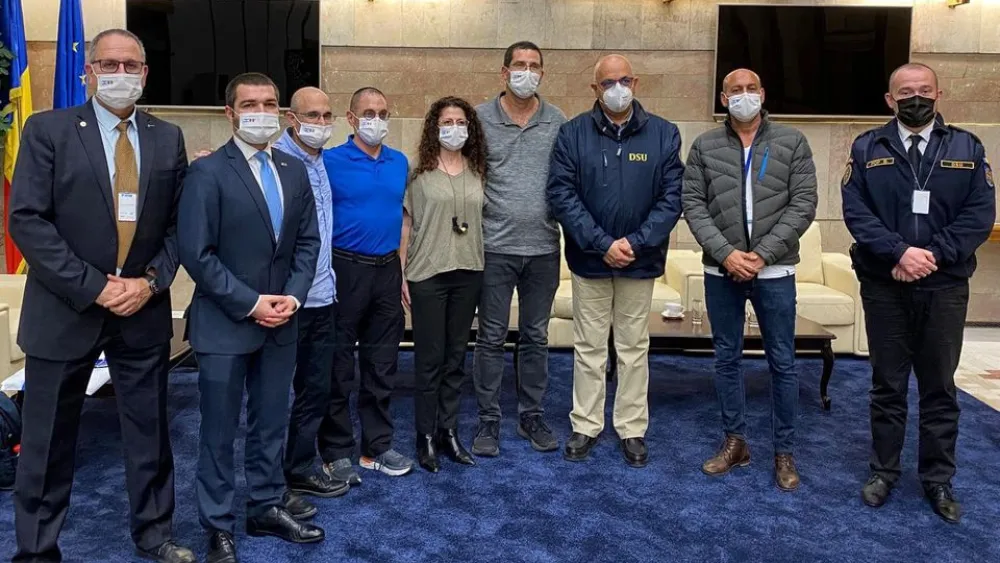
A medical team from Israel, sent to Bucharest on Nov. 7 to share best practices with physicians in Romania. Photo courtesy of the Israeli Embassy in Bucharest.
A medical team from Israel was sent to Bucharest on Nov. 7 to share best practices with physicians in Romania. Photo courtesy of the Israeli embassy in Bucharest.

The country requested help via the E.U. Civil Protection mechanism. Denmark, Holland, Poland, Italy, Austria, France, Germany and Serbia all stepped up to the plate. Moldova also sent a team of doctors and nurses to work at the hospital in Letcani, in Romania’s northeastern county of Iasi, where COVID patients are treated.

Although cases of infection in Romania seem to have plateaued, the number of patients dying from the disease is still high. On Nov. 2, for example, the death toll reached an all-time record: 591 in 24 hours. The country’s death toll since the start of the pandemic has reached 48,664, authorities reported.

Romania has a population of 19.2 million—about double that of Israel, which also saw new cases of infection skyrocket to 10,000 a day during the height of the fourth wave, although total deaths remained much lower, at 8,109.

This article was first published by Israel21c.

Experts at JNS Summit examine claims of institutional bias against Israel at the United Nations.

The former IDF chief and defense minister told JNS that the Jewish state must remain strong against Iran and its proxies while building domestic consensus and new regional alliances.
“I didn’t serve this country to watch it get sold out by a career politician, who would rather protect his party than his constituents,” Cait Conley stated.
“I have to get even more involved because, apparently, the progressive movement is taking such a deep root in New York City, we have no choice,” Sid Winston, of Brooklyn, told JNS.
Darializa Avila Chevalier’s victory over incumbent Rep. Adriano Espaillat caps off a trio of wins for candidates who made opposition to Israel a focus of their campaigns for New York congressional seats.
AIPAC spokeswoman Deryn Sousa told JNS that Adrian Boafo “has made clear his vision to carry forward the strong pro-Israel legacy of Congressman Steny Hoyer, one of Congress’s most steadfast champions of the U.S.-Israel relationship.”
Benny Gantz, JNS editor-in-chief Jonathan S. Tobin, Gilad Erdan, Mosab Hassan Yousef, Nissim Black and leading voices in security, diplomacy, media, law and Jewish communal affairs headline the summit’s third day in Jerusalem.
