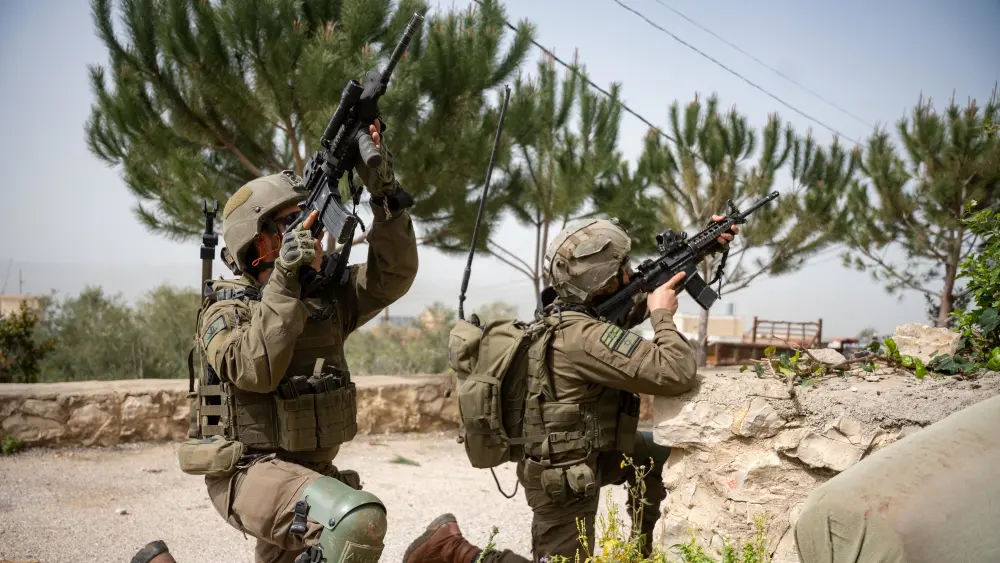
The Israel Defense Forces has killed more than 1,000 Hezbollah operatives since the Iranian-backed terrorist group joined the war on March 2, “and that number will continue to rise,” IDF Chief of Staff Lt. Gen. Eyal Zamir said on Sunday.
The military is striking Hezbollah “with determination, extensively and across multiple fronts,” Zamir said during a visit to Ras el-Bayada, a strategic coastal headland located near Tyre that is the northernmost point in Southern Lebanon where Israeli soldiers are currently operating on the ground.
The campaign against Hezbollah targets “its operatives, its command-and-control centers, its terrorist infrastructure, its military capabilities, its weapons, its financial capabilities and more,” he said during a situational assessment with fellow military officials in the area.
“Every terrorist target and any target that supports terrorism in Lebanese territory will be struck,” Zamir vowed, adding that the entire area south of the Litani River has been turned into an “operational zone” where the IDF will remain until it is “free of threats to Israel and our northern communities.”
“We issued advanced warnings to the residents of Southern Lebanon for their protection and to enable freedom of military operation,” he said. “We will remain on this line as long as required.”
Hezbollah began firing rockets and suicide drones at Israel on March 2, in retaliation for the Jewish state’s targeted killing of Iranian Supreme Leader Ali Khamenei. Khamenei was killed in the opening strikes of “Operation Roaring Lion/Epic Fury” against the regime on Feb. 28.
In response to the terrorist organization’s violation of the U.S.-brokered Nov. 27, 2024, truce agreement, Jerusalem launched an aerial campaign against Hezbollah and ordered IDF troops to advance and take control of additional areas in Southern Lebanon to halt cross-border attacks.
Inside a school
Meanwhile, soldiers of the IDF’s Golani Brigade located large amounts of combat equipment inside a school in Southern Lebanon, including Hezbollah military gear and uniforms, graduation certificates of its elite Radwan Force, RPG operation manuals, surface-to-surface rockets and launchers, the IDF announced on Sunday, noting that “this all was found alongside packages that were sent from Iran to Shi’ite villages in Lebanon.”
Close the school, troops discovered an additional cache of military equipment and weapons, including military vests and helmets, explosive devices and anti-tank missiles, it said.
כוחות צוות הקרב של חטיבת גולני, בפיקוד אוגדה 36 ממשיכים בפעילות הקרקעית הממוקדת להרחבת מרחב האבטחה.
— צבא ההגנה לישראל (@idfonline) April 5, 2026
הכוחות איתרו בתוך בית ספר ציוד רב של ארגון הטרור חיזבאללה הכולל: ציוד צבאי ומדים של ארגון הטרור, תעודות סיום הכשרה של יחידת 'כוח רדואן', מדריכי הפעלת רקטות 'RPG', רקטות קרקע-קרקע… pic.twitter.com/6dDoEMJ92T
In a separate statement on Sunday, the IDF announced that the Israeli Air Force was continuing strikes in the Beirut area, including on Hezbollah command centers and its “significant financial infrastructure” in the Lebanese capital.
“In recent days, the IDF struck two gas stations of the Al-Amana company, which were controlled by Hezbollah,” it stated. “The gas stations were used to refuel trucks transporting weapons and Hezbollah terrorists, while generating millions of dollars in profits that funded the organization’s terrorist activity.”
Since the beginning of “Operation Roaring Lion,” the IDF has struck more than 15 gas stations linked to Hezbollah, the military revealed.
צה"ל תקף בביירות מפקדות ותחנות דלק ששימשו את מחבלי ארגון הטרור חיזבאללה
— צבא ההגנה לישראל (@idfonline) April 5, 2026
צה"ל ממשיך להעמיק את הפגיעה בארגון הטרור חיזבאללה בביירות.
צה"ל תקף בימים האחרונים שתי תחנות דלק של חברת "אלאמאנה", שנשלטו על ידי ארגון הטרור חיזבאללה ושימשו כתשתית כלכלית משמעותית לפעילות טרור.
תחנות הדלק… pic.twitter.com/jSXTmXkBkQ
Other attacks in Beirut targeted command centers “from which Hezbollah terrorists planned to carry out terror attacks against IDF soldiers and Israeli civilians,” according to the army.
“The IDF will continue to operate decisively against the Hezbollah terrorist organization after it chose to join the attack on Israel and operate under the auspices of the Iranian regime,” the statement concluded.
תיעודים חדשים מתקיפות חיל האוויר בלבנון: הושמדו שורת תשתיות טרור ומחסני אמצעי לחימה שהוסתרו בלב אוכלוסייה אזרחית ברחבי לבנון
— צבא ההגנה לישראל (@idfonline) April 6, 2026
במסגרת המאמץ לפגיעה בתשתיות הטרור של חיזבאללה וחיזוק קו ההגנה הקדמי, במהלך הימים האחרונים, חיל האוויר זיהה ותקף באופן ממוקד, משגרים ומחסני אמצעי לחימה… pic.twitter.com/Yeee0YtaEX
During a televised Easter address on Sunday, Lebanese President Joseph Aoun reiterated his call for negotiations with Israel to stop the fighting.
“It may be true that Israel wants to operate in Southern Lebanon as it does in Gaza, but our duty is not to drag it into doing what it does in Gaza,” Aoun said. “Negotiations are not surrender. Gaza is destroyed, and more than 70,000 have been killed, and only afterward do they negotiate. We have no choice but to negotiate to stop the tragedy in Lebanon.”
Aoun again accused Hezbollah and Iran of dragging Lebanon into the war, saying anyone who “harms civil peace is serving Israel—and that is worse than the Israeli attacks.”
Lebanese Prime Minister Nawaf Salam on March 2 came out against attacks launched from Lebanese territory without approval from legitimate state institutions as he called for “limiting Hezbollah’s activities and obliging it to surrender its weapons.”
Two weeks ago, Hezbollah Secretary-General Naim Qassem slammed demands by Lebanon’s government that the group disarm as required by the ceasefire deal.
“When the exclusivity of weapons is demanded [by the Lebanese Armed Forces] to meet what Israel desires while the occupation and aggression continue, it is a step toward Lebanon’s demise and the realization of Greater Israel,” he claimed, peddling false assertions that Jerusalem is seeking to expand its borders to include the Land of the Cedars.