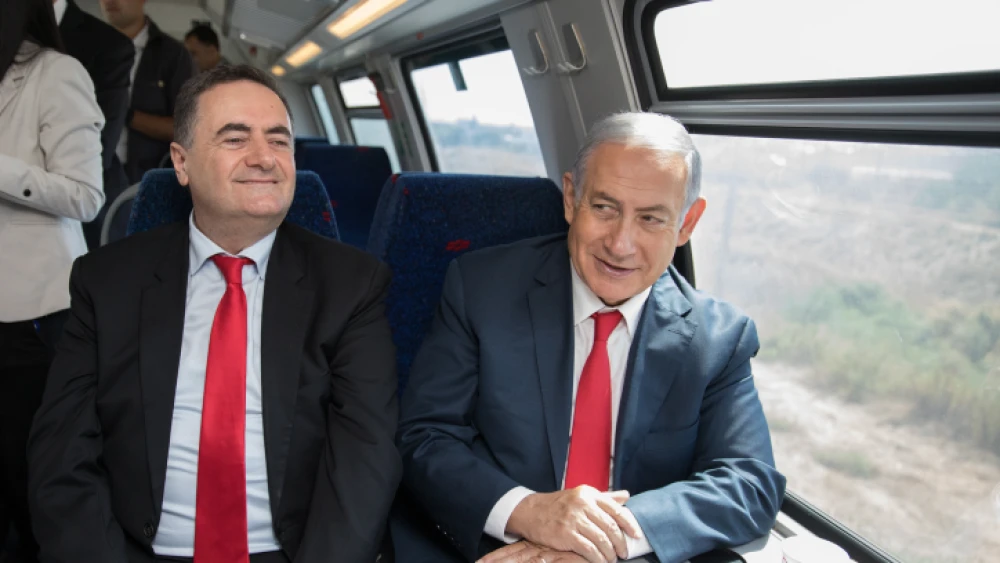
Transportation Minister Israel Katz departed Sunday evening for Oman, nine days after Israeli Prime Minister Benjamin Netanyahu visited the Gulf emirate.
Katz, who also holds the Intelligence Services portfolio, was expected to attend an international transportation conference in Oman and hold other meetings with senior officials.
During his visit, Katz will present the Tracks for Regional Peace initiative, which he developed together with Netanyahu. The initiative outlines plans for a railway that would link Israel to Persian Gulf counterparts states.
“This will be a historic visit,” Katz said before his departure. “It will strengthen ties. My intention is to present and promote our joint Tracks for Regional Peace initiative to connect the Gulf States, and Israel and the Mediterranean Sea via a route bypassing Iran. Normalization through strength; that’s important, it’s right and it’s possible.”
In late October, Netanyahu met with Omani leader Sultan Qaboos bin Said. The prime minister and his wife, Sara, were invited by the sultan after prolonged, behind-the-scenes talks between representatives of both countries.
Netanyahu’s visit to Oman was the first official meeting between the two countries’ leaders since 1996.
The prime minister was accompanied on his trip by Mossad director Yossi Cohen, national security adviser Meir Ben-Shabbat, Foreign Ministry director general Yuval Rotem, bureau chief Yoav Horowitz and military secretary Brig. Gen. Avi Bluth.