Campus Antisemitism

Karen Parry, executive director of Hillel of San Diego, said the center will be “a hub for Jewish life and is critical to ensuring that students have a place to gather, connect and learn.”

This incident came days after university officials announced a new initiative to faculty and staff that seeks to “understand how anti-Semitism manifests itself at Tufts.”

“This program is designed to give participants a practical way in which they can mark the memory of those who perished and add more positivity and light to this world,” said Rabbi Levi Slonim.

Dean Terry Rhodes noted that the university provides “extra structural support” to classes with “controversial” content.

Student corps members will participate in a full-year cohort experience with a choice of six issue-based education cohorts.
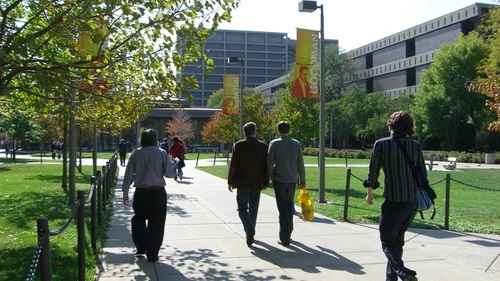
According to the Canary Mission, the UIC branch of Students for Justice in Palestine stepped up its efforts in 2020-21, even attacking the wider Chicago Jewish community.

Among the 312 enrolled students and 194 alumni from different Jewish affiliations who took part in the survey, 95 percent said anti-Semitism was an issue on their current or former college campus.

“They did not choose any other place or event,” said the group Action and Communication on the Middle East, “but precisely the location where more than a million people were murdered.”

Alums for Campus Fairness said that Students for Justice in Palestine’s “history of activism often goes far beyond legitimate criticism of Israel, descending into outright anti-Semitism.”

“It’s no coincidence that anti-Israel forces focus on schools with more Jewish students to try to poison their minds about Israel,” says Hillel International president and CEO Adam Lehman. “Like the child at the seder who doesn’t even know how to ask, many of our kids are vulnerable.”
StandWithUs is urging administrators at the University of North Carolina to monitor what they say is an anti-Israel course this fall and make recordings of the class available for the public.

While they are looking forward to some sense of pre-pandemic normalcy at their schools, they also risk facing BDS and pro-Palestinian activists with renewed energy against the Jewish state.