When Lt. R. (name withheld for security reasons), an Israel Defense Forces’ special operations officer serving in the central West Bank, first emigrated to Israel aged 18 from Long Island, N.Y., she decided that the time had come to “understand for myself what was happening here,” the officer told JNS.
Today, Lt. R. serves in the Efraim Regional Brigade—responsible for securing the Qalqilya region—and works on the frontlines of the IDF’s campaigns against terrorist plots, illegal weapons and terror financing.
After four years of military service, which included serving in an operations room on the Syrian border, and providing humanitarian relief to Syrian civilians, Lt. R. said, “Today, I think I understand what is happening, and I am a part of it.”
She arrived in Israel through the Garin Tzabar program run by the Israeli Scouts (Tzofim) movement that places new immigrants in kibbutz communities before they enlist for military service. She then joined the IDF, at first becoming an infantry firearms instructor.
“I then asked to join the operations world so that I could be in the operations room, where I could be linked to the sectors and experience what is taking place,” related Lt. R. She served in the elite combat engineering unit known by its Hebrew acronym, Yahalom, and then transferred to the operations room on Israel’s border with Syria.
“This was an incredible role,” the officer said. “Under Israel’s humanitarian assistance program, which just recently ended, I played a big part in coordinating the transfers of food and medicines into Syria, and the absorption of Syrian civilians injured in the civil war for Israeli hospital treatment. Once a week, there was a fun day for Syrian children.”
Lt. R. could have completed her IDF service at this stage but chose to sign on for another year, transferring to the Efraim Regional Brigade.
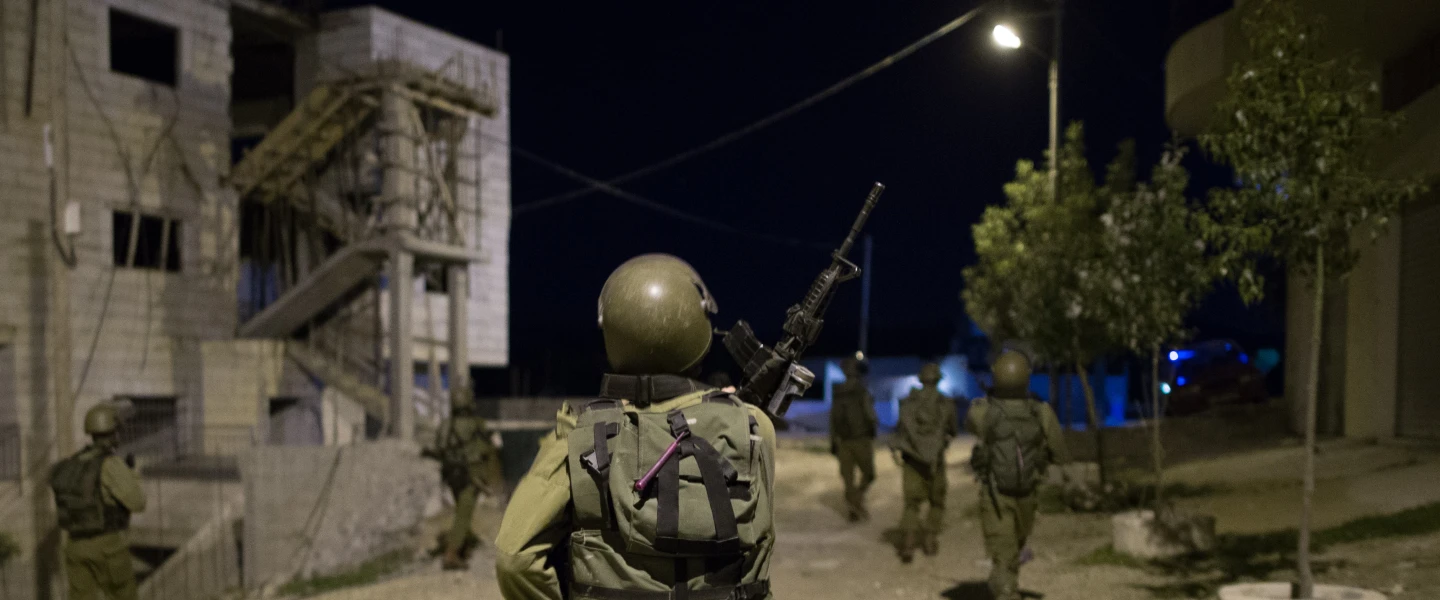
Now her role is to assist the IDF’s activities within her brigade’s sector, and she is busy throughout day and night. “During the day, I coordinate activities, and at night, I oversee them from the command post, making sure they proceed correctly,” she said. “I’m awake without stopping day and night; in between, I find a little time for rest.”
‘The smallest thing can trigger an explosion’
The Efraim Regional Brigade conducts daily security missions focused along seven campaigns. These include seizing terrorist finances. The brigade intercepted over 120,000 shekels (nearly $35,000) intended for members of terror organizations in 2018. The IDF moved the money into bank account dedicated to building Palestinian civilian infrastructure and creating jobs for Palestinians.
“None of it goes to Israel,” Lt. R. stressed.
A second goal of the brigade is disrupting incitement to violence. “These are people who we know with certainty are encouraging others to conduct armed operations and terrorism against the state,” she said. The brigade also arrests “anyone planning attacks, members of terror organizations in the sector.”
On the law-enforcement side, the brigade stops illegal crossings by workers from West Bank villages into Israel, helping the Israel Police identify vehicles that transport them. It also has begun working to tackle violent car-jackings in the area. “People have been taken out of their cars and beaten before their cars were stolen. This is a danger affecting Israelis in the area. I have seen a badly beaten car-jacking victim. It was a shocking incident,” she recounted.
The brigade works to tackle unorganized Palestinian violence, which can take the form of youths hurling firebombs and rocks at Israeli vehicles traveling on roads in the area. “On highways, hitting a car with a rock can cause very dangerous accidents. We work hard in the sector to stop this,” said the officer.
Finally, the brigade launches an average of five raids a week to seize illegal weapons. In 2018, it found 53 firearms, ranging from M-16s, heavy machine guns and improvised locally produced handguns.
“Our campaign against weapons is very big. We work very hard to stop this,” said Lt. R. The Efraim Brigade arrested 716 suspects in 2018, sending them to either the Israel Police or the Shin Bet domestic intelligence agency for further questioning.
“The Judea and Samaria area is very dynamic in my view. It can be calm for a long time, and then erupt in a second. The smallest thing can trigger an explosion. The smallest incident of violence between a settler and a Palestinian can trigger it. A terror attack can lead to others,” Lt. R. said, describing the volatility of the region.
While 2018 has not been free of deadly attacks, the military has prevented many more of them and works around the clock to “prevent friction and thwart incidents,” she stated.
“I chose to be a special operations officer because it is one of the most incredible roles,” she said. “We see the results of our work every day.”