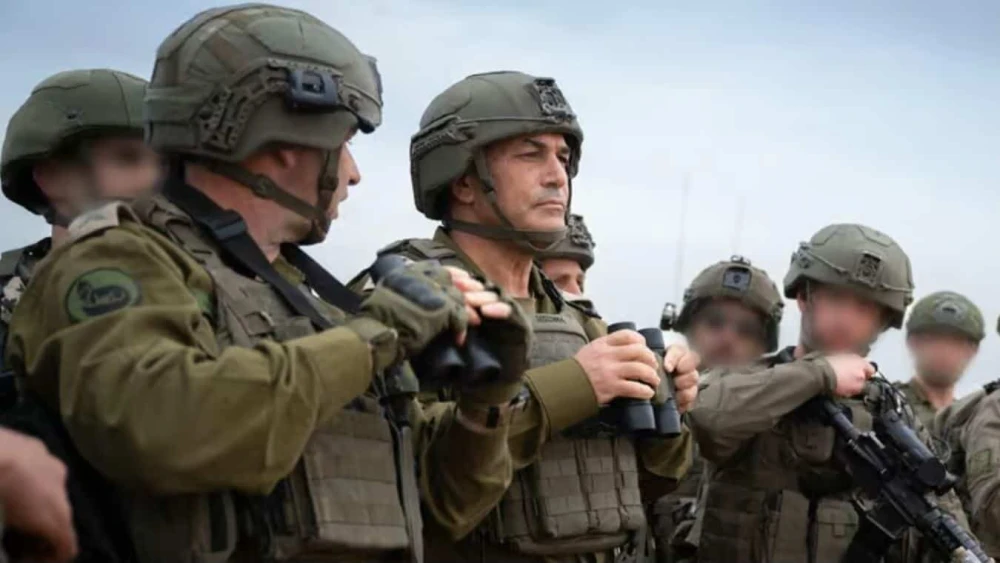
IDF Chief of Staff Lt. Gen. Eyal Zamir has canceled the policy of military “shutdowns” during holidays, in which large numbers of active-duty soldiers are granted leave, Hebrew media reported on Tuesday.
Zamir made the announcement on Monday at an officers’ meeting. He said the decision applies a lesson learned from the Oct. 7, 2023 Hamas invasion, when the terror group invaded sparsely defended bases on the Gaza border and ran rampant through the southern Negev for hours.
“The IDF will be ready the entire year,” he said.
During “shutdowns,” particularly during religious holidays such as Rosh Hashanah and Yom Kippur, IDF bases operate with reduced manpower.
The Oct. 7 invasion took place on the holiday of Simchat Torah, which follows immediately after Sukkot. The IDF was “shut down” and the number of soldiers on bases was low.
Roughly a week ago, the IDF published the core findings of its investigations into the Hamas invasion.
According to Ynet, “One of the scandalous failures that the investigations revealed was the decision five years ago by the General Staff to reduce the number of fighters in the security sector by about half on weekends.”
That decision, which the Southern Command recently admitted was a “mistake,” cost the IDF dearly on Oct. 7. At the Nahal Oz base, 53 men and women were killed.
A Hamas attack booklet recovered at the base noted that only about half of the combat force would be present on weekends.
On March 5, his first day as chief of staff, Zamir set up a team headed by Maj. Gen. (res.) Sami Turgeman to re-examine the IDF’s investigations and present him with the findings.