


The Israel Defense Forces on Saturday killed Hezbollah terrorist Zayn al-Abidin Hussein Fatouni in an airstrike in the area of Jibchit in Southern Lebanon.
According to the military, Hussein commanded an anti-tank unit within Hezbollah’s Radwan Force and had recently been involved in efforts to rebuild the group’s terrorist infrastructure.
“These activities constituted a violation of the understandings between Israel and Lebanon,” the IDF said, referring to the Nov. 26, 2024 ceasefire agreement that ended more than a year of fighting between Israel and Hezbollah.
Also on Saturday, an IDF strike in the Al-Qlaiaah area of Southern Lebanon eliminated Muhammad Akram Arabiya, a Radwan Force commander, according to an IDF statement on Sunday morning.
“Recently, he advanced the reestablishment of Hezbollah’s combat capabilities and took part in attempts to reestablish Hezbollah’s terror infrastructure,” the military stated.
Hezbollah, which is backed by Iran, began launching attacks on Israel in support of Hamas following the Palestinian terror group’s Oct. 7, 2023, massacre.
Since the ceasefire, the IDF has carried out regular operations to prevent Hezbollah from reestablishing its military presence in Southern Lebanon—actions Israel argues are necessary to enforce the terms of the agreement.
On Friday, the IDF targeted two Hezbollah terrorists in Southern Lebanon, killing at least one. The slain terrorist was identified as Abbas Hassan Karky, the logistics commander of Hezbollah’s Southern Front headquarters.
Karky was a relative of Ali Karki, the former commander of Southern Lebanon for the Islamist group, who was killed during the elimination of Hezbollah leader Hassan Nasrallah in Beirut on Sept. 27, 2024.
The second terrorist was targeted in the area of Zawtar al-Sharqiyah. He was involved in efforts to reestablish Hezbollah’s military capabilities in Southern Lebanon, according to the IDF.
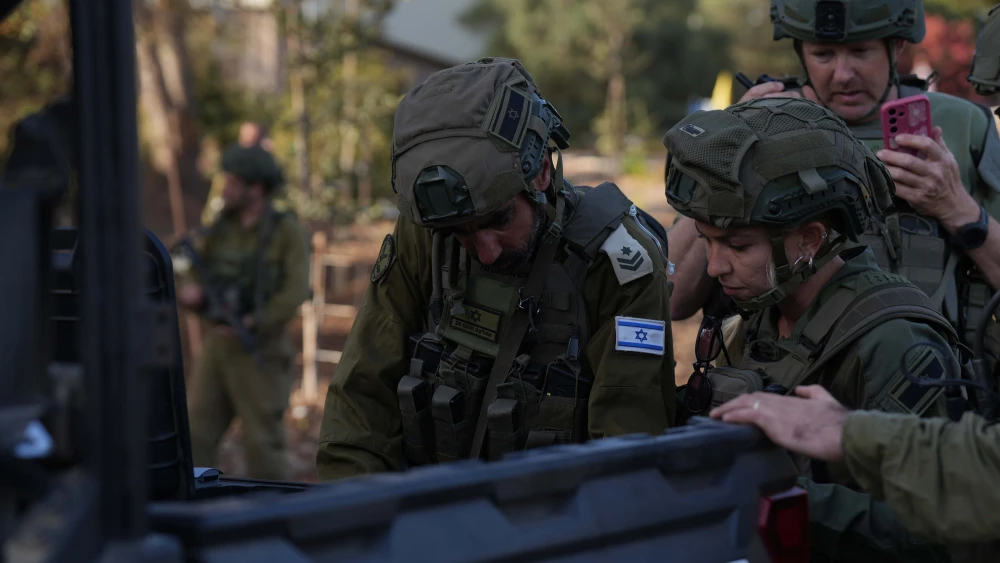
The military on Thursday night completed an intensive five-day division-level exercise along the border with Lebanon, led by the 91st Division and the National Ground Training Center.
It was the military’s largest exercise since the start of war on Oct. 7, 2023.
The drill was designed to prepare for “extreme defense scenarios,” ensure a rapid response to emerging incidents—including reserve troops mobilization and force buildup—and transition to offensive operations, all while applying lessons learned from two years of fighting across multiple arenas, according to the IDF Spokesperson’s Unit.
Although Jerusalem has withdrawn most of its ground forces since the war ended, it still controls five strategic sites in Southern Lebanon. Israeli officials have stated that the IDF will retain these positions until the Lebanese army demonstrates it can maintain security.
Lebanese Foreign Minister Youssef Raggi said on Sept. 9 that the country’s armed forces will have fully disarmed Hezbollah in Southern Lebanon within three months.
Last month, Naim Qassem, the secretary-general of the Iranian proxy, vowed that Hezbollah would not lay down its arms.
In response, President Donald Trump has approved $230 million in funding for Lebanon’s security forces. In an email, a State Department spokesperson said the assistance would support the effort “to assert Lebanese sovereignty across the country and fully implement U.N. Security Council Resolution 1701, the only viable framework for a durable security arrangement for both Lebanese and Israelis.”
The U.N. resolution, adopted in the aftermath of the 2006 Second Lebanon War between Israel and Hezbollah, calls for the terror proxy to disarm and withdraw from Southern Lebanon, with the Lebanese army and the U.N. Interim Force in Lebanon (UNIFIL) tasked with securing the area.



