Newsletter
Newsletter Support JNS

Israel eases restrictions on Gaza, citing ‘relative quiet’

Total number of entry permits raised by 40 percent to 7,000 • Gaza fishing zone extended as part of an Egyptian-negotiated unofficial truce between Israel and Hamas.

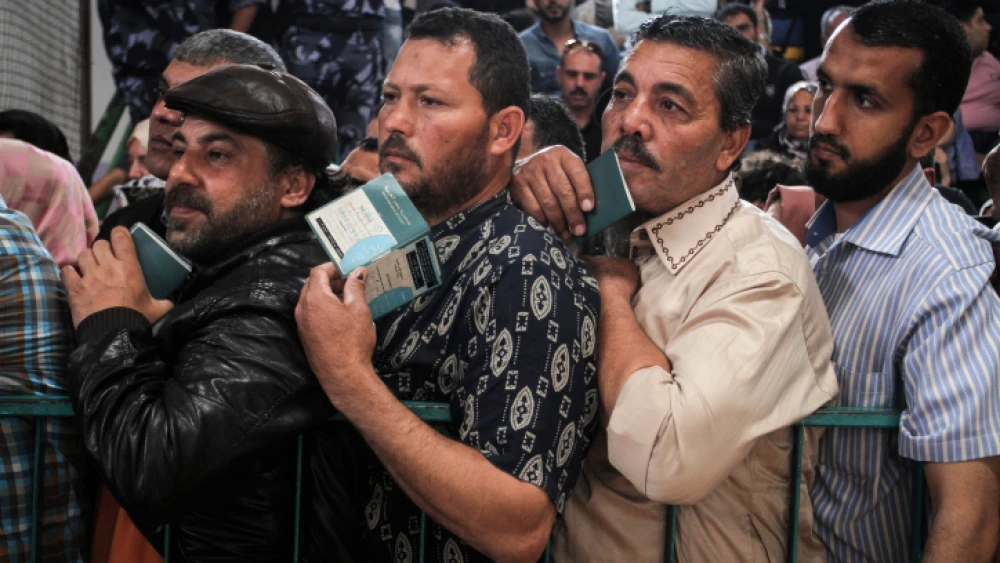
Palestinians wait at the Rafah border crossing with Egypt in southern Gaza after it was opened for two days by Egyptian authorities on May 11, 2016. Photo by Abed Rahim Khatib/ Flash90.

Israel announced on Tuesday that following several days of “relative quiet” from the Gaza Strip, it was easing restrictions on the coastal territory.

According to the Israeli Defense Ministry’s Coordinator of Government Activities in the Territories (COGAT), among the measures taken will be extending the fishing zone off the Gaza coast to 15 nautical miles and issuing 2,000 additional entry permits to Israel, a 40 percent increase, reported Ynet.

The increase raises the total number of permits to an unprecedented 7,000, according to the report.

Gazans entering Israel on Wednesday morning expressed appreciation that Israel had allowed them in.

“Everyone wants to work [in Israel]; everyone wants quiet, and a good life,” said Nahed Halees, who crossed at the Erez border crossing, according to Ynet.

“Everyone tells me, ‘I want to get in [to Israel] for work,’ but I tell them that I can’t get them a permit. More merchants should be allowed out of Gaza to work [in Israel],” he said.

Israel is providing relief to Gaza as part of an Egyptian-negotiated unofficial truce with Hamas, the report noted.

“This is a historic decision that reflects the way we view settlement,” said regional council head Yaron Rosenthal.
SAZF Chairman Craig Pantanowitz urges cabinet ministers to provide evidence or retract suggestions that Israel is linked to anti-immigrant unrest in South Africa.
The prime minister rejected claims that Jerusalem is in a “permanent state of war.”
“We can begin to reconstruct not only how tools were made, but also how technological knowledge moved between regions and how it changed along the way,” said Dr. Gadi Herzlinger of the University of Haifa.
“Throughout their training, the course commanders continued to prepare the next generation of aircrews,” said the air and space arm of the IDF.
“Herzl knew that we would need a defensive force, a Hebrew army that would protect our state from those who wish us harm,” the Israeli premier said.