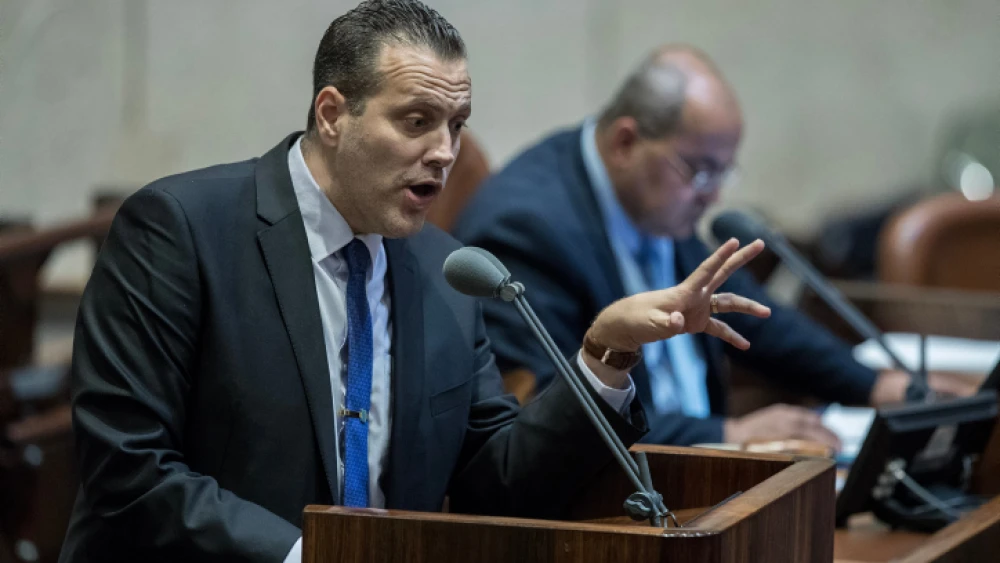
Israeli Prime Minister Benjamin Netanyahu on Tuesday had to step in to prevent furious lawmakers from pursuing the dismissal of Knesset member Miki Zohar as head of the Likud faction and coalition chairman.
Twelve of the 32 Likud MKs signed a petition to fire Zohar, whose style as coalition chair has been slammed as “thuggish.”
In recent weeks, Zohar has threatened to sanction MKs and ministers who go against coalition discipline, and has been locking horns with Finance Minister Israel Katz, a high-profile Likud lawmaker and Netanyahu confidant, even demanding Katz be fired.
The proverbial straw for the ministers and MKs demanding Zohar’s impeachment was his decision Monday to remove fellow Likud MK Yifat Shasha-Biton as head of the Knesset Committee on the Coronavirus Pandemic.
Shasha-Biton has overturned several government decisions on coronavirus policy over the past two weeks, reportedly frustrating the prime minister.
Taking to social media, Netanyahu backed the steps taken by Zohar.
“Likud cannot govern without discipline,” he tweeted. “I ask of all Likud MKs to act responsibly, be diligent about maintaining factional discipline, and to cease the unnecessary infighting.”
Meanwhile, the future of the coalition was once again clouded Tuesday, after the ultra-Orthodox parties warned Netanyahu that unless he passes a state budget, he would have “no business calling us after the next elections.”
Likud and unity government partner Blue and White have been at odds on the question of whether to pass a one-year or two-year budget.
Blue and White demand that Likud endorse a biennial budget, as stipulated in the coalition agreement, but Netanyahu prefers a single-year budget.
Under Israeli law, if a government is unable to pass the annual budget within 100 days of its formation the Knesset must dissolve and new elections must be held.
According to the Finance Ministry, the 2020 budget bill must be approved by Sept. 24 and the 2021 budget must pass its Knesset vote by Feb. 24, 2021.
The ultra-Orthodox parties have expressed concern that unless a budget is passed, the flow of funds to seminary schools and other religious institutions, as well as the stipends paid to yeshiva students, will be interrupted.
This article first appeared in Israel Hayom.