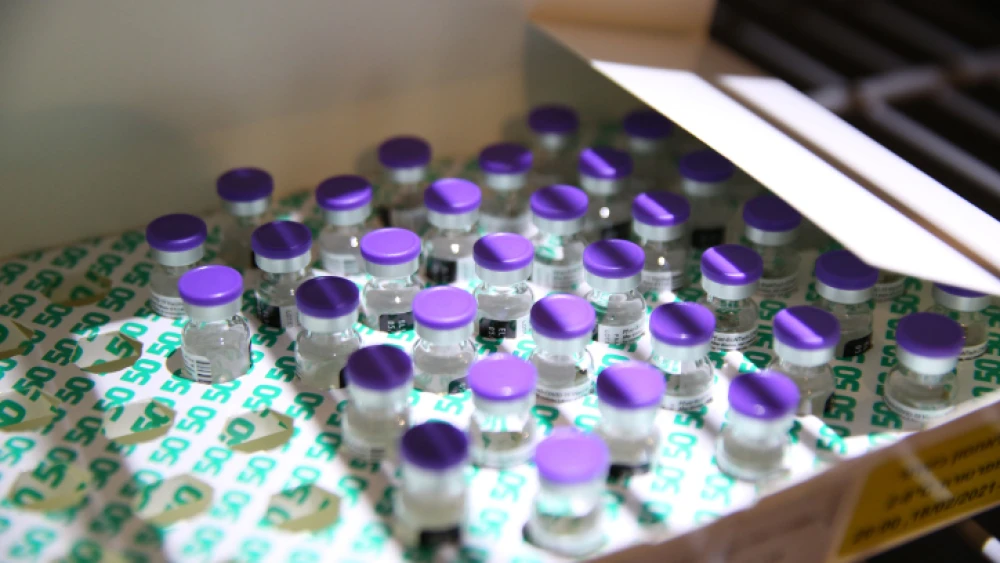
The Knesset Finance Committee has approved the allocation of 2 billion shekels ($600 million) to Israel’s Health Ministry to help it deal with the COVID-19 pandemic, the committee announced on Tuesday.
The money is to be earmarked for those parts of the country’s healthcare system involved with containing the spread of the virus. The bulk of the money, according to the announcement, will finance COVID-19 testing, epidemiological investigations and quarantines. The rest will go to maintaining public health; breaking the chain of infection; upkeeping the logistics surrounding the vaccination drive and centers; and purchasing more vaccines.
So far, Israel has spent NIS 2.6 billion shekels ($789.5 million) on COVID-19 vaccines, according to the statement.
Israel’s Health Ministry, Pfizer and BioNTech said on Thursday that data from Israel’s national vaccination campaign demonstrates that the Pfizer-BioNTech vaccine is 94 percent effective in preventing asymptomatic infections. They also said that Israeli data shows that vaccinations prevented symptomatic disease, severe cases and death with 97 percent effectiveness, according to a joint statement released by the companies and the ministry.
As of Tuesday, 5,200,395 Israelis had received their first dose of the Pfizer-BioNTech vaccine, and 4,291,116 had received their second, according to Health Ministry data.
Committee chairman MK Moshe Gafni, according to the statement, “The State of Israel is ahead of all the other countries in the word, thank God. We are pleased that the vaccines are working and that we can begin to get back to the routine.”