Israeli Prime Minister Benjamin Netanyahu said on Saturday night that returning Gazans must “disavow terrorism” as part of U.S. President Trump’s temporary resettlement plan for the war-torn coastal enclave.
“All President Trump is saying is that I’m going to open the gate and give them an option to relocate temporarily while we rebuild the place physically and while we also rebuild it in terms of deradicalization,” Netanyahu said during an interview with “Life, Liberty & Levin” host Mark Levin that aired on Fox News at the end of his week-long trip to Washington, D.C.
“You want to come back? You have to disavow terrorism. But you can come back,” he continued.
Netanyahu welcomed Trump’s Gaza proposal as “the first fresh idea in years,” calling it “a novel and correct approach” that should not be dismissed outright.
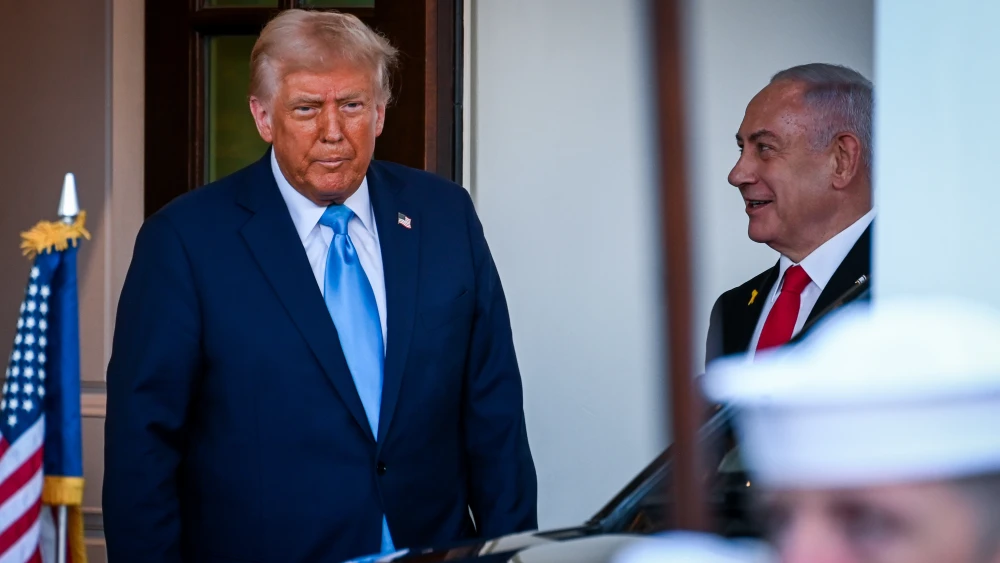
Speaking to reporters alongside Netanyahu at the White House on Tuesday, Trump proposed that the U.S. take control of Gaza, resettle its Palestinian population elsewhere and transform the enclave, which he described as a “demolition site right now,” into a developed hub.
During the interview with Levin, Netanyahu criticized past cycles of Israeli military action, withdrawal and renewed Hamas attacks, saying, “we smack them, they rebuild, we smack them again, and nothing changes.”
Trump’s plan, according to Netanyahu, offers a different approach, including finishing off Hamas permanently to ensure Israeli security, temporarily relocating Gaza’s civilian population to allow for reconstruction, rebuilding Gaza’s infrastructure and deradicalizing its population, and securing financial support from Arab and Gulf nations instead of from U.S. taxpayers.
The Israeli premier also clarified that Trump never proposed using American troops or taxpayer funds in Gaza. Even before the war, he noted, some Gazans wanted to leave but were prevented from doing so due to Egyptian border restrictions.
Arab countries, the Palestinians, including Hamas and other terror factions, and other countries around the world have rejected the president’s proposal to move Gazans out of the Strip.
Netanyahu calls Trump ‘Israel’s greatest ally’
The Israeli leader praised Trump during the interview as “the greatest friend that Israel has ever had in the White House.”
He credited Trump with significantly strengthening the U.S.-Israel alliance, highlighting his leadership both for America and globally.
Netanyahu summarized Trump’s second term in the White House so far as “a great beginning and a restart, a recalibration of our great alliance.”
He thanked Trump for swiftly unblocking weapons shipments to Israel as it fights a multi-front war, and also lauded Trump’s stance against antisemitism and rejection of the International Criminal Court (ICC), which he accused of unfairly targeting Israel and the United States.
Saudi normalization and a Palestinian state
The Israeli leader dismissed the idea of creating a Palestinian state, asserting that “Gaza under Hamas was essentially a Palestinian state, and it became a terror base to destroy Israel.” He argued that both Hamas and the Palestinian Authority seek Israel’s destruction—Hamas through terror, and the P.A. through legal and diplomatic warfare.
He reiterated that Israel will not accept a security situation where it is just “nine miles wide” and vulnerable to attack. In the wake of the Oct. 7, 2023, Hamas-led massacre, the debate over a Palestinian state is over, he added. Instead, he sees long-term peace through a strong regional alliance, including further cooperation with Saudi Arabia and other Arab nations.