Israel, Syria and the United States announced a “joint fusion mechanism” for security cooperation.
After holding talks in Paris, the three states agreed on Tuesday to create the “dedicated communication cell” for “intelligence sharing, military de-escalation, diplomatic engagement and commercial opportunities” under U.S. guidance.
“After a period of several months, the diplomatic dialogue between Israel and Syria resumed with American backing and support,” the Israeli prime minister’s office stated. “It was agreed that the dialogue will continue in order to advance common goals and to ensure the safety of the Druze minority in Syria.”
Israel and Syria have no formal diplomatic ties, which has exacerbated tensions between Jerusalem and the new government in Damascus over fighting in southern Syria that has threatened the Druze community in that area.
Israel has repeatedly launched cross-border raids in southern Syria to counter armed groups on Israel’s border and to support the Druze, who have a large cross-border population within Israel. Since the fall of Bashar al-Assad, Israel has also occupied parts of southern Syria as a security buffer zone.
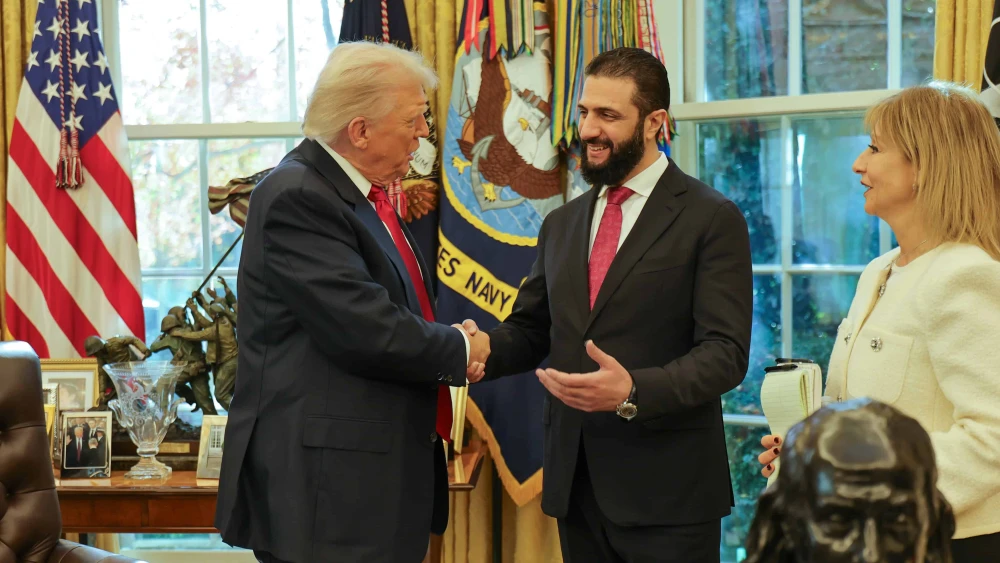
The Trump administration has been keen to support the government of Syrian President Ahmed al-Sharaa, who overthrew the Assad regime in 2024, and has removed many of the sanctions that were placed on Syria during that country’s civil war.
The communications channel announced Tuesday is the most significant formal step that Israel and Syria have taken towards working together since al-Sharaa took power after months of skepticism from Israeli officials about his viability as a potential security partner.
“I’m sure that Israel and him will get along,” U.S. President Donald Trump said of al-Sharaa during Israeli Prime Minister Benjamin Netanyahu’s U.S. visit in December. “I will try and make it so that they do get along.”