


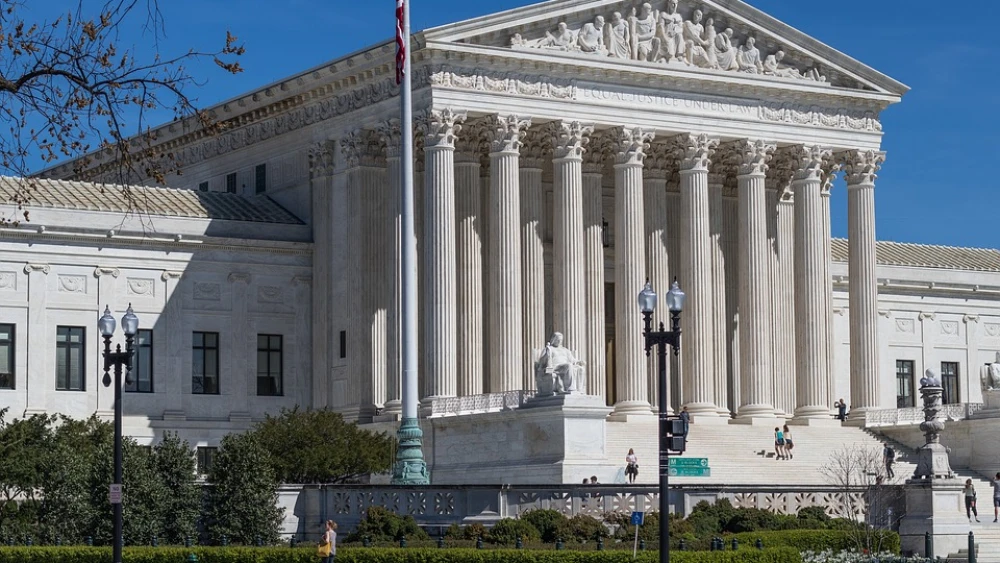
A group of 10 Jewish organizations has petitioned the U.S. Supreme Court to overturn a discrimination case from the 1970s that involved a Jewish employee who couldn’t work on Saturdays—Shabbat or the Jewish Sabbath.
The amicus curiae was filed on Monday by the National Jewish Commission on Law and Public Affairs (COLPA). It was joined by Orthodox Jews groups, including Agudath Israel of America, Agudas Harabbonim, the Coalition for Jewish Values, the National Council of Young Israel, the Orthodox Jewish Chamber of Commerce, the Rabbinical Alliance of America, the Rabbinical Council of America, Torah Umesorah and the Orthodox Union.
The brief was filed in Jason Small v. Memphis Light, Gas & Water, whereby an employee—a Jehovah’s Witness—sued the employer, alleging both religious and disability discrimination, in addition to retaliation.
In the amicus curiae in support of Small, the group of Jewish entities asks the Supreme Court to overturn Trans World Airlines Inc. v. Hardison, a 1977 case surrounding a TWA employee terminated for refusing to work on Shabbat.
In February, the Supreme Court declined to hear a separate case on the pharmacy chain Walgreens—accused by Seventh-day Adventists of religious discrimination—that sought to overturn Hardison.
In the opinion denying certiorari, Justice Samuel Alito, joined by Justices Clarence Thomas and Neil Gorsuch, said that although a “review of the Hardison issue should be undertaken when a petition in an appropriate case comes before us,” the petition to hear the Walgreens case “does not present a good vehicle for revisiting Hardison.”
Howard Slugh, founder and general counsel for the Jewish Coalition for Religious Liberty, explained to JNS, “In Hardison, the Supreme Court adopted an unduly narrow understanding of what Title VII means when it requires employers to provide religious employees with a reasonable accommodation. The court interpreted those words so narrowly as to excuse employers from providing many accommodations that the average person would consider eminently ‘reasonable.’ ”
Title VII of the Civil Rights Act of 1964 prohibits discrimination based on race, color, religion, sex or national origin.
Hardison “has hurt Jewish and other religious employees by denying them the full breadth of protection that Congress provided when it passed Title VII,” said Slugh. “By reversing Hardison and returning to the original public meaning of Title VII, the Supreme Court can restore the robust anti-discrimination protections that Congress provided religious workers.”
Although JCRL is not filing a petition in Small, it is filing one in another case, Dalberiste v. GLE Assoc., Inc., that also seeks to overturn Hardison.
Whether the Supreme Court will hear the Dalberiste or Small case has yet to be determined. The court is on recess until Oct. 5.


