Middle East

The dinner meeting at White House will reportedly focus on the Israel-Hamas hostage deal and renewed U.S. talks with Iran over its nuclear program.

The framework under discussion includes predefined intelligence triggers, joint threat assessments, and an agreed-upon process for authorizing strikes if Iran resumes enrichment activity or reconstruction at key facilities.

Israel’s victory over Tehran opens doors for regional growth, but, the PM warns, lasting prosperity depends on vigilance to protect hard-won gains.

News outlets escalate from Israel criticism to explicit calls for destruction as antisemitic rhetoric spreads across the political spectrum.
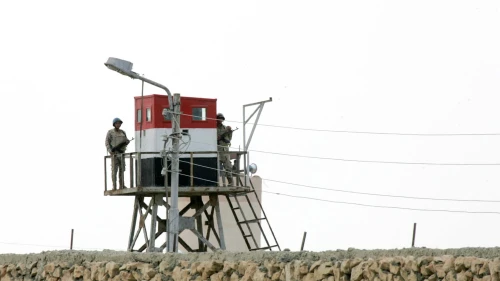
The ongoing Egyptian military presence in Sinai as war rages in Gaza elicits a range of interpretations.

All intelligence personnel, including cyber units, will now study Arabic and Islamic culture as part of sweeping reforms to address intelligence gaps.

Police seized weapons, drugs and 250,000 shekels during the raid.

“I think with Iran, the game is still on,” Assaf Orion, a fellow at the Washington Institute for Near East Policy, told JNS. “It’s not ‘Mission Accomplished.’ We can’t go and have beers because this problem is solved.”

Ending Iran’s nuclear ambitions was the first stage in realizing a new vision for a war-torn region. Stage two is ending the war in the Gaza Strip. Stage three is expanding the 2020 Abraham Accords.
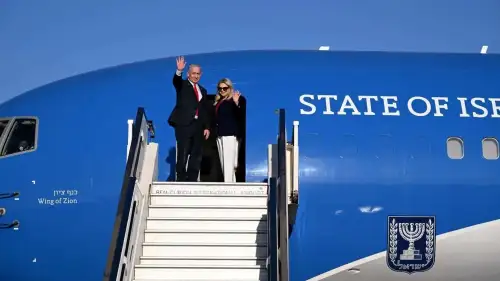
“I am committed to the release and return of all our hostages, the elimination of Hamas’s capabilities, and ensuring that Gaza no longer poses a threat to Israel,” said the prime minister

Cécile Kohler and her partner Jacques Paris were held in Evin prison, where according to Iranian authorities 70 people were killed by an Israeli strike.
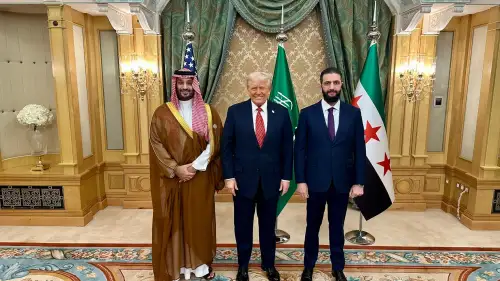
Israel’s approach to any agreement with Syria is shaped by hard-learned lessons from past diplomatic efforts.