Israeli reserve forces killed a Hezbollah terrorist during a clash in Southern Lebanon on Tuesday, according to the Israel Defense Forces.
The troops, operating under the command of the 91st Division in the Bint Jbeil area, were searching a building when the terrorist opened fire at them.
A soldier from the IDF’s Oketz canine unit returned fire, killing the terrorist. An Oketz dog was killed in the incident.
The building was the site of a separate clash last Thursday in which an IDF reservist was severely wounded, according to Hebrew media reports.
The IDF said its forces continue to operate in the security zone in Southern Lebanon to remove threats to Israeli troops and civilians.
“The IDF will continue to operate to remove any threat to its troops and will not allow the Hezbollah terrorist organization to harm the citizens of the State of Israel,” the military said.
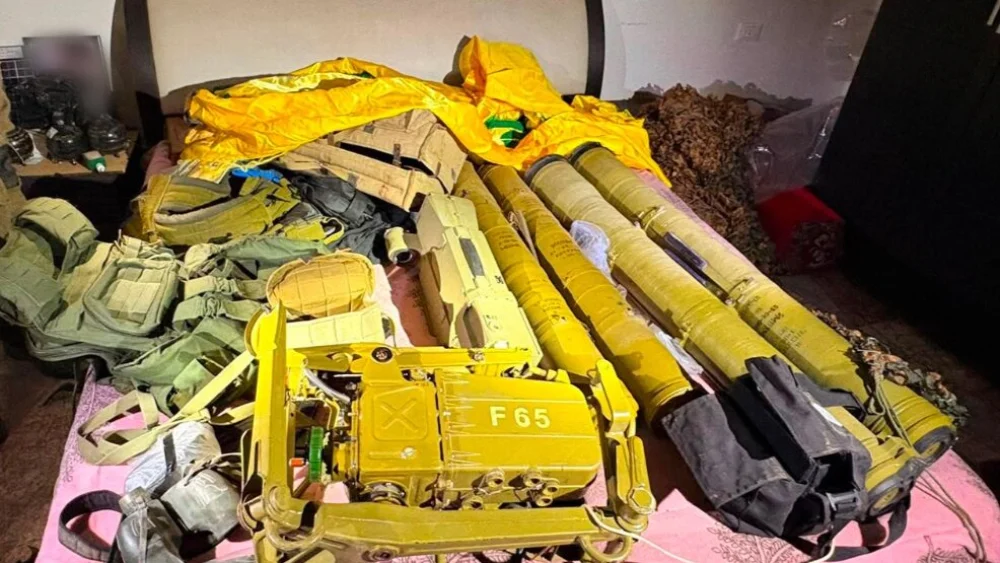
Earlier on Tuesday, IDF troops operating in the Southern Lebanon security zone uncovered a cache of Hezbollah weapons hidden inside a bedroom of a civilian home, the military said.
The discovery was made during ongoing operations in the village of Tallousa, where troops are continuing efforts to remove what the IDF described as immediate threats to Israel.
According to the Israeli military, soldiers located weapons storage facilities containing RPG launchers, ammunition and small arms. During searches of the area, they also found explosive devices, anti-tank missile launchers and missiles, RPG rockets, vests, helmets and Hezbollah flags inside a bedroom in a civilian residence.
The operation comes as Israeli forces continue to dismantle Hezbollah infrastructure in Southern Lebanon following months of fighting and under Israel’s policy of maintaining a security zone until the threat posed by the Iranian-backed terrorist organization is removed.
The IDF on Monday struck a suspicious vehicle that approached the security zone in southeastern Lebanon, the military said.
The Israeli Air Force carried out a “precise strike” after the vehicle carrying four suspects advanced toward the security zone near Al-Uqaydah, a village located in the Nabatieh Governorate, adjacent to the Ali al-Tahir Ridge.
The statement noted that the vehicle posed a threat to IDF soldiers.
On Sunday, the IDF carried out an airstrike in the same area, targeting Hezbollah terrorists on motorcycles, to “remove the threat,” it stated.
The Iranian-backed Hezbollah terror group renewed its rocket and drone attacks from Southern Lebanon on Israel on March 2, following the targeted killing in Tehran of Iranian Supreme Leader Ayatollah Ali Khamenei on the first day of “Operation Roaring Lion” on Feb. 28.
In response, Jerusalem launched a broad aerial campaign against Hezbollah targets and expanded military operations in Lebanon aimed at preventing cross-border attacks on Israeli communities.
Following the resumption of hostilities, Lebanese President Joseph Aoun vowed to do “the impossible” to stop cross-border exchanges between Israel and Hezbollah, and moved to outlaw the Iranian proxy.
Israeli and Lebanese officials subsequently held five rounds of historic direct talks at the U.S. State Department, resulting in a framework of understandings that was reached on June 26 and conditions an Israeli redeployment on Hezbollah being removed from the south.