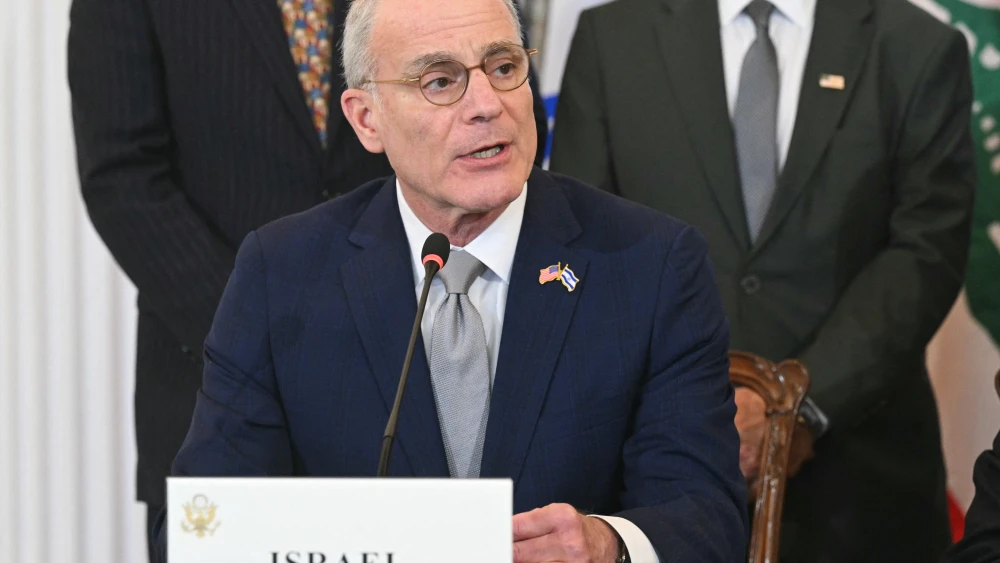
Israel is working to draft a comprehensive peace agreement framework with Lebanon that could be implemented once Hezbollah is no longer a factor, Israeli Ambassador to the United States Yechiel Leiter said on Monday.
Speaking at a Council on Foreign Relations event in Washington, Leiter said Jerusalem aims to prepare a “full-fledged peace agreement, A-Z” and “put it on the shelf,” ready for use when conditions allow.
Israeli Ambassador @yechielleiter says Israel is pushing to draft a full Israel-Lebanon peace agreement now and “put it on the shelf,” so it is ready the moment Hezbollah is removed from the equation.
— Or Shaked (@Or_Shaked) July 6, 2026
Referring to the July 14-15 talks in Rome, he said the vision includes… pic.twitter.com/2isiGEntyh
“Imagine for a moment that there is no Hezbollah, just Lebanon and Israel,” he said, outlining a vision that includes trade, visas, embassies and tourism.
During the fifth round of talks in Washington on June 26, representatives of Beirut and Jerusalem, including Leiter, signed a U.S.-brokered framework agreement that, among other provisions, calls for the disarmament of the Iranian terrorist proxy.
Leiter said Israeli and Lebanese teams are expected to meet in Rome on July 14–15 to begin discussions through working groups on key issues, including border disputes.
“It would be like negotiating the Abraham Accords,” he said, noting that points of contention would be addressed through structured talks between “two sovereign countries” recognizing each other’s security needs.
The U.S.-brokered Abraham Accords were initiated in 2020 during President Donald Trump’s first term, normalizing relations with several countries, including the United Arab Emirates, Bahrain and Morocco.
The Israeli and Italian foreign ministers on Tuesday confirmed next week’s Rome meetings.
“Less than two weeks ago, Israel, Lebanon and the United States reached a historic framework agreement. These talks are due to continue next week in Rome, Italy,” Sa’ar said alongside his German counterpart, who was visiting Jerusalem to sign a Yad Vashem Holocaust museum funding accord.
Italian Foreign Minister Antonio Tajani said that the next round of U.S.-facilitated talks between Israel and Lebanon will be held in Rome, describing the city as a “crossroads of peace and dialogue.”
Tajani said Italy had previously expressed its willingness to host negotiations and support efforts to advance regional peace, citing the government’s diplomatic engagement and international role.