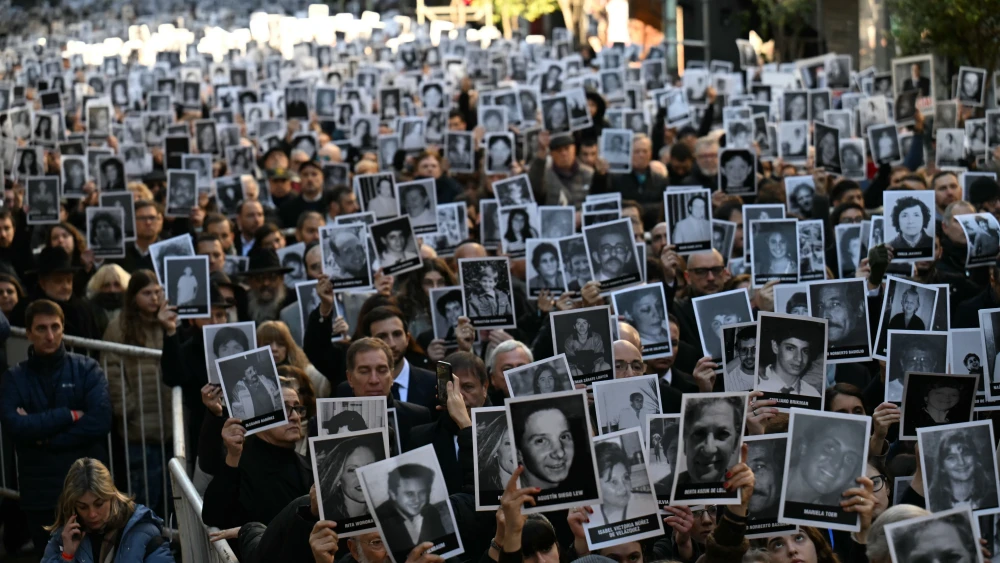
Israel’s Foreign Minister on Saturday marked the 32nd anniversary of the 1994 bombing of the AMIA Jewish community center in Buenos Aires, the deadliest terrorist attack in Argentina’s history.
Eighty-five people were killed and hundreds wounded in the attack, which was planned by the Iranian regime and carried out by its proxy, the Hezbollah terrorist organization.
Today, we mark 32 years since the deadliest terrorist attack in Argentina’s history, the bombing of the AMIA Jewish community center in Buenos Aires.
— Israel Foreign Ministry (@IsraelMFA) July 18, 2026
85 people were murdered and hundreds more injured in an attack planned by the Iranian regime and carried out by its proxy, the… pic.twitter.com/Ow2UEK37sH
“We honor the victims, stand with their families, and remain steadfast in the fight against terrorism,” the ministry said in a statement posted on social media.
Separately, the pro-Israel organization StandWithUs marked 14 years since the 2012 Burgas bus bombing in Bulgaria, in which a Hezbollah suicide bomber killed five Israeli tourists and a Bulgarian bus driver at Burgas Airport.
14 years since the Burgas Bus Bombing: Today we remember the 5 Israelis and 1 Bulgarian murdered by Hezbollah terrorists. pic.twitter.com/NlrUQ3Kdeg
— StandWithUs (@StandWithUs) July 18, 2026