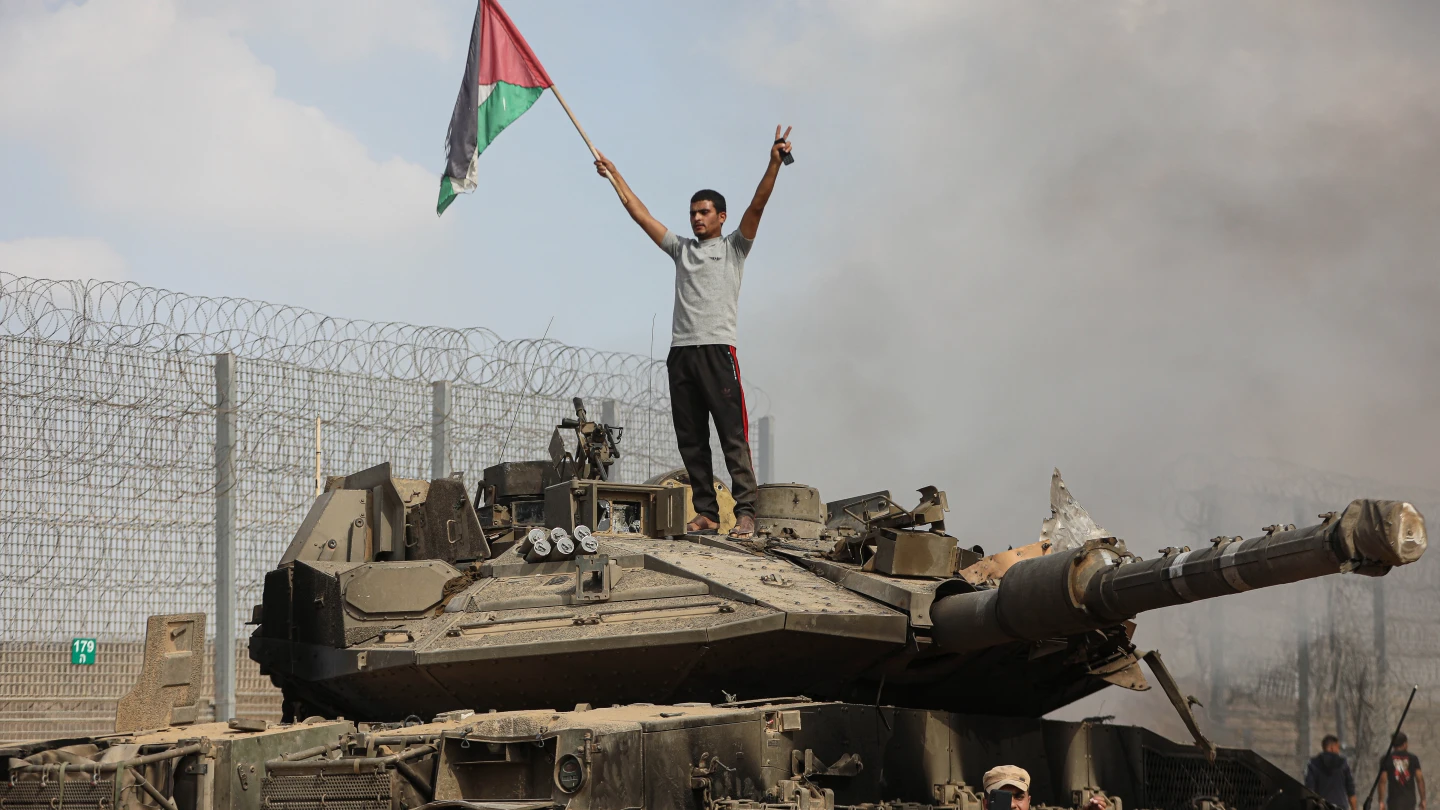
Oct. 7 was a day when the world witnessed a level of cruelty that defied every boundary of human conscience, a moment when the moral anchors of humanity seemed to break loose. The atrocities committed against Israel were not only an assault on life; they were an assault on the very idea of moral order.
Terrorism seeks to erase the image of God within humanity. It replaces compassion with brutality, dignity with degradation and holiness with desecration. The Jewish soul instinctively recognizes this rupture because our tradition teaches that evil is not merely the absence of good. Evil is the conscious choice to destroy what God has declared sacred. “Shall not the Judge of all the earth do justice?” (Genesis 18:25) is not a question of doubt. It is a cry for moral clarity in a world that has lost its way.
For many of us, Oct. 7 reopened a wound that had never fully healed. The ache of unfinished responsibility surged with painful intensity as we watched our homeland endure the unthinkable. Rabbi Jonathan Sacks taught that faith is the courage to refuse despair, even when the world is engulfed in darkness. “Out of the depths I call to You, O Lord” (Psalms 130:1) becomes not a verse but a lifeline. It is the Jewish declaration that even when humanity loses its moral compass, we will not lose ours.
The birth of the Tehillim Project
In the hours after Oct. 7, the weight of grief was overwhelming. The images, the stories and the unbearable silence of families waiting for news created a spiritual paralysis that demanded a response.
That morning was Simchat Torah in the United States, a day when Jews traditionally dance with the Torah and celebrate its eternal wisdom. Yet the joy of the festival had been shattered. In the midst of the service, as the congregation stood with the Torah scrolls, a shared sense of urgency filled the room. Together with Rabbi Ari Soussan, the Tehillim Project emerged from that moment of collective resolve. “God is our refuge and strength, a very present help in trouble” (Psalms 46:2) became the verse that opened the door to what would become a global movement of devotion.
Rabbi Joseph Dweck teaches that Tehillim is the language of the Jewish heart—the place where fear, hope, pain and faith meet without contradiction. King David’s words give us permission to speak honestly before God, to articulate our deepest wounds and highest aspirations. That insight became the foundation of the project. Each participant embraced a reading pattern that suited his or her life, whether once per cycle, weekly or daily, and together these commitments formed a rhythm of devotion that never broke.
What began as a moment of anguish on Simchat Torah in Maryland quickly grew into a worldwide chorus of prayer that carried the Jewish people through one of the most painful chapters in recent memory.
“Out of the depths I call to You, O Lord” (Psalms 130:1) became not a verse but a lived experience.
Within hours, friends, relatives, former congregants and colleagues reached out from other cities and countries asking to join. Participants came from Maryland, New York, Florida, California, Israel, the United Kingdom, India, Australia and the United Arab Emirates. These were not strangers. They were people connected to our community, people who felt the same anguish, and people who wanted to stand with Israel in a way that was spiritual, disciplined and deeply Jewish.
The project became a chorus of familiar voices spread across continents, united by the words of King David.
As the months passed, the Tehillim Project grew into a remarkably sustained expression of communal prayer, one that became a steady source of strength for Jews across the world. The return of the body of Ran Gvili after 843 days reminded us that prayer is not theoretical. It is lived. It is carried in the hearts of those who refuse to give up hope. By the time we completed the third cycle on Oct. 2, 2026, our community will have read the book of Tehillim 913 times, with 14,165 participations across three years.
These were not unique readers. They were a living rhythm of devotion. Some read once per cycle, others weekly and others daily. Together, these readings formed a tapestry of prayer that stretches across continents and time zones. It is a testament to the enduring strength of Jewish unity and the power of sacred words spoken with sincerity.
An invitation to humility
Every tragedy forces the human soul to confront a question that has no simple answer. Why does God permit suffering?
It is a question as old as Abraham and as present as the families who sat in silence on Oct. 7, waiting for news that never came.
Jewish history does not hide from this question. It carries it openly, honestly and with reverence. “For My thoughts are not your thoughts, and your ways are not My ways” (Isaiah 55:8) is not a dismissal. It is an invitation to humility, to recognize that divine purpose often lies beyond human understanding.
Rabbi Doron Perez, reflecting on Rabbi Joseph B. Soloveitchik’s Kol Dodi Dofek, teaches that Jewish suffering is not a sign of Divine absence. Soloveitchik says God knocks through the events of history, calling us to respond not with despair but with responsibility. Suffering becomes a summons, a call to rise and to act, and to reaffirm the covenant that has sustained our people through every generation. He writes that prayer places the human being in the presence of the Infinite, even when the Infinite feels hidden. In that encounter, we discover that suffering does not sever the covenant. It strengthens it.
“Out of the depths I call to You, O Lord” (Psalms 130:1) became not a verse but a lived experience. Oct. 7 confronted us with the depths of human evil, yet it also revealed the depths of Jewish resilience.
The voices that carried us
Throughout these three years, the teachings of our rabbis became a compass that guided us through uncertainty and grief. Sacks wrote that Tehillim is the music of the Jewish spirit, a chorus that binds generations and gives voice to the deepest truths of the Jewish soul. His words reminded us that faith is not the denial of suffering. Faith is the courage to stand before God with honesty, dignity and hope.
Readings formed a tapestry of prayer that stretches across continents and time zones.
Rabbi Joseph Dweck teaches that Tehillim allows us to speak with emotional clarity, to bring our fears and aspirations before God without hesitation. These teachings shaped the heart of the Tehillim Project. They reminded us that prayer is not escape. Prayer is encounter. Prayer is the way the Jewish people transform anguish into responsibility and despair into resolve.
Oct. 7 awakened something deep within us, a sense of belonging and covenant that had remained quiet for years. The journey of Lech Lecha is not only the story of Abraham. It is the story of every Jew who feels called to rise, to return and to rediscover the mission that defines our people. “Go to yourself” (Genesis 12:1) is not a command to travel. It is a command to become. It is the call to embrace identity, purpose, and responsibility. The Tehillim Project became part of that journey. It became a way to stand with Israel, to stand with each other and to stand before God with the full weight of our history and full strength of our faith.
A people who choose light
The project began in a moment of anguish, yet it became a testament to the enduring strength of the Jewish spirit. It revealed that even when the world feels unmoored, the Jewish people do not lose their direction. We choose prayer. We choose covenant. We choose responsibility.
Sacks taught that faith is not the naive belief that everything will be good. Faith is the refusal to let evil define the world. It is the insistence that God’s presence can be found even in the darkest valleys. The thousands of readings, the voices from across continents and the unwavering commitment of every participant formed a single declaration. Am Yisrael lives! Am Yisrael endures. Am Yisrael refuses to surrender its hope!
With the completion of the third cycle, we carry with us the lessons of these years. We carry the courage of families who waited in silence. We carry the strength of soldiers who defended our homeland. We carry the prayers spoken in living rooms, synagogues, airports and hospital rooms. We carry the covenant that has sustained us since Abraham first heard the call of Lech Lecha.
The world may struggle to understand the Jewish response to suffering, but we understand it. We respond with faith. We respond with unity. We respond with the words of King David: “The Lord is my light and my salvation. Whom shall I fear?” (Psalms 27:1).
In choosing Tehillim, we chose light. In choosing prayer, we chose to stand with God. And in choosing each other, we chose to ensure that the Jewish future remains unbroken.