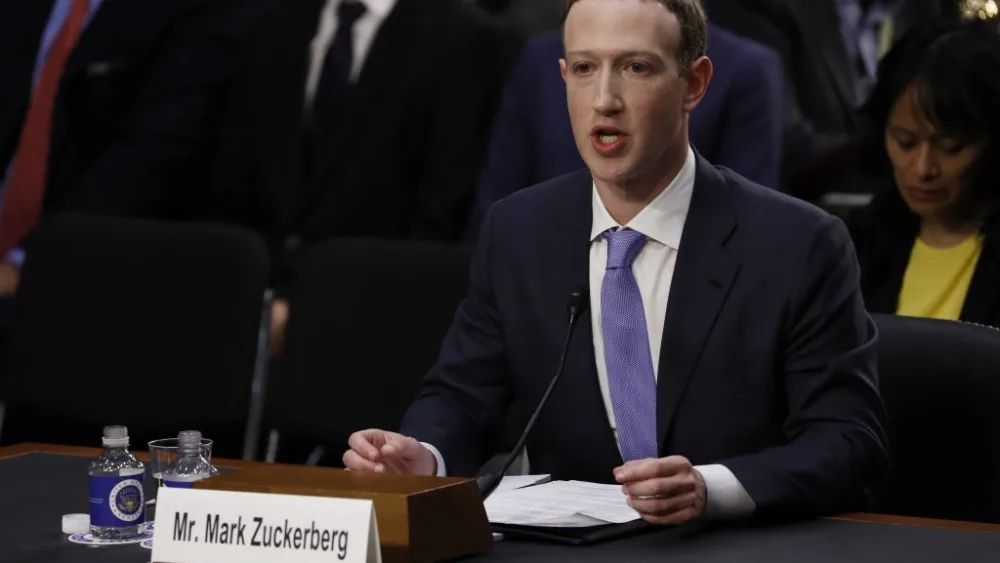
People get much of their news and information from social media. As such, it is refreshing to learn that the largest social-media companies have policies against hate speech on their popular platforms, and have taken it upon themselves to remove anti-LGBTQ, anti-black and Islamophobic content when they become aware of it.
Why then are they negligent in ensuring that discriminatory and hateful anti-Semitic speech is not removed as well?
As the frequency and levels of violence of anti-Semitic acts soar in the United States and throughout the world, we expect that social-media companies will do their part to remove this dangerous content from their platforms, and take stronger actions in the future to monitor and purge such hate speech of their own volition.
Zachor Legal Institute has recently sent letters to Facebook, YouTube/Google and Twitter, updating them about anti-Semitic postings that are present on their popular platforms. These postings violate their own hate-speech regulations, and we have asked them to remove this content immediately. To date, we have received no response whatsoever from any of these companies.
We are using the International Holocaust Remembrance Alliance’s (IHRA) working definition of anti-Semitism as our guideline for recognizing this form of hate speech directed at Jews.
Countries throughout the world are adopting the IHRA definition of anti-Semitism, which includes both the age-old hatred targeting Jews, as well as the more modern venom aimed at Israel as a proxy for Jews.
The inclusion of the newer form of anti-Semitism targeting Israel is critical for the following reasons:
- On university campuses where anti-Semitism is so prevalent, the primary form this takes is discrimination aimed at Israel and Jews who support Israel.
- Anti-Semitism targeting Israel, rather than Jews directly, is more nefarious, as it is regularly claimed that the attacks are legitimate criticisms of Israel and often even disguised as Palestinian human-rights expressions, when in reality the organized movements targeting Israel openly admit that their goal is to eliminate Israel as a Jewish nation.
What the IHRA definition does is distinguish between legitimate criticisms of Israel that are protected free speech and expressions that cross the line into unprotected anti-Semitic hate speech. Adoption and implementation of the IHRA definition of anti-Semitism is as legitimate an anti-discrimination measure as the use of similar laws and regulations that prohibit other forms of discrimination, including LGBTQ and gender discrimination.
In the United States, the State Department has adopted the IHRA definition, and the recent Executive Order Combating Anti-Semitism instructs the Department of Education to consider IHRA when evaluating Title VI Civil Rights Act complaints of discrimination against federally funded academic institutions and programs.
What is critically missing is acceptance and enforcement in the online and technology sectors, where anti-Semitism is today most prevalent and spreads quickest. For instance, we referenced in our report “The New Anti-Semites” an ADL study that “reported 4.2 million anti-Semitic tweets on Twitter in 2017 alone. This means that over the course of the study, throughout 2017, an average of 81,400 anti-Semitic tweets were generated per week.”
In our letters to the leading social-media companies, we identify specific content that violates their own internal hate-speech regulations using the IHRA definition of anti-Semitism. Examples include comparing Israel’s legitimate reactions to Palestinian terror with the Nazi regime, as well as cases calling for Palestine from “(Jordan) River to (Mediterranean) Sea,” a code for the elimination of the State of Israel.
The United Nations is well-known for applying negative double standards in their treatment of Israel. We are concerned that social-media companies are applying a similar double standard as far as how they treat anti-Israel anti-Semitism compared to all other forms of hate content.
All of the tools are in place for social-media companies to accurately define, monitor and remove anti-Semitism from their platforms, and make the world a safer place. The only thing needed is the will of the online companies to do so.
Ron Machol is the COO of Zachor Legal Institute, an organization using the law and activism to combat antisemitism. He can be reached at ron@zachorlegal.org.