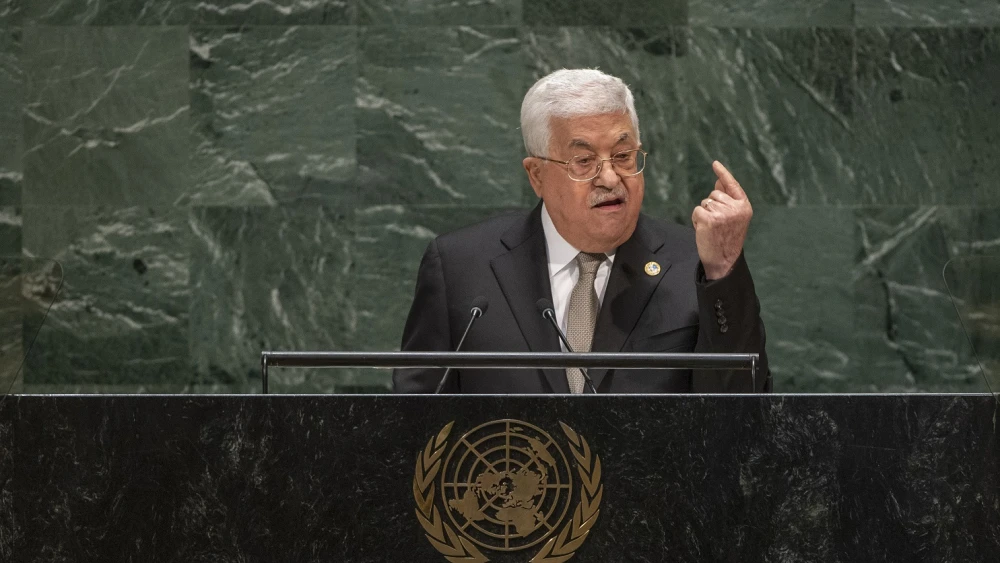
Palestinian Authority leader Mahmoud Abbas claimed at a recent P.A. anti-corruption conference that Israel “plants corruption” in Palestinian society, including by supplying young Palestinians with drugs.
“The occupation plants corruption among us. ... If we don’t have it, it brings us corrupt people and corrupters. Therefore, we see substances like cannabis and drugs, etc., and also spoiled goods which are always accepted in our land from them because they want to fight our existence. ... They don’t want us to have a future,” said Abbas, in remarks broadcast on official P.A. television on Dec. 10.
Fatah official and regular P.A. daily Al-Hayat Al-Jadida columnist Muwaffaq Matar made the same claim in an op-ed two days later, writing that Israel would rather Palestinian children hold “drug needles” than “books, pens or work tools.”
“The Israeli occupation’s security forces are interested in there being drug needles in the hands of the children, youth and young people instead of books, pens or work tools because drug needles kill the soul and lead the users to a stage of helplessness,” wrote Matar.
The op-ed went on to claim that Israel “turns a blind eye” to drug dealers at the gates of Palestinian schools, and that in fact the dealers were Israel’s “pawns,” sent to make young Palestinians “fall into the clutches of the Israeli intelligence forces.”
“The Israeli occupation forces are digging everywhere in the [Shuafat] refugee camp [in Jerusalem] searching for young fighters, but they turn a blind eye to the drug dealers who sell their poisons at the gates of the schools in the camp, knowing that the occupation authorities’ police are secretly securing them and protecting them. The drug dealers are the occupation’s pawns, whose goal is to make our young men and women fall into the clutches of the Israeli intelligence forces. This means that they are more dangerous to society, values and law than any spy or agent whose mission leads to the killing of civilians or the endangering of the national interests.”