Newsletter
Newsletter Support JNS

Rep. Ilhan Omar laments Israeli, Saudi influence in Trump administration

The Democrat has made numerous anti-Semitic and anti-Israel remarks since entering Congress in January 2019.

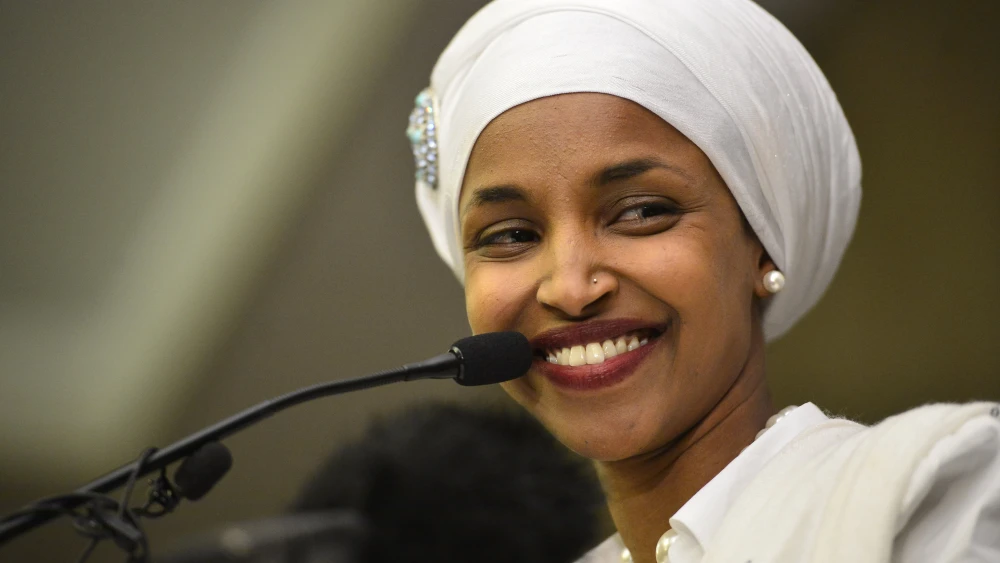
Rep. Ilhan Omar (D-Minn.). Credit: Leopaltik1242/Wikimedia Commons.

Rep. Ilhan Omar (D-Minn.) compared Saudi Arabia’s influence in the Trump administration to that of Israel’s, lamenting the money both have invested in pushing their policies.

Ahead of the Tuesday publication of her book This Is What America Looks Like: My Journey from Refugee to Congresswoman, Omar told the U.K.-based Sunday Times, “We know the amount of money and influence and connection that the Saudis have with the administration is really the reason that everything destructive they do is nullified. And that really is no different to what’s happening with Israel.”

She continued, saying, “There’s an alarming connection to the really destructive policies Israel is proposing and how much of it is being rubber stamped by this administration. And how much of it is being urged by Americans who have connection and influence with this administration.”

Since entering Congress in January 2019, Omar has made numerous anti-Semitic and anti-Israel remarks, including tweeting the following February “It’s all about the Benjamins baby,” referring to AIPAC and the pro-Israel lobby’s influence on U.S. policy.

Following backlash from both sides of the political and ideological spectrum, Omar apologized.

She also sought to introduce pro-BDS legislation into the U.S. House of Representatives.

The teacher alleged Portland Public Schools allowed Palestinian flags and anti-Israel displays while administrators told him that displaying “an Israeli flag or related symbols would be too disruptive.”
The Islamic Republic’s foreign minister threatened on Friday to kill a U.S. soldier for every Iranian killed in the war, as Trump speculated that regime leaders might “cry uncle” or “go into a cave and hide.”
Art historian Jacob Wisse told JNS that he is concerned “when museums, which I value for the rigor, depth and richness of their curatorial voice, fall back, lazily, on untruths.”
“Shame on Mamdani and those who continue to parade this dangerous rhetoric,” Daniel S. Mariaschin of B’nai B’rith International told JNS.
“Every community deserves a seat at the table when healthcare policy is being shaped,” Eveline Shekhman, CEO of the American Jewish Medical Association, told JNS.
Khan “sought to scapegoat Israel in an attempt to divert attention from his own misconduct,” said Danny Danon, the Israeli envoy to the United Nations. “The international community rejected that cynical attempt today.”