Newsletter
Newsletter Support JNS

Six Israeli Border Police hurt when riots break out during arrests near Ramallah

When security forces entered Kalandia to apprehend suspected car thieves, locals took to the rooftops, hurling bricks and other heavy items, including a washing machine, at them.

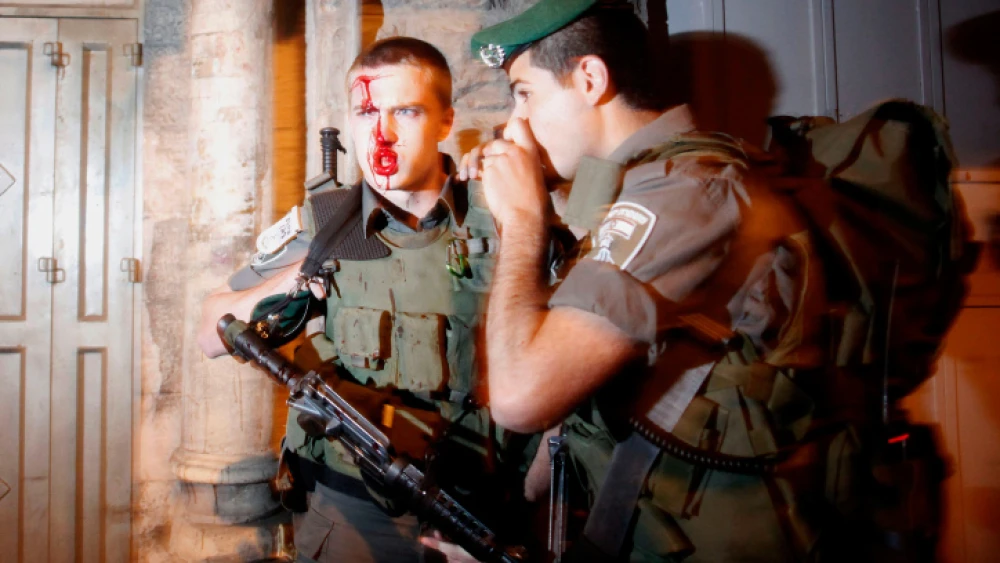
An Israeli Border Police officer wounded during clashes between Israeli security forces and Palestinian youths (not pictured), near the Damascus Gate at Jerusalem's Old City, on June 22, 2013. Photo by Sliman Khader/Flash90.
An Israeli Border Police officer wounded during clashes between Israeli security forces and Palestinian youths (not pictured), near the Damascus Gate at Jerusalem’s Old City, on June 22, 2013. Photo by Sliman Khader/Flash90.

Six Israeli Border Police officers were wounded on Monday morning when riots broke out during an arrest raid in the Palestinian city of Kalandia near Ramallah, according to Israeli media reports.

Some of the locals took to the rooftops, hurling bricks and other heavy items, including a washing machine, at the security forces. Some were treated by medics on the scene; others, who lost consciousness, were evacuated to the hospital, where their injuries were designated as “light.”

During the clashes, the officers fired rubber bullets and live ammunition, wounding four Palestinians. Backup from the Israel Defense Forces arrived to complete the operation. Two of three suspected car thieves were apprehended.

A similar incident occurred in May, when IDF Staff Sgt. Amit Ben-Yigal was killed by a cinder block to the head during a raid in the Palestinian village of Ya’bad in search of suspected terrorists.

The American leader reportedly told aides he expected fighting to resume with the Islamic Republic after the November midterm elections.
The Israeli military also killed a Hamas terrorist who took part in the Oct. 7 massacre and held hostages throughout the war.
The Israeli military grounds attack and munition-dropping drones as it investigates whether a technical malfunction or enemy interference caused the tragedy.
Jason Brodsky, of United Against Nuclear Iran, told JNS that the address carried messages to “the international community, antisemites abroad, state threats against Israel and most especially the Iranian people.”

