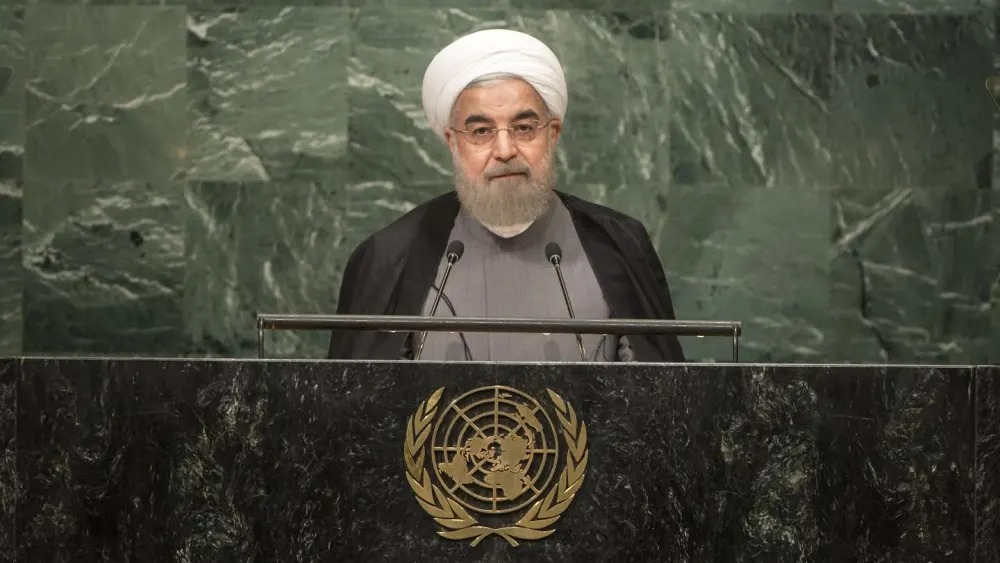
U.S. President Donald Trump said on Monday that he could meet with Iranian President Hassan Rouhani, which wasn’t the first time he has invited talks with Tehran.
“It could happen,” he told reporters outside the White House.
“No problem with meeting. Iran should straighten out because frankly, they’re in a very bad position,” he added.
Despite Trump repeatedly saying lately that he would meet with the Iranians, Rouhani has rejected his overtures, insisting that he would only meet with the United States if it lifts sanctions, which the Trump administration reimposed after withdrawing from the 2015 nuclear deal, in addition to enacting new financial penalties against the regime.
"It could happen," President Trump says when asked if he would meet with Iranian President Rouhani.
— This Week (@ThisWeekABC) September 9, 2019
"No problem with meeting. Iran should straighten out because frankly, they're in a very bad position," he adds https://t.co/s5XgPCmrVq pic.twitter.com/iqyXnTQgYr
Until Thursday, Israeli Prime Minister Benjamin Netanyahu expressed opposition to a possible meeting.
“I’m sure Trump will take a much tougher position,” Netanyahu told reporters on Thursday in London, where he met with British Prime Minister Boris Johnson and U.S. Secretary of Defense Mark Esper.
Trump’s remarks on Monday came just hours after Netanyahu revealed what he called a “nuclear-weapon development” site in the southwestern Iranian city of Abadan.
The White House declined to comment on the record regarding whether the Trump administration has been briefed on what Netanyahu presented.