U.S. Foreign Policy
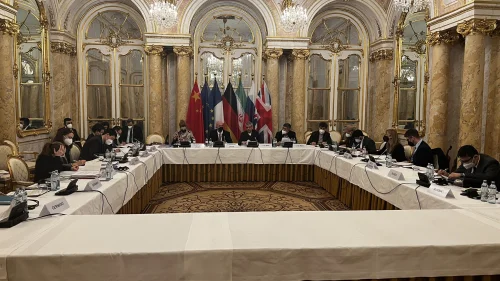
“The mood in Congress indicates concern over the direction of these negotiations. Endless discussions only benefit Iran’s nuclear program, and there are calls for a more coercive approach to the U.S. posture on Iran,” said Jason Brodsky, policy director at United Against Nuclear Iran.

U.S. House Speaker affirms a commitment to Israel’s security and stresses the need for a two-state solution in talks with Israeli officials.
Jerusalem has expressed concern that the United States and other world powers will make concessions to Iran that will result in a new agreement with terms worse than the original.

The California lawmaker is expected to hold talks with Israeli officials about U.S. efforts to re-enter the 2015 Iran nuclear deal.

“The more we help Israel in terms of their capability to deny Iran a nuclear weapon, the less likely we’ll have a war,” Sen. Lindsey Graham (R-S.C.) said, adding that the theUnited States should try to provide Israel with “anything that changes the equation.”
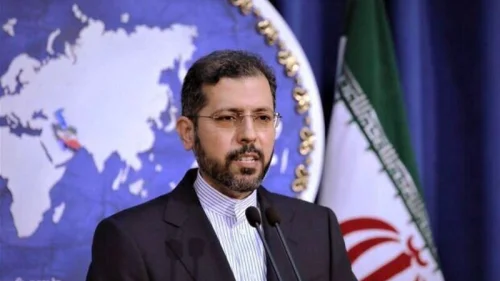
Iran’s Foreign Ministry spokesman also accused the U.S. of shedding “crocodile tears” over the situation in Yemen.

Just like in 2015, it is expected an agreement with Iran would be unanimously rejected by Republicans in both chambers, as well as some Democrats. While it’s unlikely that two-thirds will reject the agreement, it’s likely to be rejected by a majority vote, according to JINSA.
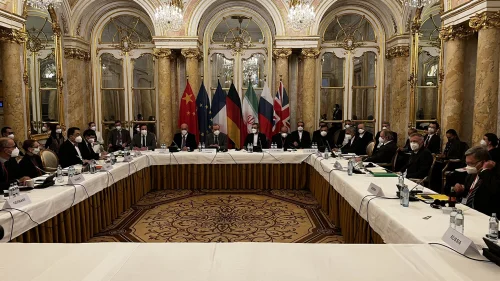
Annalena Baerbock was “convinced that a full restoration of the JCPOA would make the region more secure, including Israel; otherwise, we would not be having these talks.”

The long-range, surface-to-surface “Kheibar-Shekan” missile was displayed during a ceremony that coincided with celebrations in Iran marking the 43rd anniversary of the Islamic Revolution.

Eyal Hulata is reportedly holding talks with his American counterpart, Jake Sullivan.

“Terrorism ... is how you conduct negotiations, Tehran-style” says Israeli Prime Minister Naftali Bennett, after U.S. grants sanctions waivers in run-up to resumption of Vienna talks.

Sheikh Tamim bin Hamad Al Thani said he does not envision the country joining the Abraham Accords “in the absence of a real commitment to a two-state solution” between Israel and the Palestinians.