The U.S. Government Accountability Office released a report on Thursday finding that the U.S. State Department failed to properly inform Congress about efforts to reform Palestinian textbooks.
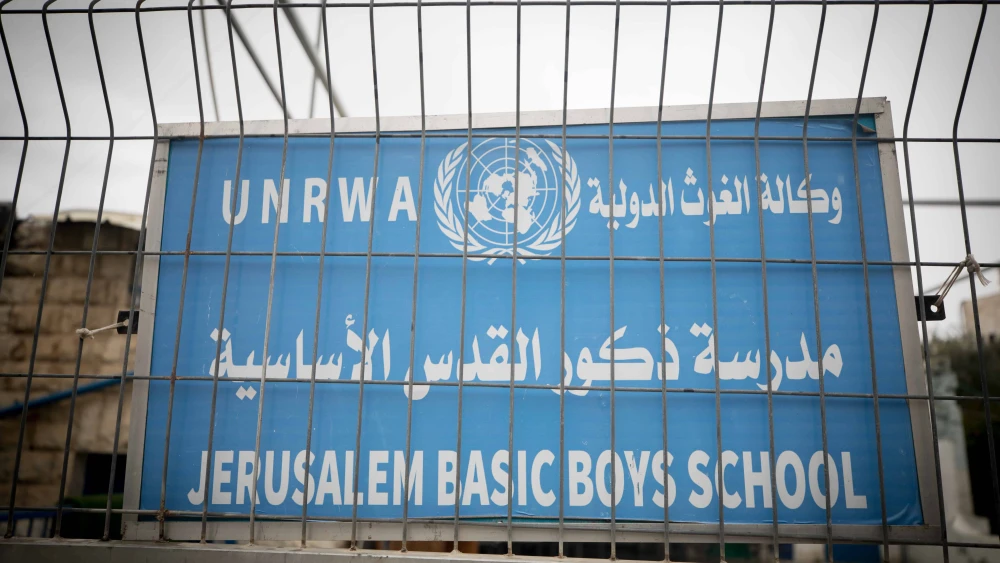
As part of U.S. funding to the U.N. Relief and Works Agency for Palestine Refugees, Congress required the department to issue reports on UNRWA’s educational activities, which Israel and watchdog groups have long said include materials promoting extremism.
The independent agency that answers to Congress found that in all but one report during the years when the United States provided funding to UNRWA from 2018-024, the State Department either “omitted required information,” missed deadlines or reported inaccurate information about UNRWA schools.
“In June 2019, we reported that UNRWA and the Department of State had taken actions to address potentially problematic content in UNRWA schools in the West Bank and Gaza—content that promotes intolerance toward groups of people or incites violence—but that State’s reporting to Congress omitted required information and contained inaccurate information,” the GAO report states.
“In some cases, State cited the organization without a date, relied on oral discussions without identifying a corroborating document or did not cite education-related information at all,” it states.
The United States cut off funding to UNRWA for 2019 and 2020 during the first Trump administration and again in 2024, as part of a congressional funding deal during the Biden administration, in large part over concerns about UNRWA’s education programs and allegations from the Israeli government that the aid agency employed hundreds of Hamas members at its facilities in Gaza.
The GAO report describes how UNRWA has “taken steps to review the curriculum and content of the Palestinian Authority textbooks” that it uses in Judea, Samaria and Gaza, but that UNRWA’s reviews continue to find hundreds of pages of such material in its teaching materials.
“UNRWA reviewed 13,149 textbook pages and reported that it found issues on 507 of them, representing 3.85% of the total pages reviewed,” the GAO report says. “In total, UNRWA reported that it identified 435 issues across the 507 pages, 349 of which (roughly 80%) involved material that did not align with U.N. positions.”
Those issues included “mathematics problems that compare the number of prisoners across two years and use the number of martyrs to teach a mathematical concept” and “a description of a boy, who was shot and had a broken leg while participating in a demonstration in support of a prisoners’ strike in Zionist prisons.”
It describes how, as recently as last January, UNRWA had to cease using teaching materials that contained “problematic content related to a controversial figure.”
“UNRWA stopped using a fifth-grade Arabic textbook, in which this figure appears and reported having banned the teaching related to the figure altogether, now relying on supplementary materials to teach the subject,” the GAO wrote.
“UNRWA officials noted that this may be due to conflict in the West Bank and Gaza and because they had self-learning materials in place to teach the subject,” it added.
Based on a statement from UNRWA’s commissioner-general, Phillipe Lazzarini, from June, that figure appears to be Dalal Mughrabi, one of the attackers in the 1978 Coastal Road massacre that killed 38 Israeli civilians, including 13 children.
The report describes how UNRWA’s teachers “often deviate” from approved material based on the views of their students about “problematic content.”
“One teacher described difficulties teaching maps related to Jerusalem, because people have different beliefs about who the city belongs to,” the report says. “She explained that students often share their own feelings about the conflict, which can lead to emotional discussions and make it harder to stay focused on the lesson.”
The report made no recommendations about how the State Department could improve its reporting to Congress, given the U.S. halt in funding to UNRWA.