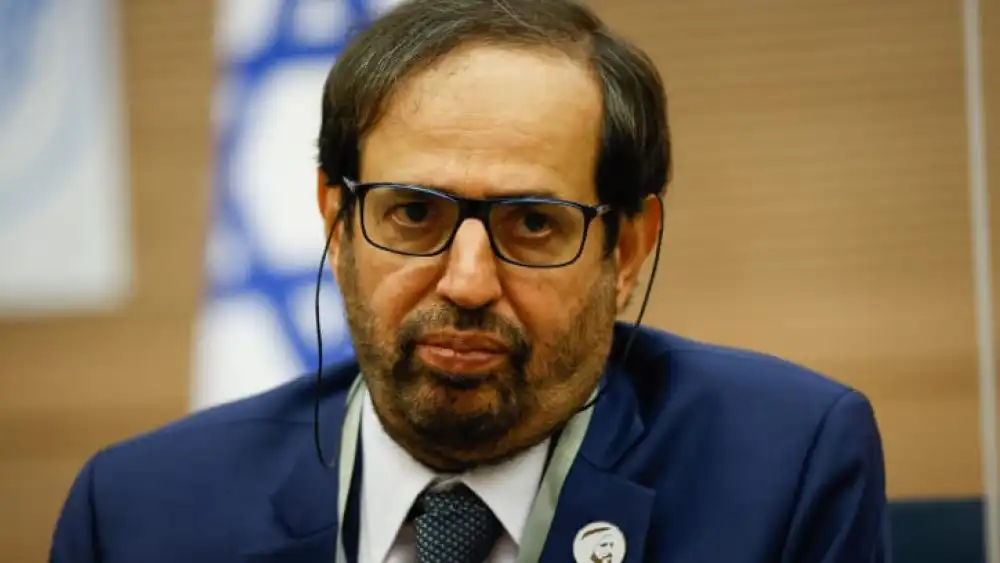
The Abraham Accords between the United Arab Emirates and Israel are not at risk, despite Abu Dhabi’s criticism of Israeli military actions against Hamas in the Gaza Strip, a senior Emirati official said on Tuesday.
“From the UAE perspective, the Abraham Accords are there to stay,” Ali Rashid Al Nuaimi, chairman of the Defense Affairs, Interior and Foreign Relations Committee of the UAE Federal National Council, told a briefing organized by the European Jewish Association and the American Israel Public Affairs Committee.
The Abraham Accords, which normalized relations between Israel and the UAE, Bahrain, Morocco and Sudan in the fall of 2020, are the future of the Middle East, Al Nuami explained.
“It is not an agreement between two governments but [rather] a platform that we believe should transform the region where everyone will enjoy security, stability and prosperity,” he told those on the call.
“We want everyone to acknowledge and accept that Israel is there to exist and that the roots of Jews [and] Christians are not in New York or Paris but here in our region. They are part of our history, and they should be part of our future,” said the UAE official.
Tuesday’s briefing took place against the backdrop of the war started by Hamas’s Oct. 7 terrorist attacks. A total of 1,400 people were killed in the cross-border invasion, in which Hamas terrorists raped, tortured and butchered men, women and children in Israel’s southern communities.
“Those terrorist organizations don’t respect human life. Don’t let them achieve their goals,” said Al Nuami. “No person with a human feeling and common sense will agree with the barbarian terrorist attack that Hamas committed on Oct. 7.”
The UAE was the first Arab country to directly denounce the Hamas invasion. Abu Dhabi condemned the attack as a “serious and grave escalation,” and said it was “appalled” that Israeli civilians had been taken from their homes as hostages.
On Oct. 15, Israeli Prime Minister Benjamin Netanyahu and Emirati President Sheikh Mohamed bin Zayed Al Nahyan spoke by phone to discuss regional developments in the wake of Hamas’s murderous attack.
At the same time, the UAE has leveled harsh criticism against Israel in international forums. During an Oct. 18 United Nations Security Council meeting, Abu Dhabi characterized the IDF’s precision strikes on Hamas targets as a “relentless and indiscriminate bombardment.”
“We cannot ... lose sight of the context of this crisis—the longest ongoing occupation in the world today of a people that do not wish to be ruled and have been let down again, and again, and again,” UAE Ambassador to the United Nations Lana Nusseibeh said as she called for a ceasefire.
Will the Abraham Accords survive?
— Jason D. Greenblatt (@GreenblattJD) October 31, 2023
I believe so.
And I'm not the only one.
Here's what UAE's Dr. Ali Rashid Al Nuaimi says.
Watch. Share. https://t.co/78SvIfJT7b pic.twitter.com/ruPHvl7KoV