The rabbi of the Western Wall on Sunday asked the head of the Israel Defense Forces Home Front Command for a reassessment of the restrictions on the entry of worshipers to the Western Wall during wartime.
The appeal follows a controversial ruling by the Israeli High Court of Justice instructing the military to permit an anti-war protest on Saturday night, while the limitations on all other gatherings nationwide remain in place.
“I find it difficult to understand why the right to protest is perceived as more important or more urgent than the right to pray,” Rabbi Shmuel Rabinowitz wrote in a letter to IDF Major General Shay Kapler, the commander of the Home Front Command.
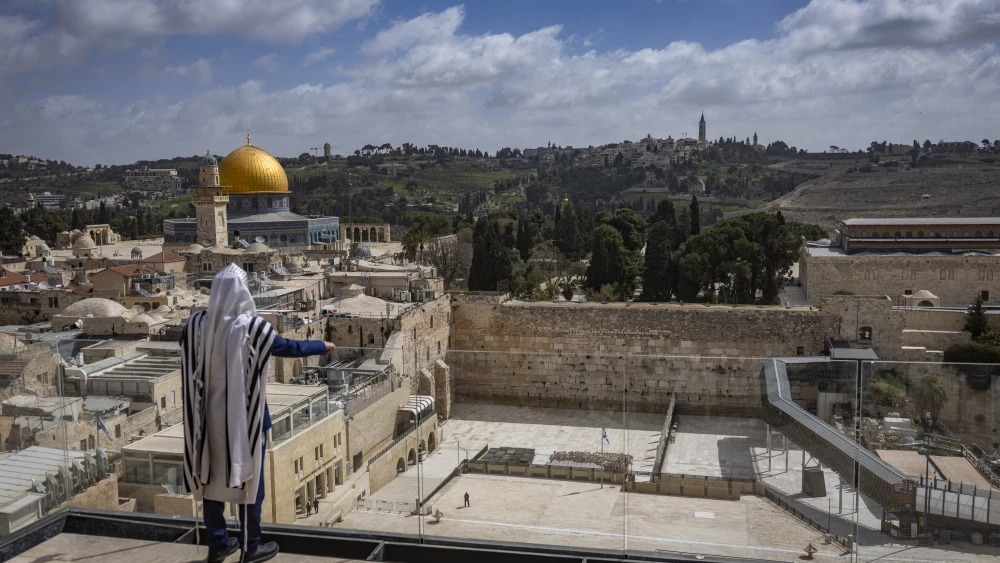
“The Western Wall is the beating heart of the Jewish people,” he added. “If the security reality permits hundreds of people to gather in public squares for demonstrations, all the more so it should allow Jews to assemble at the Western Wall Plaza.”
According to security guidelines in place in major Israeli cities since the start of the month-old war, gatherings and services are limited to up to 50 people, provided that a shelter can be reached within 90 seconds.
The court’s decision, which was criticized by Israeli National Security Minister Itamar Ben-Gvir as “irresponsible lawlessness” that endangered security officials, forbade police from breaking up a protest of fewer than 600 people at Tel Aviv’s central Habima Square.
“I ask that the guidelines be re-examined, and that worshipers be allowed to come to the Western Wall and pray for the welfare of our people, our land, and our soldiers, at least under the same conditions in which other gatherings are permitted, and even more so. Precisely in these days, we must not forgo prayer, the source of strength and hope for us all,” the rabbi wrote.
The rabbi’s appeal came as only a few dozen people attended the restricted priestly blessing or Birkat Kohanim recited during the Jewish holiday of Passover, which typically attracts tens of thousands of worshipers to the Western Wall in the Old City of Jerusalem.
Easter Sunday services at the Church of the Holy Sepulchre were likewise limited to a small number of clergy due to the war.