


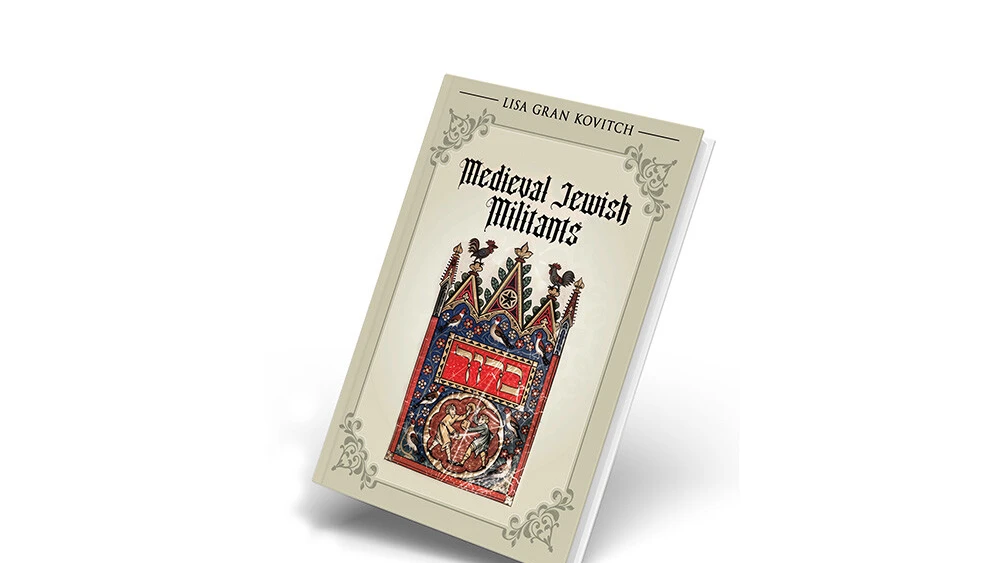
Medieval Jewish Militants by Lisa Gran Kovitch offers an examination of self-defense, resilience and survival in Jewish communities across medieval Europe. Challenging long-standing assumptions about Jewish passivity during periods of persecution, this work uncovers historical evidence of armed resistance, communal defense strategies and Jewish participation in military life.
Drawing on centuries of historical records, Kovitch investigates how medieval Jewish communities responded to violence and existential threats, particularly in environments where access to weapons and political autonomy was restricted. The book traces patterns of adaptation, conflict and endurance, asking a central and provocative question: How did the ability, or inability, to defend themselves shape Jewish survival and historical outcomes?
The project originated decades ago, when Kovitch encountered a deeply troubling account of martyrdom in the Jewish community of Mainz, Germany. Struck by the narrative’s emphasis on helplessness, she began questioning whether Jews of the medieval period truly lacked the means or will to fight back. This inquiry became a lifelong mission to identify historical cases in which Jews did employ self-defense strategies, bear arms and resist attacks in order to save lives.
Her findings challenge a dominant scholarly focus on martyrdom as the primary Jewish response to persecution. Kovitch argues that armed resistance and self-defense were both present and historically significant. She further argues that recognizing these examples is essential for a fuller and more accurate understanding of Jewish history and for confronting narratives that deny Jewish agency.
Lisa Gran Kovitch is a lifelong student of Jewish history. She holds a B.A. in Near Eastern and Judaic Studies from Brandeis University and a master’s degree in psychology from Temple University. She has published on Jewish historical topics and served as an editor for the writings of Samuel Merlin, a key aide to Zionist leader Ze’ev Jabotinsky. In addition to her scholarly work, Kovitch has spent many years teaching Judaica and serving communities as a licensed counselor and behavior analyst.
Grounded in historical inquiry, Medieval Jewish Militants offers a perspective on an understudied dimension of medieval Jewish life. The book invites readers to reconsider assumptions about power, vulnerability and moral responsibility while drawing connections between medieval history and modern debates about identity, sovereignty and the right to self-defense.
To purchase the book, click here.


