Afeka College of Engineering is at the forefront of efforts to rejuvenate Yad Eliyahu, a long-underdeveloped area in south Tel Aviv that is now perfectly positioned to become the city’s latest up-and-coming neighborhood.
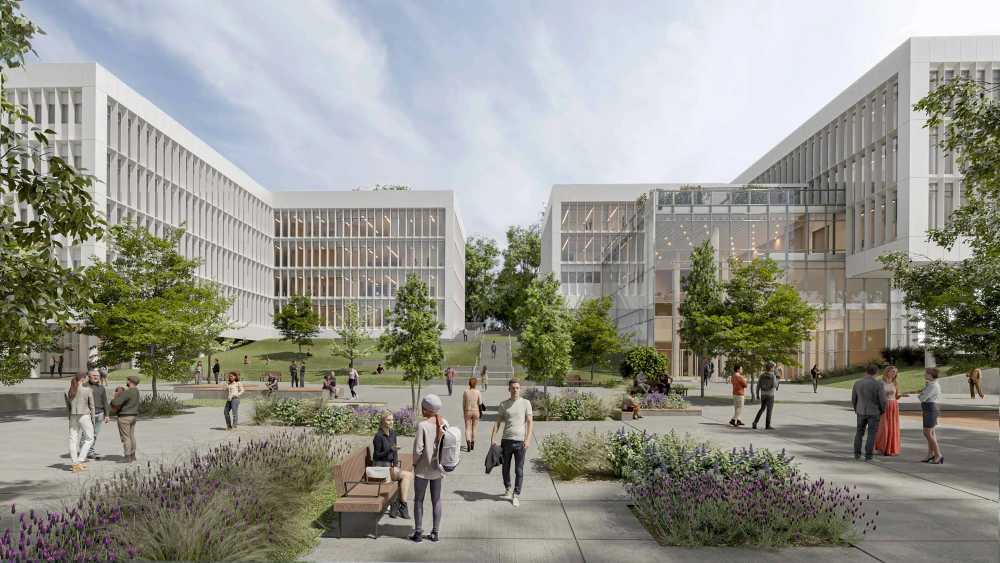
The college signed a historic agreement this year to build its new $100 million campus in south Tel Aviv. The 42,000-square-meter (452,000-square-foot) lot will be located southeast of the city, on the border of Yad Eliyahu and Kfar Shalem. The school is working in partnership with the city of Tel Aviv-Yafo, the Planning and Budgeting Committee of the Israeli Council for Higher Education and private donors to build their new campus which will include academic buildings, advanced laboratories and student dormitories.
The project dovetails with a central pillar of the Tel Aviv Municipality’s vision, and its enormous investment in the renewal of the southern and eastern areas of the city. In doing so, it will also provide the infrastructure for significant development of a college training engineers for the Israeli high-tech industry, which suffers from a significant shortage of skilled manpower.
“Our new campus will attract young Israelis and provide new services and academic activities, secure prosperity for the area and lay the foundation for the start-up nation’s continued growth,” Afeka College President Prof. Ami Moyal, said. “It will transform the entire south of the city, cultivating an ecosystem of inextricable connection between higher education and industry, while serving as a catalyst for local rejuvenation.”
Indeed, things are changing in south Tel Aviv. Yad Eliyahu, which is home to 19,000 residents and around 500 commercial units (offices and shops), is currently undergoing a real estate development boom with Rotshtein Real Estate Ltd. building an urban renewal project at 35-45 La Guardia Street that will cost NIS 700 million ($190 million) and is set to bring in revenue of NIS 820 million ($222 million).
In light of the great importance that the municipality places on promoting urban renewal in the neighborhood, the municipal corporation Ezra and Bitzaron took it upon itself to lead various processes with the residents themselves.
“The Yad Eliyahu neighborhood is facing accelerated urban renewal aimed at improving the quality of life of its residents, while preserving the characteristics of the neighborhood and green areas and renewing public spaces,” the Tel Aviv Municipality said. “According to the scheme, which is in line with the master plan delegated to the city, LaGuardia Street will become the main urban street of the Yad Eliyahu neighborhood and of East Tel Aviv, and will be lined with commerce, wide sidewalks and bicycle paths. In addition, the residential buildings along the street can be expanded and enlarged.”
However, when it comes to education in south Tel Aviv, the city has a lot of catching up to do. Even though the neighborhood has two elementary schools, Gibore Israel and Rokach and a religious school, many parents opt to send their children to school elsewhere because its standards are seen as subpar.
The uphill battle to improve the local school system in South Tel Aviv is one of the reasons the Afeka College of Engineering was drawn to the area.
Over the past several years, Afeka College has been at the helm of a pedagogical revolution and in turn, forging the future of the workforce in Israel as a whole. They began by defining the desired output of their education process, they’re so-called ultimate “graduate profile” that incorporates not only knowledge and engineering skills, but also vital personal skills and values.
Now, Afeka’s new model of teaching will finally have a new home.
The new campus comes at a vital time when there is an estimated shortage of 13,000 engineers and software developers in the Israeli high-tech industry. This gap has been defined by the government as the main barrier for development in the high-tech sector, with potential consequences on Israel’s national resilience and international status as a beacon of innovation.
“Moving our leading academic institution to an underdeveloped neighborhood will bridge societal gaps, bringing an influx of students, faculty, commerce and facilities to the area. The new campus will build a socio-educational ecosystem that promotes excellence and innovation in science and technology as a basis for social mobility. The new dormitories on the campus, meanwhile, will provide much-needed access for the social periphery in the city and region,” Moyal said.
The hope is that the campus will serve as a magnet for students, faculty, commerce and facilities that will give the neighborhood a much-needed shot in the arm ‑— and put its residents on the path to social mobility.
As such, Afeka’s numerous social involvement programs aim to impact Israeli youth by exposing them to the beauty of science, technology and engineering with age-appropriate activities led by Afeka students that are hands-on, enriching and fun. In doing so, the school is helping students pay forward and act as role models to youth who find the field of engineering daunting or unattainable.
The college is planning to be far more than an impressive brick and mortar presence though, as it is actively engaging in community outreach.
“We have made social involvement a cornerstone of the education we offer our engineering students,” Moyal added. “We also believe it is our obligation to actively contribute along the entire national K-12 STEM education continuum, with the goal of reaching every part of the country, particularly the geographical and social periphery. To attain these goals, Afeka established a Social Involvement Unit dedicated to fostering social involvement, establishing collaborations and overseeing all social involvement activities.”