Newsletter
Newsletter Support JNS
Yaakov Lappin

Yaakov Lappin

Yaakov Lappin is an Israel-based military affairs correspondent and analyst. He is the in-house analyst at the Miryam Institute; a research associate at the Alma Research and Education Center; and a research associate at the Begin-Sadat Center for Strategic Studies at Bar-Ilan University. He is a frequent guest commentator on international television news networks, including Sky News and i24 News. Lappin is the author of Virtual Caliphate: Exposing the Islamist State on the Internet. Follow him at: www.patreon.com/yaakovlappin.

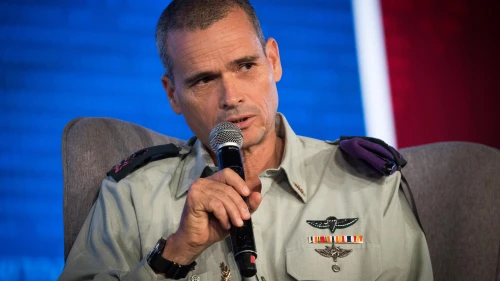
The military’s state of readiness has dramatically improved, according to internal reports, but a senior analyst told JNS it had a lot more catching up to do after years of neglecting the ground forces, which will be essential for defeating enemies like Hezbollah decisively.
One of SpaceIL’s stated goals is to inspire the next generation in Israel and around the world to study science, technology, engineering and mathematics.
Iran’s ultimate goal is to encircle Israel with bases of missiles and terrorist armies, a sentiment made clear by Tehran’s Palestinian proxy group, Palestinian Islamic Jihad, which is the second-largest armed faction in the Gaza Strip.
As dangerous enemies arm themselves with missiles that can strike anywhere, the strategic value of Israel’s submarine fleet keeps rising. When did they start adding to the military security of the Jewish state, and how did Prime Minister Benjamin Netanyahu first get involved in helping purchase them?
It is a low-profile conflict, mostly fought away from the headlines, in which Israel is playing an active defense against Iran’s offensive attempt to set up a war outpost in Syria.
The surprise announcement by U.S. President Donald Trump to pull American forces out of Syria has led to concern that Iran can now complete its “land bridge” from Tehran to Beirut.
Past experience indicates that Hamas will not be in any rush to slow down its West Bank terrorism program, even if this ends up placing its Gazan regime in Israel’s sights.
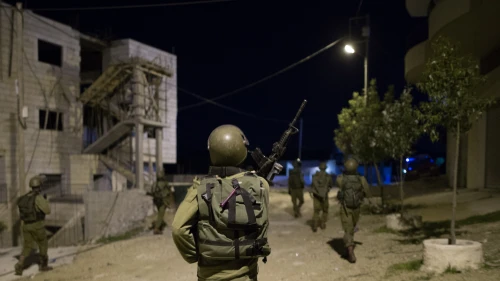
The military works closely with intelligence to launch frequent raids on gun-making workshops as part of a long-term effort to “drain the swamp” of terrorism.
Terrorism threatens both Israeli and Palestinian civilians. The coming weeks will see whether Israel and the Palestinian Authority will be able to contain an escalating situation and roll back the violence, or whether the region will slide into a new and dangerous phase.
Seventy years later, Israeli army combat officers have been meeting with veterans of the nation’s first war in 1948, who are telling their stories to the soldiers of 2018.
They will be equipped with their own arsenal of high-tech weaponry and can be expected to receive missions to attack the most sensitive enemy targets.
Hezbollah’s special forces, combined with Iraqi Shi’ite militias, were supposed to infiltrate Israel, traveling through the tunnels along various routes on the Israeli-Lebanese border, from the Mediterranean Sea to Mount Dov.