Campus Antisemitism

“The Harvard Lampoon is garbage,” tweeted Catherine Zhang, a senior at the university.

A new synagogue opened and has been operating without a rabbi.

Legal groups are seeking answers to the Persian Gulf country’s ties with Texas A&M University.

Computer-science pioneer and father of murdered journalist Daniel Pearl says his life experience and the rise of “Zionophobic” racism in academia made it “necessary” for him to take a stand when NYU awarded a prize to anti-Israel group Students for Justice in Palestine.

U.S. Jewish organizations react to a decision at the university, claiming discrimination, and the violation of both college policies and students’ First Amendment rights.

Rabbi Abraham Cooper of the Simon Wiesenthal Center notes that Eli Valley’s cartoons resemble imagery from the Third Reich.

“Parents of incoming students need to know that they are paying for the indoctrination of their children and the general public when they pay their tuition fees,” said CAMERA researcher Dexter Van Zile.

It’s Palestine Awareness Week at the California university, complete with an “apartheid wall.” It coincides with Israel Week on campus.
It’s the first time in more than a decade that the College Council voted against having a club that met the criteria of its bylaws.

“These departments are basically sponsoring a hate-fest,” said attorney Karen Hurvitz, who is representing the students. “They need to move this rally off campus and not sponsor it in any way.”
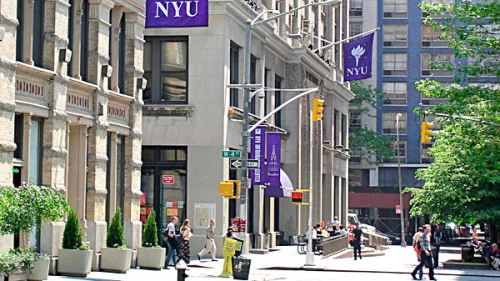
“It is time for Jewish parents to vote with their dollars and to take NYU off the list of consideration for their kids to attend. There are plenty of other great schools who aren’t endorsing anti-Semitism at every turn,” said Club Z executive director Masha Merkulova.

It will endow courses, research and programs of the Berkeley Institute for Jewish Law and Israel Studies.