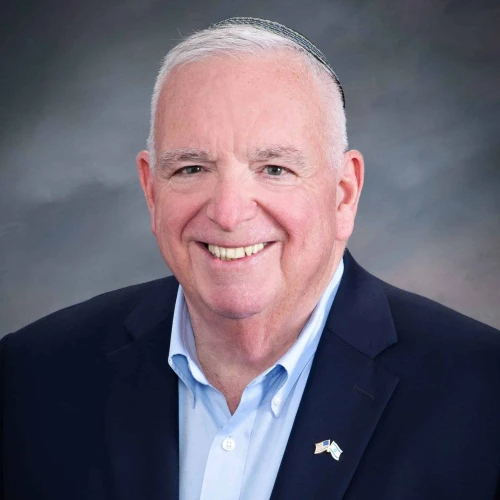
U.S. Secretary of State Antony Blinken referred to Ambassador David Satterfield on Oct. 3 as “a longtime colleague” and “extraordinary Foreign Service officer,” speaking during an event at Rice University in Houston, where Satterfield was then director of the Baker Institute for Public Policy.
Neither man knew that Hamas would attack Israel four days later, brutally killing more than 1,400 Israelis, wounding thousands and kidnapping many others.

The U.S. State Department announced on Sunday that Satterfield is the new U.S. special envoy for Middle East humanitarian issues.
“He will lead efforts to address the humanitarian crisis in Gaza and coordinate with our partners to provide life-saving assistance to the most vulnerable,” Blinken wrote.
In an interview with Al Arabiya television that day, Blinken called Satterfield “one of our most experienced diplomats.”
A former ambassador to Turkey, Satterfield has more than 40 years of experience in the Middle East, including in Lebanon, Syria, Tunisia and Saudi Arabia. (He left the top U.S. post for the Horn of Africa after several months in 2022.)
He is also a former acting assistant secretary for Near Eastern affairs and former director for Near Eastern affairs at the U.S. National Security Council.
Satterfield “will lead a whole-of-government campaign to mitigate the humanitarian fallout of Hamas’s terrorist attack against Israel, supporting critical efforts by the U.S. Agency for International Development and the Department of State’s Bureau of Population, Refugees and Migration,” the department said.
“David Satterfield is a no-nonsense professional who understands well Israeli security concerns about Gaza from past diplomatic posts, including leading the Sinai Multinational Force and Observers,” wrote Robert Satloff, executive director of the Washington Institute for Near East Policy. “As we bulk up U.S. military presence to deter Iran/Hezbollah, this is a reasonable step on [the] humanitarian front.”

Michael McFaul, a former U.S. ambassador to Russia during the Obama administration who now teaches at Stanford University, called Satterfield “an excellent choice to coordinate American humanitarian efforts right now in the Middle East.”
Tibor Nagy, a former U.S. assistant secretary of state for Africa, and former ambassador to Guinea and Ethiopia, wrote that Satterfield deserves “huge kudos” for “taking on an impossible and thankless role. He was happily retired and directing the prestigious Baker Institute at Rice University, and he is now willing to jump into the fire.”
“Addressing the ongoing humanitarian crisis in Gaza is a formidable mission, but I believe Ambassador David Satterfield’s diplomatic experience and regional knowledge will strengthen our commitment to peace and stability in the Middle East,” wrote Rose Gottemoeller, a former NATO deputy secretary general and now a Hoover Institution research fellow.